Month: April 2025

10 Essential Life Hacks for Women Over 60

10 Essential Life Hacks for Women Over 60

When was the last time you engaged in a life hack? For me, I didn’t even know what that term meant until a friend asked me about the life hacks concept a couple of years ago. The more I read about it the more intrigued I was.

Much to my surprise, it turns out I had been engaged in life hacks for a good portion of my adult life. I just didn’t refer to many things I did to make my life better with that term.

So, what exactly does “life hack” even mean? And how can your awareness of life hacks positively improve your sense of joy, fulfilment, and overall health and well-being?

To answer these questions, we are starting an exclusive new series for Sixty and Me readers, titled “Life Hacks for Women Over 60.”

What Is a Life Hack?

A life hack typically refers to a strategy, technique, or unique but simple change that can significantly improve your personal and professional life, making it more efficient, enjoyable, or manageable.

Life hacks can maximize your well-being, health, and happiness while minimizing stress, discomfort, or unnecessary complications.

Given the unique challenges and opportunities that often come with being a woman over 60, life hacks can take on a deeper meaning for us at this stage than at earlier times in our lives. In this context, a life hack for you could encompass a wide range of activities or adjustments, such as:

  • Health Optimization: Finding simpler or more effective ways to maintain your physical and mental health, such as easy exercise routines, diet changes, or mindfulness practices.
  • Social Engagement: Utilizing technology or community resources to stay connected with friends and family or to make new social connections.
  • Lifestyle Adjustments: Modifying your home environment for more comfort and safety or adopting self-love routines that enhance the quality of your life.
  • Time Management: Streamlining daily tasks or obligations to create more time for leisure, hobbies, or relaxation.
  • Learning & Growth: Adopting new learning methods or exploring hobbies that are both mentally stimulating, emotionally uplifting, and enjoyable.
  • Financial Simplicity: Implementing straightforward financial strategies for budgeting, investing, or saving to ensure financial stability and ease of managing your finances.

10 Life Hacks for a Vibrant Life

Here are 10 simple yet effective life hacks that can improve your overall well-being, increase your happiness, and improve the quality of your life:

Create Self-Love and Self-Care Rituals

Self-love and self-care practices will vary for each person, but activities such as meditation, reading, listening to music, massages, time in nature, laughing more, or taking spa days at home and elsewhere are essential go-to life hacks. These activities can reduce stress and deliver measurable benefits to your emotional, mental, and physical well-being.

Embrace Technology

Technology is a powerful tool for staying connected with people, managing health, and pursuing interests. Learning to use smartphones, social media, and various apps can enhance communication and provide access to a wealth of information and entertainment.

Prioritize Physical Activity

Regular exercise tailored to your ability and health status can significantly improve physical and mental health. Activities like walking, yoga, swimming, or gentle strength training can maintain mobility, reduce the risk of chronic diseases, and boost mood.

Read How to Restart Your Walking Habit.

Nurture Social Connections

Actively maintain and build social connections by joining clubs, groups, or classes online and offline that align with your interests. Strong social ties are crucial for emotional support and mental health.

Mindful Eating

Proper nutrition is key to managing your emotional, mental, and physical health. Mindful eating is also excellent for maintaining your energy levels and preventing age-related health challenges.

Lifelong Learning

Keep the brain active and engaged by learning new skills or hobbies. Whether it’s a new language, musical instrument, or artistic craft, lifelong learning keeps your mind sharp and is a great source of joy.

Volunteer

Volunteering can be a fulfilling way to give back, connect with others, and find purpose. It’s also a great way to stay active and engaged in your community.

Streamline and Organize

Decluttering and organizing your living space leads to a more manageable and stress-free environment. It can also be a cathartic process, bringing a sense of calm, emotional balance, and order.

Financial Planning

Financial security can bring peace of mind and stability. Stay on top of financial health by setting a budget, planning for the future, and perhaps consulting with a financial advisor.

Adopt a Growth Mindset

Cultivating a growth mindset and maintaining a positive attitude is essential to your overall happiness. Let go of a fixed mindset and instead, embrace optimism and explore new ways to enjoy everyday life.

The Essence of a Life Hack

Implementing these life hacks will come down to making sure the ones you are drawn to are aligned with your values, needs, and desires without requiring significant overhauls or investments.

Remember, the essence of a life hack is found in its ability to create more fulfilling experiences, not make your life busier or overwhelming.

Everyone will resonate with and be drawn to different life hacks. Ultimately, a life hack is about enjoying life to the fullest by being, doing, and experiencing what your heart desires after 60.

I invite you to join me in the video, where I will share additional insights on hacks along with journal prompts to help you integrate what you’re learning.

Let’s Have a Conversation:

What are some life hacks you have found useful and helped improve an important area of your life?

Read More

13 Wedding Hairstyles for Women Over 50

wedding hairstyles

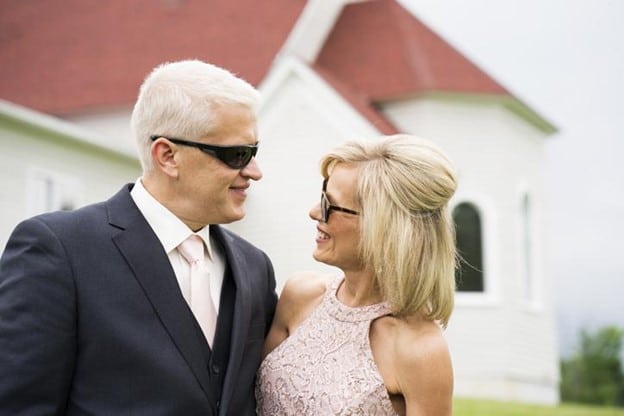
Are you attending a wedding soon? Are you getting married or renewing your vows? The next biggest thing to consider after your dress is your hair.

Bring some photos to your hairstylist for inspiration to create the perfect wedding hairstyle for you.

Here is our list of wedding hairstyle ideas for women over 50:

  1. Updo with Swirls
  2. Soft Back Bun with Curls
  3. Short Side Part Bob
  4. Curls Updo Bun
  5. Slick Pulled Back Style

Continue reading to discover more wedding hairstyles for women over 50, including photos and tips.

Wedding Hairstyle for Older Women

Updo with Swirls

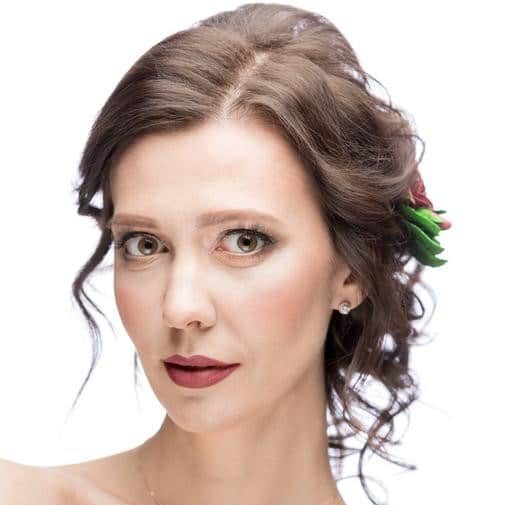
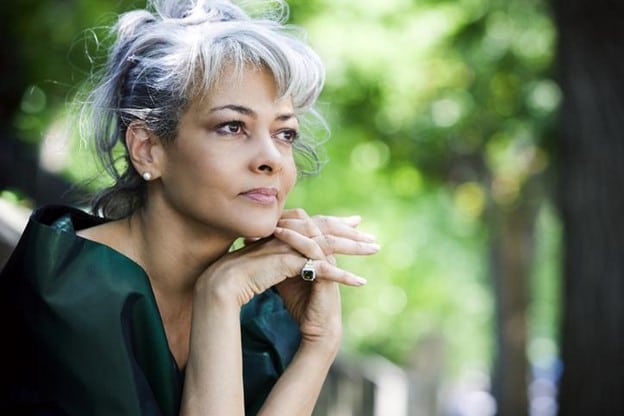
A soft girly look that we can pull off well into our 50s. Leave a strand of hair, either to one side or both sides, to softly frame your face.

A soft girly look that we can pull off well into our 50s. Leave a strand of hair, either to one side or both sides, to softly frame your face.

The swirls are curled and pinned in a circular formation at the top back of the head.

Soft Back Bun with Curls

This elegant do looks great if you have medium to long hair. Curl your hair and pin it back softly. Leave volume at the sides and create a soft beehive at the top for more oomph.

Short Side Part Bob

Short bobs are always in style. Add some flair by side-parting and adding volume, and you’ll look spectacular and stylish at the event.

Curls Updo Bun

If you have longer hair, softly slide it into a high ponytail and add a hairpiece to create a voluminous updo.

Slick Pulled Back Style

This is a super chic and elegant way to style your short or medium-length hair for a wedding. Use a hair product to combat flyaways and to keep your beautiful do in place.

Read Hairstyles for Women Over 60 with Fine Hair.

Chic Beehive

Beehives have been around for decades and are still fashionable. The late Amy Whinehouse brought back the beehive into mainstream fashion trends many years ago. Add a hairpiece to bump up the beehive as much as you want.

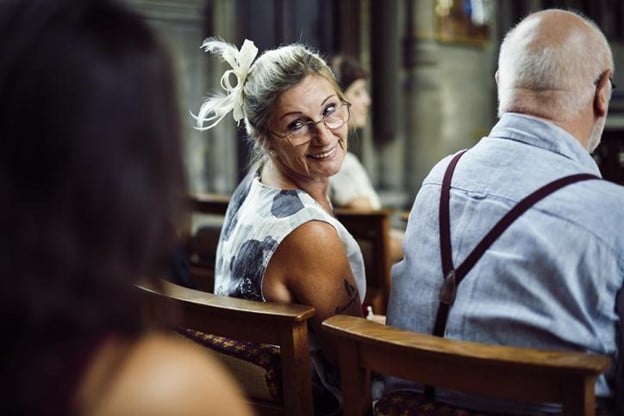
Accessorize with a Feather

Pull your hair back into a bun and add a feather hair accessory to glamorize your look.

Read Long or Short Hair Over 60?

Simple Side Flower

A simple flower on one side can liven your look dramatically. You can add a natural flower or purchase a flower hair accessory.

Read 11 Best Hairstyles for Round Face Shape Women Over 60.

Messy Updo with Bangs

Messy buns are super trendy and are sported at events like weddings all the time. The “messy” look is actually well-placed strands of hair that give you a relaxed (but still chic) look.

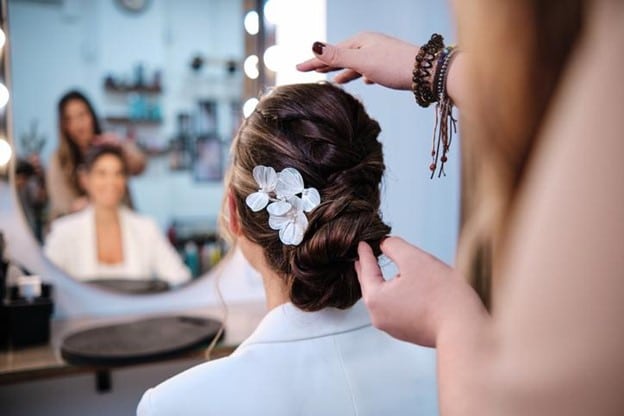
Chic Low Bun with Flowers

This is a very classic wedding hairstyle look. Create a bun at the nape of the neck and accessorize it with flowers.

Half-Up Half-Down Style with Waves

This style is perfect for those who want to showcase some length while keeping hair away from the face. Adding soft waves to the hair left down gives volume and bounce, making it a romantic choice for any wedding.

Read Short Hairstyles for Older Women with Thick Hair

Loose Waves with a Side Part

For a more relaxed yet elegant look, consider loose waves with a deep side part. This style is flattering and works well for all hair lengths, providing a soft frame for the face and a youthful appearance. It’s ideal for outdoor or casual weddings.

Classic Chignon with Side Swept Bangs

A chignon is a classic choice that never goes out of style. Add side-swept bangs to soften the look around the face, making it suitable for women with shorter face-framing layers.

How to Choose the Perfect Wedding Hairstyle  

Selecting the right wedding hairstyle is just as important as choosing the perfect dress. Your hairstyle should not only reflect your personal style but also complement the event’s overall vibe, your face shape, and the dress you’re wearing. Here are key factors to consider when deciding on the best hairstyle for your special occasion.  

Consider the Wedding Theme

Your hairstyle should align with the atmosphere of the wedding. Whether you’re the bride, a bridesmaid, or a guest, keeping the event’s theme in mind will help you select a style that feels appropriate.  

  • Formal & Black-Tie Weddings: Classic updos like chignons, French twists, or elegant buns create a polished and refined look. Sleek styles also work well in upscale settings.  
  • Casual & Outdoor Weddings: Loose waves, soft curls, and half-up styles are perfect for a relaxed or boho-style wedding. If it’s a beach wedding, consider a tousled style with natural movement.  
  • Themed Weddings: If the wedding has a vintage, rustic, or retro theme, you can incorporate era-inspired hairstyles like finger waves for a 1920s look or a chic beehive for a 1960s-inspired aesthetic.  

Match Your Hairstyle to Your Dress  

Your wedding attire plays a big role in determining which hairstyle will look best. The neckline, fabric, and embellishments of your dress should work in harmony with your hairdo.  

  • High Necklines & Detailed Backs: If your dress features a high neckline or intricate back details, an updo will showcase these features beautifully. Consider a classic bun, chignon, or a French twist.  
  • Strapless or Off-the-Shoulder Dresses: Flowing curls, loose waves, or a side-swept hairstyle can frame your shoulders elegantly without overpowering the look.  
  • V-Neck or Plunging Necklines: A half-up, half-down style with soft waves adds romance while keeping some hair away from your face.  
  • Minimalist Dresses: If your dress is simple, you can add drama with a statement hairstyle, such as voluminous curls or a sophisticated updo with accessories.  
  • Embellished or Lace Dresses: If your gown is heavily detailed, a sleek, polished hairstyle like a low bun or a side chignon can balance the overall look.  

Hair Length & Texture – Finding a Style That Works for You 

Your natural hair length and texture will influence the type of styles you can achieve. Here’s a guide to help you find the best match for your hair:  

  • Short Hair: Pixie cuts can be styled with soft waves or volume at the crown. A sleek, side-parted bob with a decorative clip can create an elegant look.  
  • Medium Hair: Mid-length hair works well with updos, soft curls, or textured waves. You can also add hairpieces or extensions to create volume.  
  • Long Hair: If you have long hair, you have endless styling possibilities. From braided updos to Hollywood waves, long hair provides versatility in creating both structured and effortless styles.  
  • Fine Hair: Opt for styles that add volume, like a softly teased updo or layered waves. Using a volumizing mousse or clip-in extensions can help create fullness.  
  • Thick Hair: Sleek ponytails, structured updos, and soft layers can help manage and shape thick hair for an elegant finish.  

How to Incorporate Accessories Effectively 

Accessories can brighten your wedding hairstyle, adding a touch of glamour and personality. However, it’s important to strike the right balance so they complement rather than overpower your look.  

  • Hair Combs & Clips: Perfect for securing updos or side-swept styles. Choose delicate pearl or crystal-adorned clips for an elegant touch.  
  • Flowers & Floral Crowns: Ideal for boho or garden weddings. Fresh flowers like baby’s breath, roses, or orchids add a soft, romantic vibe.  
  • Headbands & Tiaras: A headband can create a vintage or regal look, while a tiara adds a classic bridal touch. Both work best with sleek buns or softly curled styles.  
  • Hairpins & Pearl Accents: Subtle pearl or metallic pins can add sophistication without being overpowering, making them great for minimalist looks.  

Final Tips for Choosing Your Wedding Hairstyle  

  • Do a Trial Run: Whether you’re styling your hair yourself or working with a professional, schedule a trial session before the wedding day to test different styles.  
  • Think About the Weather: If the wedding is outdoors, choose a hairstyle that will hold up in humidity, wind, or heat.  
  • Comfort Matters: If your hairstyle requires a lot of pins, teasing, or heavy extensions, make sure you’re comfortable wearing it for several hours.  

Read 2025 Hair Color Trends for Women Over 50.

Let’s Have a Conversation:

Are you going to a wedding soon? What hairstyle will you create for the wedding? Will you do it yourself or go to a salon? Tell us about it in the comments below.

Read More

Try These 7 Movements to Relieve Tight Hips without Passive Stretching

Try These 7 Movements to Relieve Tightness in Your Hips without Passive Stretching

Tight hips are a common complaint among post-menopausal women. Hydration, sleep, and stretching are often recommended as helpers in the fight against tight hips.

I
also believe that if we are going to alleviate chronically tight hips, we have
to stop sitting so much and start moving more.

It’s All About Movement

When
you experience muscle tightness, the solution is to work on increasing your mobility.
Scientific advancements have revealed that the sensations we feel are not
direct inputs from our muscles.

Rather,
they are inputs from nervous system sensors on temperature, blood flow,
inflammation, etc. The brain interprets this data and creates a feeling of
tightness, pain, numbness, instability, ease, or something else. 

Oftentimes,
the sensation of tightness has a lot to do with your nervous system putting on
the brakes and not allowing you to perform a certain action because it is an
unfamiliar movement and your nervous system senses you do not have the muscle
control or strength for the move. 

A
good example is hamstring tightness. If a person is unable to touch their hands
to the floor (not a goal I suggest to my clients) in a forward fold because a
tight sensation stops them, they assume that they need to “stretch” to change
the situation.

What
if I told you that your nervous system is accustomed to you sitting much of the
day and knows you do not have the hip or hamstring strength for that move? That
your healthy nervous system might put on the brakes and stop you from going too
far?

But
what if you gained strength in all the ranges of motion that your hips and legs
can naturally accommodate? Would that make your body feel more comfortable with
end range movements like a forward fold? 

I
have seen my clients gain a greater range of motion through strength and
mobility work than years of stretching classes have done for them.

If
you want to experiment with this, try all or a portion of these seven moves
daily and see how you feel in a few weeks.

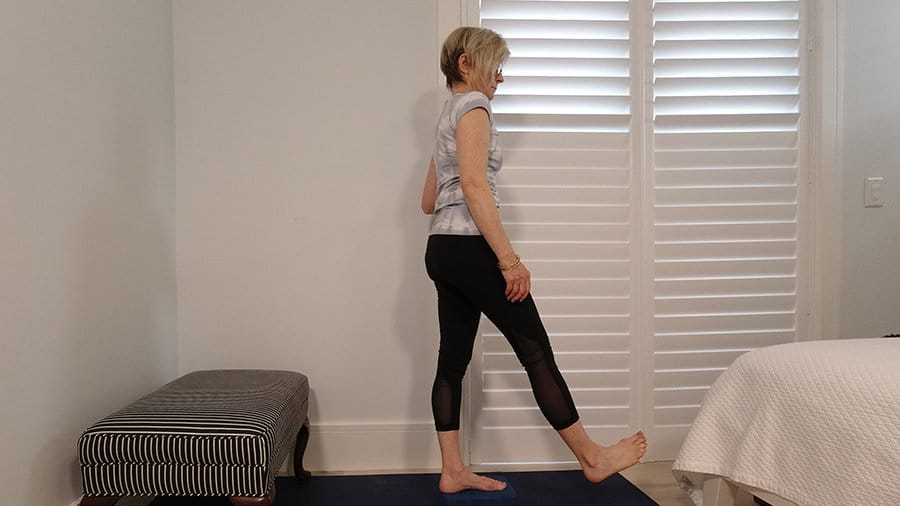
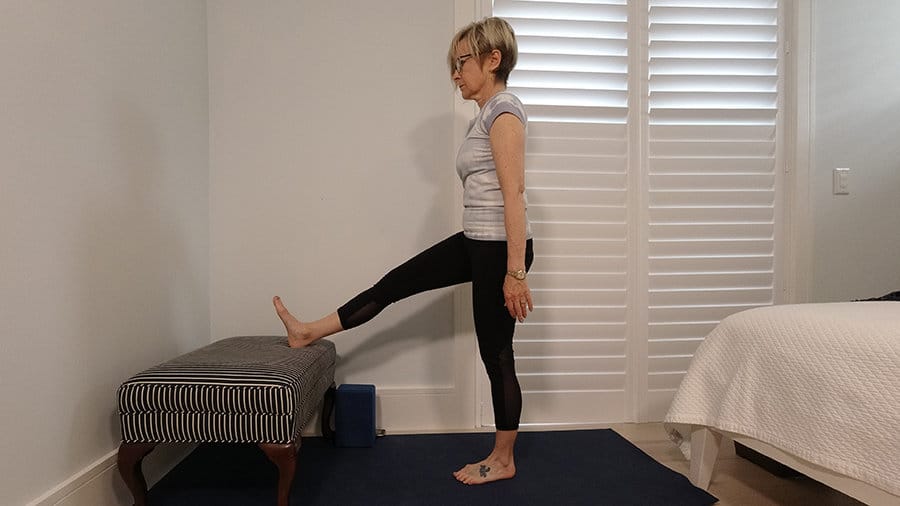
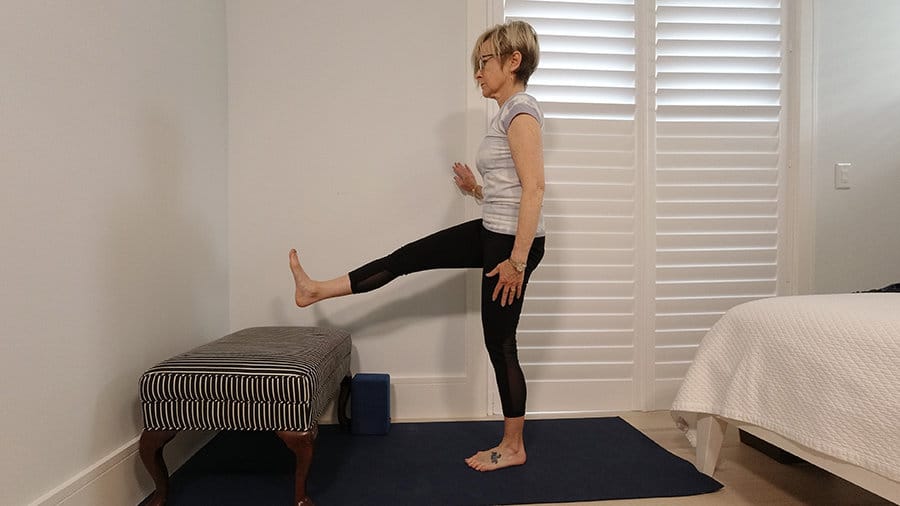
Standing Psoas Release

Put
your right foot on a block. Your heel needs to be solidly on the block so that
you can make sure your weight is more in your heels. Make sure you have support
nearby, like a wall, and use it for stability.

Swing
your free leg forward and back without trying to use your hip flexors to move.
Allow a bit of momentum to keep your leg swinging and your hip flexor on the
swinging leg relaxed. Feel as if the weight of your leg is 100 pounds and it is
being pulled toward the floor as it swings.

Switch
legs.

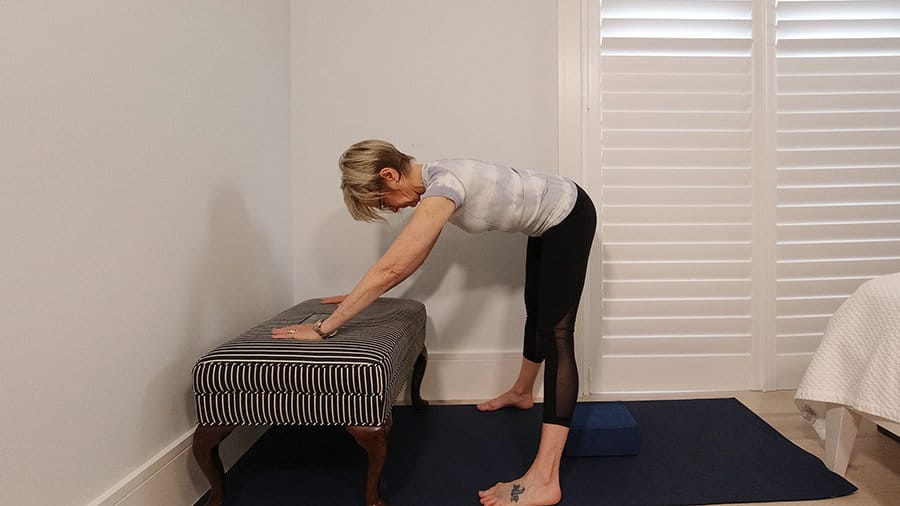
Standing Hip Glide 

Find
a counter or table that reaches hip height. Hinge at your hips and place
your hands on the table. From the hip hinge position move your hips from right
to left with as little waist cinching as possible.

Move
your hips a little bit to the right without a twist and hopefully you will feel
sensations in your left inner thigh. Keep both legs straight as you do this.
Then move to the other side. Go back and forth slowly. If you think you are
going slow, move even a little bit slower.

Standing Hip Circles

Stand with your left side to the counter. With your left hand touching the counter for stability, bring your right knee up to hip height as if you were marching. Externally rotate the leg bone at the hip so that your knee is now pointing out to the right.

Now
for the difficult part. Without using your low back muscles, internally rotate
that very same leg, which will swing your lower leg out. With your mind’s eye
at your knee, take that knee behind you as it sweeps back to its home base
parallel to the left knee.

Complete this circle 3 times and then reverse the direction.

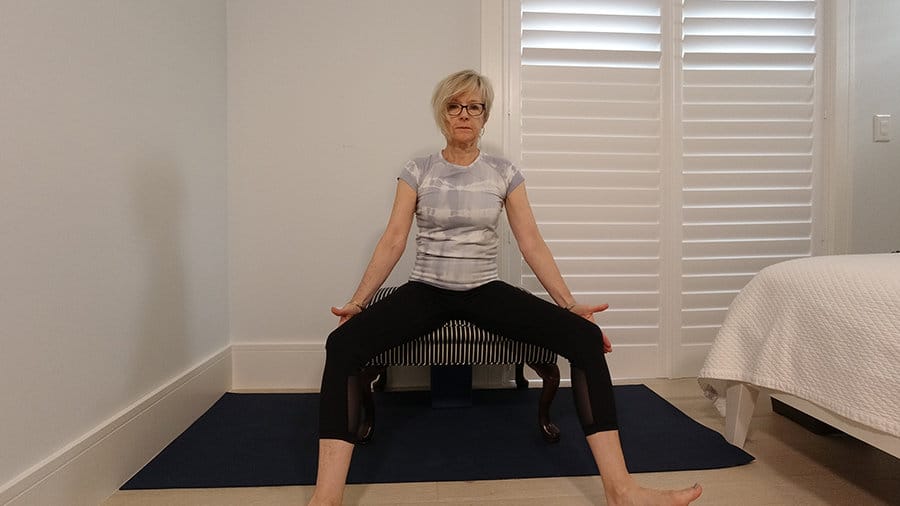
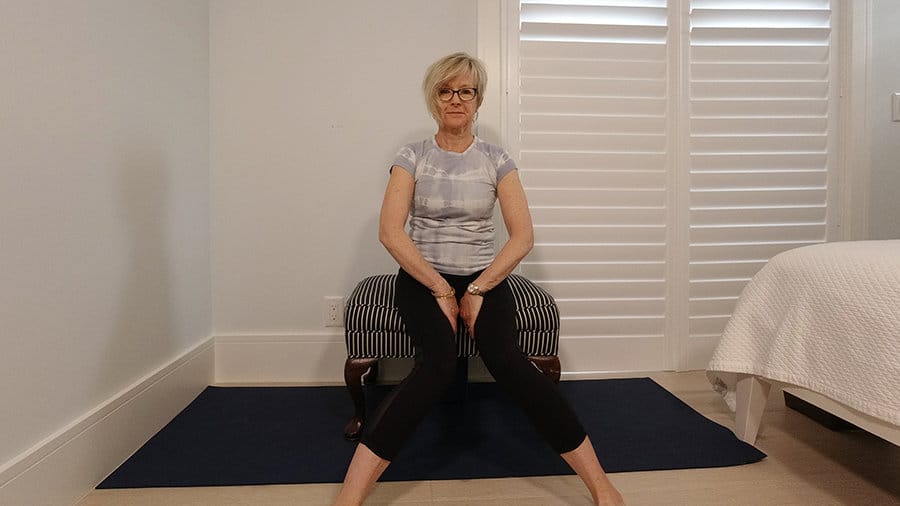
Windshield Wipers Redefined

Sit
on a chair with your heels on the floor and placed wider than your hips. Your
knees are probably out to the side in external rotation. Keeping your heels
where they are, rotate the leg bones internally (your knees will move towards
each other). Continue this internal and external rotation in a lazy fun way.

Shake
that out. Starting back in external rotation again put your hands out the
outside of your knees. Press your hands into your knees and your knees into
your hands.

Feel
that resistance and after lightening up on your hands create the internal
rotation again with a focus on the resistance your hands can create going in
both internal and external rotation. Think of this as a deliberate deep
cleaning for your hip joints while also working your inner and outer thighs.

Leg Lifts

Stand
with your left side to the counter. Your right leg is extended straight in front
of you and the right heel is resting on a block. Hinge at your hips until you
feel sensation in the back of your right leg.

Hold
there and draw your right toes toward your face. Remember to breathe as you
feel the sensations. Repeat 3 or 4 times.

Standing
in neutral now with your weight in your left leg, lift your right heel off the
block while keeping your torso still and your hips steady and neutral. Lift 5
to 7 times. Only lift as high as you can go without your hips, spine or
shoulders shifting. It may be that you barely lift off the block and that is
fine.

Repeat
on the other side.

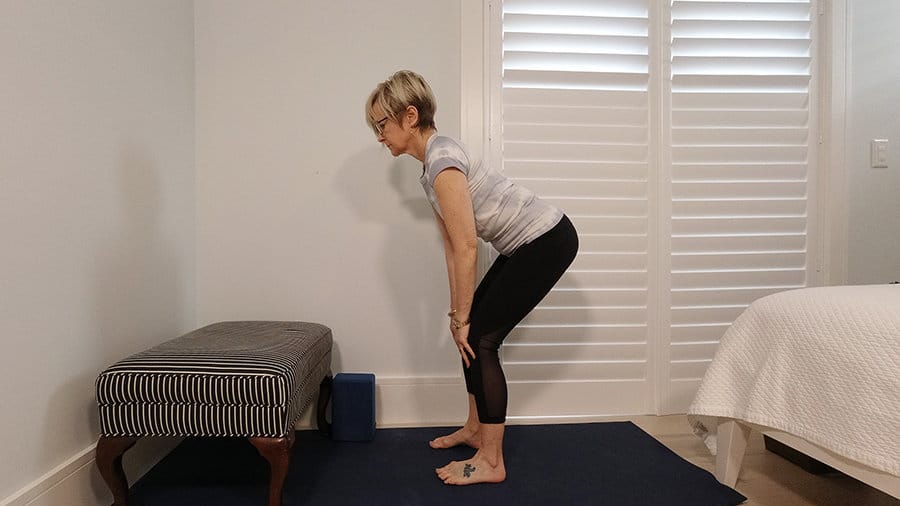
Squat

Position
your legs wider than your hips with your legs hip distance apart. Take a little
squat with your rear traveling behind you. Look down at your knees and notice
where they are.

Come
back up and this time make sure your hips are travelling behind you and your
knees do not migrate towards each other. If your knees come forward a bit it is
not a big deal, but do not let your knees collapse in.

As
you squat, imagine you have racing stripes on your pant legs and push into the
racing stripes to keep from collapsing in.

We
will take 8 slow squats counting to 4 to go down and counting to 4 to come up. Resist
the down using your glute muscles as brakes. Press through your heels and use
your glute muscles as elevators.

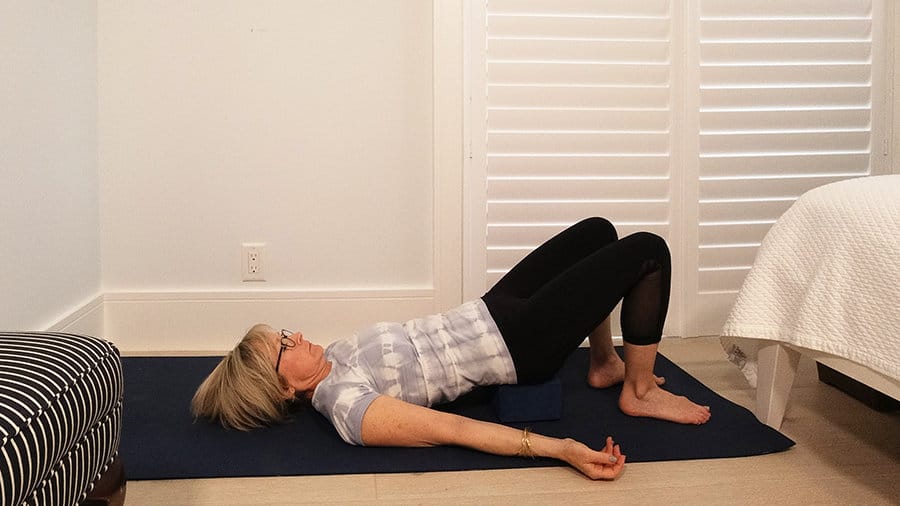
Iliacus Release

Prop
your hips up on a block, bolster, or a few firm pillows. Your feet will be
placed on the ground about hip distance apart. Your pubic bone is higher than
your hip bones and they are both higher than your waist.

Begin
to breathe slowly. Imagine that the whole front of your legs and hips are
relaxing and letting go. The muscles are just sliding down off the bolster
toward your navel. Continue to breathe as you see in your mind’s eye that your
hip flexors are relaxing into your body. Stay here as long as you like.

Everyday Movement

There
is a sweet middle road where we can strengthen and lengthen our muscles to
create more ease in our bodies. Short and tight muscles are essentially weak
muscles. Oftentimes, that weakness is related to the fact that you do not give
your muscles experience in a variety and diversity of positions on a daily
basis. 

The
movements above are a nice routine to add variety and diversity while bringing
an element of strength to your muscles. I always tell people that change needs
to be easy to fit into your routines or the chances of success are low. So,
start small.

Maybe
choose only one of the ideas here and try doing it at the same time every day.
Tack it onto something you already do every day, like making your coffee.

If you would like an online assessment or lesson, contact Sarah for a Zoom video call.

Also read, Surprisingly Effective Chair Workout for Legs and Core (VIDEO).

Let’s Have a Conversation:

What is your range of motion at the hips? Do you feel tightness that brings unease in your movements? What do you do to interrupt your sitting time? Which of the movements shared above looks like something you’d be able to start doing right away? Please share with our community.

Read More