Hair care

Latest

Why You Should Commit to the Carry-On and Tips for Making it Easy

Why You Should Commit to the Carry-On and Tips for Making it Easy

The world is divided into two different kinds of people: overpackers and underpackers. If you fall into the first category, don’t turn away yet! Give me a few minutes to try and convince you that there is a better way to travel.

As you might already suspect, I am an underpacker. My measure of a packing fail: Coming home with even one thing in my suitcase that I did not need, use or wear during my trip. I do fail sometimes, but not often anymore.

Here’s how to pack lighter – all lessons I learned the hard way.

Start with an Attitude Change

It helps that I don’t really care how I look. I don’t mean I would travel in ripped or dirty clothes. But I don’t need to be the glammed up center of attention. In fact, when you’re traveling, the more you can blend in, the better. You’re less likely to be targeted by pickpockets and local scammers.

Spend a little time researching what the locals wear and try to pack like that. This is the lesson I learned when I wore my electric blue winter coat to Romania, a former Soviet block country where there were two colors of winter coat: grey and black.

So if you simply must be a fashion plate, try to pare down the clothes to a capsule wardrobe of items you can mix and match and pieces that will do double duty.

Use a Packing List

These printable packing lists will give you a feel for the things you’ll need. If the list includes something you don’t think you’ll need, don’t pack it. If there is something missing, make a note on the printed sheet so you don’t forget it.

Check the Weather Forecast

I make this recommendation because I live in Chicago. We like to say, “If you don’t like the weather, wait 10 minutes.” Here, the calendar might say May, but the thermometer might say March. Or July.

So check the forecast for your destination. It will tell you whether to pack a raincoat, sunhat, shorts, or sweaters.

Start Packing Early

If you have a spare bed, room, couch or some other spot to hold the things you want to pack, start a week early and put everything on the bed that you think you might want on your trip.

Then walk away.

Come back the next day and look it over. Is there anything missing? Is there anything you think you might not need on the trip? Make adjustments accordingly.

Then walk away.

Come back the next day with the intention of making choices. If you have two pairs of pants on the bed, take away one pair. If you have four shirts, take away two. And so on, until you have cut in half the things on the bed.

Then walk away.

The next day, it’s time to pack. Start with the pieces of clothing you absolutely MUST have with you.

If you run out of suitcase before you run out of clothes to pack, you get to make a choice: Leave something else behind or pay $40 or more to check a bag.

Buy Packing Cubes

I resisted buying this travel essential for years. Now I can’t believe I ever traveled without them.

Packing cubes are flexible pouches with a brilliant zipper system. You pack them with the clothes you want to take, and zip them shut. Then – this is the brilliant part – you zip a second zipper to compress the insides flat. (Think of it like your expandable suitcase, when you open that second zipper, it gives you an extra inch or two of suitcase space. When you zip it shut, everything inside is compressed.)

As a bonus, the clothes you lay inside the packing cube are much more likely to stay wrinkle free. I don’t know why. But it’s true.

Stick with One Basic Color

When I head to a Caribbean resort, that color will be white. But most of the time, it’s black – black pants, a black skirt, a black dress. Then I add color in the tops I will wear with the pants and skirt. Finally, I pack a few scarves and funky costume jewelry to dress everything up or down and add more color.

Wear the Heavy Stuff on the Plane

There are plenty of TikTokers and travel hacker influencers who will tell you to wear layers and layers on the plane to save suitcase space. Or to pack a pillowcase with your stuff and pretend it’s a pillow, not a suitcase, so it doesn’t count as a carryon.

While that might be useful info for travelers on uber-budget airlines that charge for anything that doesn’t fit under your seat, you really don’t have to go that crazy. Just use a little common sense.

If, for example, you’re flying from Florida to Colorado, you know you’ll need your winter coat, hat, gloves, hiking boots and heavy jeans. Wear the jeans and hiking boots on the plane, stuff the hat and gloves in the coat pockets and carry the coat on the plane rather than packing it in a suitcase.

I do this anyway because I’m always chilly on a plane. I’m always surprised when I see someone boarding a flight in shorts and flip flops. I would be blue by the time I landed!

Think Layers, Not Bulk

Thin layers are always the right answer, no matter where you are. Even a Caribbean vacation requires preparing for chilly evenings or overly air-conditioned restaurants. Layers are the answer to staying warm and packing light.

Make the Best Use of Your Under-Seat Bag

Finally, remember that you get not one, but two things to carry onto the plane – a bag that goes into the overhead and a smaller bag that fits under the seat in front of you.

Don’t waste the space in that second bag!

My go-to is a roomy backpack because I travel with a lot of electronics – laptop, Kindle, phone, ear buds and all of the cords and accessories they require. But those only take up two zippered compartments. That leaves two more compartments for other things – makeup bag, an extra pair of shoes, etc.

The other thing that works for me is a big striped bag that is super flexible. I can cram a lot into it and still stuff it under the seat. The downside of that is it is heavy to carry, unlike my backpack which easily distributes the weight across my shoulders.

Practice, Practice, Practice

I know. This isn’t easy. Especially if you’ve always been an overpacker. But practice will make perfect. Try it on your next quick weekend trip. That will give you a chance to see how it feels to only pack what you’ll need for 2-3 days, how much you like being able to lift that light carry-on bag and how happy you are not worrying about whether your suitcase will show up at the other end of your flight.

Just remember to pack one more thing: a credit card. That way, if you find you truly can’t live without something for a few days, you can head to the store to buy it.

Let’s Have a Conversation:

Are you an overpacker or an underpacker? What’s your favorite packing hack? Share with us in the comment section below.


Uncategorised

Latest

Tamra Judge’s Burgundy Lace Asymmetric Dress

Tamra Judge’s Burgundy Lace Asymmetric Dress / Real Housewives of Orange County Instagram Fashion June 2026

The tres amigas are back again and it’s just what we want to see ahead of Season 20! Tamra Judge wore a burgundy lace asymmetric dress for the occasions and it’s flattering and fun. Satin and lace combos are everywhere this season and this pretty piece is still in stock. Which means we can fit into wardrobe and drape ourselves in a trendy dress thats also timeless when it comes to OC style.

Best In Blonde,

Amanda


Tamra Judge's Burgundy Lace Asymmetric Dress

Photo: @tamrajudge


Style Stealers

!function(d,s,id){ var e, p = /^http:/.test(d.location) ? 'http' : 'https'; if(!d.getElementById(id)) { e = d.createElement(s); e.id = id; e.src = p + '://widgets.rewardstyle.com/js/shopthepost.js'; d.body.appendChild(e); } if(typeof window.__stp === 'object') if(d.readyState === 'complete') { window.__stp.init(); } }(document, 'script', 'shopthepost-script');
Turn on your JavaScript to view content


Originally posted at: Tamra Judge’s Burgundy Lace Asymmetric Dress

Skin Care

Latest

How to Make Your Own Essential Oil Blend for Mature Skin (Recipe)

A Basic Essential Oil Blend for Everyday Mature Skin Care

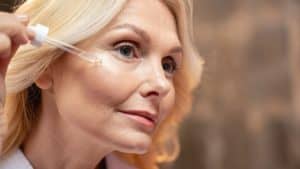
With all the wonderful natural facial serums on the market today, it can be a little overwhelming choosing the correct formula with safe, non-toxic ingredients, all at a reasonable price. The good news is that it’s easy and fun to make a quality product on your own using the miracle of nature – essential oils. 

When I started working with skincare formulas in 2003, one of the first products I was excited about making was an essential oil-based facial serum. My skin needs were changing, and a moisturizing oil made perfect sense for dry, maturing skin.

I decided to work with four wonderful healthy aging essential oils I had discovered: Lavender, Frankincense, Rose Geranium, and Carrot Seed.

The natural and highly effective nature of essential oils makes them perfect for skincare. When blended for their various properties and used with a carrier oil that matches your skin type, you can create a serum tailor-made for your skin.

What Are Essential Oils?

Essential oils are the essence of plants. Hidden away in many parts of the plant, like the flowers, seeds, and roots, they are very potent chemical compounds. They can give the plant its scent, protect it from harsh conditions, and help with pollination.

The benefits of essential oils on humans are diverse and amazing. Lavender flower oil, for example, contains compounds that help soothe skin irritation and redness, while the scent reduces feelings of anxiety and stress.

The beautiful Rose essential oil is hydrating to the skin and sometimes used to treat scarring, while the scent is known to help lift depression. 

There are many essential oils to choose from for specific skincare needs. I have used a myriad of different combinations but keep coming back to the tried and true blend from my very first serum.

The four essential oils used are the workhorses of skincare for mature skin, as well as being wonderfully uplifting for mind, body, and spirit. 

The Base Oil Blend Formula

Here’s what you’ll need:

Bottle

1 oz. amber dropper bottle. You can find those in pharmacies or online.

Base (Carrier) Oil

As a base, you can use one of the oils below or a combination of several that meet your skin’s needs:

  • Jojoba oil is my base oil of choice. It’s incredible for most skin types: it’s extremely gentle and non-irritating for sensitive skin, moisturizing for dry skin, balancing for oily skin, ideal for combination skin, and offers a barrier of protection from environmental stressors. It also helps skin glow as it delivers deep hydration.
  • Rosehip oil smooths the skin’s texture and calms redness and irritation.
  • Argan oil contains high levels of vitamin E and absorbs thoroughly into the skin leaving little oily residue.
  • Avocado oil is effective at treating age spots and sun damage, as well as helping to soothe inflammatory conditions such as blemishes and eczema.
  • Olive oil is a heavier oil and the perfect choice if your skin needs a mega-dose of hydration. Just be aware that olive oil takes longer to absorb and leaves the skin with an oily feeling. This may be desirable for extremely dry, red, itchy skin.

Essential Oils

  • Lavender essential oil is very versatile and healing. It helps reduce inflammation, kill bacteria, and clear pores. Its scent is also calming and soothing.
  • Frankincense essential oil helps to tone and strengthen mature skin in addition to fighting bacteria and balancing oil production.
  • Rose Geranium essential oil helps tighten the skin by reducing the appearance of fine lines, helps reduce inflammation and fight redness, and offers anti-bacterial benefits to help fight the occasional breakout. The scent is also known to be soothing and balancing.
  • Carrot seed oil is a fantastic essential oil for combination skin. It helps even the skin tone while reducing inflammation and increasing water retention.

The Recipe

Let’s start with a simple recipe:

  • 1 oz. Jojoba oil (or carrier oil of your choice)
  • 10 drops Lavender
  • 10 drops Frankincense
  • 10 drops Rose Geranium
  • 10 drops Carrot seed oil 

Place the essential oil drops in the amber dropper bottle then fill with Jojoba/carrier oil. It’s that simple!

Applying Your Homemade Serum

Use this serum morning and evening as part of your regular skincare routine. Serums work best when applied after cleansing your face. You can cleanse with Coconut Oil or a mixture of oils for enhanced hydration (we will cover this in the next article) or use your regular facial cleanser.

Essential oils will not interfere in any way with your normal skincare products.

Keep in mind that the serum is concentrated. Use only a pea-sized amount, work it into your fingertips, and apply evenly over the face without tugging or pulling.

If your skin feels tacky, reduce the amount on the next application. Your skin should feel soft, not oily. Follow with your regular moisturizer if you like. 

Making your own facial serum is fun and rewarding! I look forward to hearing your thoughts and ideas on essential oils and making personalized serums and skincare.

What facial serum do you use? Have you made one yourself? What is your favorite essential oil for skin care? Please share your thoughts with our community!

Tamra Judge’s Burgundy Lace Asymmetric Dress

Tamra Judge’s Burgundy Lace Asymmetric Dress / Real Housewives of Orange County Instagram Fashion June 2026

The tres amigas are back again and it’s just what we want to see ahead of Season 20! Tamra Judge wore a burgundy lace asymmetric dress for the occasions and it’s flattering and fun. Satin and lace combos are everywhere this season and this pretty piece is still in stock. Which means we can fit into wardrobe and drape ourselves in a trendy dress thats also timeless when it comes to OC style.

Best In Blonde,

Amanda


Tamra Judge's Burgundy Lace Asymmetric Dress

Photo: @tamrajudge


Style Stealers

!function(d,s,id){
var e, p = /^http:/.test(d.location) ? ‘http’ : ‘https’;
if(!d.getElementById(id)) {
e = d.createElement(s);
e.id = id;
e.src = p + ‘://widgets.rewardstyle.com/js/shopthepost.js’;
d.body.appendChild(e);
}
if(typeof window.__stp === ‘object’) if(d.readyState === ‘complete’) {
window.__stp.init();
}
}(document, ‘script’, ‘shopthepost-script’);


Turn on your JavaScript to view content


Originally posted at: Tamra Judge’s Burgundy Lace Asymmetric Dress

Read More

What Women of Ancient Times Knew About Menopause That Modern Medicine Is Just Figuring Out

What Cavewomen Knew About Menopause That Modern Medicine Is Just Figuring Out

Let me ask you something. When you think about menopause, what words come to mind?

Hot flashes. Brain fog. The end of fertility. Decline. Oh – and possibly the mysterious urge to stand in front of the open freezer at 2 a.m. and call it self-care.

Now let me ask you something else. What if every single one of those associations was wrong – or at least, wildly incomplete?

That’s the challenge Dr. Mindy Pelz throws down in her groundbreaking books and coaching practice. And once you start seeing yourself through the lens she offers – an evolutionary one – you may never look in the mirror the same way again.

The Story We’ve Been Told

For most of modern medicine’s history, menopause has been treated as a deficiency. A malfunction. Something to be managed, medicated, and endured. The cultural narrative isn’t much kinder: perimenopause and menopause mark the point where a woman becomes less relevant, less vital, less herself.

But here’s what strikes me every time I hear that story: it’s extraordinarily recent. And it’s almost entirely a Western, industrialized invention. Our great-grandmothers weren’t handed a pamphlet about the change and told to power through.

They had something far more powerful – a completely different story about who they were becoming.

What Evolution Actually Says About You

Here is a remarkable fact that rarely makes it into mainstream conversation: humans are one of the few species on Earth where females live decades beyond their reproductive years.

Chew on that for a moment. Nature is ruthlessly practical. It doesn’t keep anything around just for sentimental reasons – not even us. If post-reproductive women were simply a footnote in the human story, evolution would have written us off at the end of our fertility. Instead, it did the opposite. It went out of its way to keep us here.

Scientists call this the Grandmother Hypothesis – a theory gaining serious traction in evolutionary biology. Women who stopped reproducing and redirected that energy toward their grandchildren dramatically increased their family’s survival odds. Grandmothers who could gather food, pass down knowledge, and help raise the next generation while younger mothers had more babies? They were the secret engine of human civilization.

In other words, your post-menopausal years weren’t an afterthought. They were the whole plan. That, in itself, is incredibly amazing!

Your Body Isn’t Breaking Down – It’s Upgrading

Dr. Pelz takes this lens and brings it into the language of modern science in one of her books, Age Like a Girl. What she describes isn’t decline – it’s a deliberate biological pivot. Your hormones aren’t disappearing; they’re redistributing. Your body is moving away from a chapter defined by reproduction and into one defined by something else entirely: clarity, energy conservation, and a kind of inner sharpening that women who’ve crossed this threshold know exactly what I mean.

The hot flashes, the sleep disruptions, the mood shifts – these aren’t your body staging a dramatic protest. They are signals that something real is happening. And if we worked with it instead of white-knuckling through it, the entire experience might look completely different.

What stopped me cold when I first discovered these ideas wasn’t the science – though it is genuinely thrilling. It was the reframe. What if the discomfort of perimenopause and menopause isn’t punishment? What if it’s simply the labor pains of your next chapter?

The Cavewomen Had It Right

In traditional and indigenous cultures around the world, the older woman – the elder, the grandmother, the keeper of stories – holds a position of profound respect and authority. She is the one the community turns to when things get hard. Her years of lived experience don’t make her obsolete. They make her indispensable.

That’s not just a lovely idea. According to the Grandmother Hypothesis, it’s biology in action. Our value to the people around us was so essential that evolution literally selected for our longevity. We were built to last because we were built to matter.

Somewhere along the way, modern culture lost that memo. We traded reverence for dismissal. We took one of nature’s most intentional designs and called it a problem to be solved.

I think it’s time we reclaimed the original story.

This Is Only the Beginning

These ideas have been living rent-free in my head ever since I first discovered them – and they’ve quietly reshaped how I talk about my age, understand my body, and imagine what’s still ahead.

In my business, I’m on my own journey of growth – and I’m soon completing my certification as a coach for women navigating exactly this chapter. The science Dr. Pelz shares and teaches is one of the most powerful tools I’ve found for that work – because once you understand what your body was actually designed to do, everything changes.

In the next article in this series, we’ll go deeper into what’s actually happening inside your body before, during and after menopause – and how working with your biology, rather than battling it, can transform your energy, your clarity, and your sense of self. I can’t wait to share all of this and more with you!

For now, take this one idea with you: you were not designed to disappear. You were designed to matter more.

Over to You

Has the story you’ve told yourself about menopause ever held you back from fully stepping into this season? And when you imagine yourself as the wise, essential woman you were meant to be all along – what comes up for you? I’d love to keep this conversation going in the comments below.

Read More

Is Being Sexual After 60 Just About the Sex?

Is Being Sexual After 60 Just About the Sex

When was the last time you felt confident with your sexuality?

If you are like many of us who are over 60, the question can leave you scratching your head, wondering how far back in the rearview mirror of the past you have to look to locate the last time you felt confident with your sexuality.

There are many limiting beliefs and outdated stories about sexuality that can make you feel your inner flame is all but gone as you age.

But what if you could radically improve your lifestyle by boosting your sexual confidence and embracing your sexuality after 60?

This article and the accompanying video begin a new, 10-part exclusive series for Sixty and Me readers titled “Improve Your Lifestyle After 60 by Boosting Your Sexual Confidence.”

Limiting Beliefs and False Stories

Feeling confident about your sexuality is not just a matter of sexual pleasure with yourself or a partner.

What often gets in the way of cultivating your sexual confidence comes down to false myths, outdated stories, and limiting beliefs.

Therefore, feeling sexy at this stage of life is a mindset issue.

To develop a healthy and confident mindset will require you to first get clear on the limiting beliefs that frame the stories you tell yourself about sex and intimacy. When you identify what is holding you back, the easier it will be for you to shift into a more empowered state of mind.

To get started, I want to share with you five of the more common limiting beliefs about love and sexuality that women and men over 60 have. I will also reveal the corresponding false story linked to the limiting belief.

1) Limiting Belief: “Sexuality fades with age.”

Outdated Story: “I’m past my prime, so my sex life will never be as good as it was when I was younger.”

2) Limiting Belief: “My body is no longer attractive or desirable.”

Outdated Story: “Only youthful bodies are sexy. My wrinkles, weight, or changes make me unworthy of intimacy.”

3) Limiting Belief: “If I don’t have a partner, there’s no point in embracing my sexuality.”

Outdated Story: “Sexuality is only for people in relationships. Self-pleasure or personal sensuality is unfulfilling.”

4) Limiting Belief: “Talking about my needs and desires is embarrassing.”

Outdated Story: “Expressing what I want is selfish or shameful.”

5) Limiting Belief: “It’s too late for me to experience passion and romance.”

Outdated Story: “Real love and pleasure happen when you’re younger. At my age, it’s about companionship, not passion.”

Installing New Beliefs and New Stories

Even if some of these limiting beliefs and stories are not directly related to you, being aware of them can still help reframe your perspectives and further integrate new narratives about your sexuality into your mindset and lifestyle.

Here are five new, empowering beliefs and corresponding stories that can replace limiting beliefs or false stories that no longer serve you.

Also read: 7 Steps to Turn Up the HEAT on Your Love Life

New Belief #1: “My Sexuality Is Timeless. I Have the Power to Cultivate Passion at Any Age.”

New Story: “Passion is not limited by age for it evolves and deepens with experience. My desires and pleasures are uniquely mine to explore. I embrace them with curiosity and joy. Every stage of life offers new ways to experience intimacy. I welcome the unfolding of my sensuality with an open mind and heart.”

2) New Belief: “My Body Is an Evolving Masterpiece. I Embrace My Sensuality with Confidence and Love.”

New Story: “My body tells the story of my journey. It is strong, wise, and worthy of love and pleasure. I celebrate its curves, changes, and unique beauty. Instead of seeking perfection, I choose to honor and appreciate my body for all the ways it allows me to experience life, love, and intimacy.”

3) New Belief: “Sexual Pleasure and Self-Discovery Are My Birthright, Regardless of Relationship Status.”

New Story: “I do not need permission or validation from anyone to embrace my sensual self. My pleasure is for me first. Whether I am single, in a relationship, or rediscovering intimacy, I have full ownership of my sexuality. I give myself permission to explore what brings me joy and fulfillment.”

4) New Belief: “I Deserve to Express My Desires Openly, Knowing That My Voice Matters.”

New Story: “Speaking my truth about what I desire is a gift to myself and those I share intimacy with. I am a confident communicator, knowing that my needs, boundaries, and pleasures are valid. Love and intimacy flourish when I allow myself to be fully seen, heard, and understood.”

5) New Belief: “Love, Intimacy, and Passion Are Always Available to Me, and I Welcome Them with an Open Heart.”

New Story: “My heart is open to love in all its beautiful forms, from self-love and romantic love, to deep friendships, and sensual connections. I do not chase love; I attract it by being fully present, embracing who I am, and allowing connection to unfold naturally.”

Next Steps:

Now that you have clear examples of what kind of new beliefs and stories you can apply in your life, in our next article and video, you will learn how you can turn yourself on and enjoy pleasuring the most beautiful, sensual person in your life – which is YOU!

I invite you to join me in the video, where I will guide you through a five-part, step-by-step process for reinforcing your new beliefs and stories. I will also guide you through three journal prompts to help you integrate what you are learning.

Let’s Have a Conversation:

Is sensuality part of your mindset? Do you live in a way that embraces your sensuality? What limiting beliefs have worked in your life?

Read More

The Freedom of Finally Being Yourself When Everyone Else Is Telling You Who to Be

The Freedom of Finally Being Yourself When Everyone Else Is Telling You Who to Be

Somewhere along the way, I realized I had spent much of my life listening to everyone except myself.

Parents. Teachers. Friends. Husbands. Society.

Everyone seemed to have an opinion about how life should be lived and how I should fit in.

What surprised me was not that I listened. That was expected. It was that I listened for so long.

Like many women of my generation, I grew up believing that being a good person meant keeping the peace, meeting expectations, and avoiding disappointment.

We learned to be agreeable. Responsible. Thoughtful of others. To smile and be happy, no matter how we felt inside.

Those are not bad qualities.

But somewhere along the way, many of us also learned to ignore ourselves.

We stopped listening to that quiet inner voice that knew when something did not feel right. The voice that whispered that a choice was not really ours, that it wasn’t who we truly were. The voice that wondered whether we were living from our hearts or from everyone else’s expectations.

The First Time I Chose My Own Path

I remember learning that lesson early.

In high school, I loved art and design and dreamed of becoming an engineer. My school offered mechanical drafting classes, but girls were not allowed to take them. I was told those classes were reserved for boys because they would be the ones expected to earn a living someday.

Instead, I was steered toward home economics, which I disliked from the very first day.

But something inside me refused to accept that answer.

I complained to counselors, the principal, and anyone else who would listen. Eventually, the issue made its way to the school board. The following year, the rules changed, and I became the first girl allowed to take drafting.

I loved it. I excelled at it.

Years later, when I entered engineering classes in college, I was often the only woman in the room.

Sadly, I understood why.

For a long time, I thought that experience was about drafting. Looking back, I think it was really about learning how easy it is to lose yourself when everyone around you is telling you who you are supposed to be.

For years, I did exactly that.

The Freedom That Arrives with Age

And then, somewhere in my 60s, something began to change.

I started to realize that every bit of energy I spent worrying about what other people thought was energy I could have spent creating a life that felt authentic to me.

At this stage of life, I have learned that energy is far too precious to waste.

In finding that freedom, I no longer feel the need to explain every decision about my life, my work, my finances, or how I spend my days.

I do not need everyone to understand my choices. I only need to understand them.

I do not need approval for the things that bring me joy. I only need to know that they genuinely bring joy to me.

That does not mean I have become selfish. It does not mean I have stopped caring about others. In fact, life feels more precious these days, and caring runs deeper.

It simply means I have learned there is a difference between true kindness and self-abandonment.

One comes from generosity.

The other from fear.

As the years have passed and life has slowed, I have realized that most people are thinking far less about me than I once imagined. They are busy worrying about their own lives, their own problems, and yes, what other people think of them.

There is something wonderfully freeing about that realization.

Learning to Trust Myself

These days when I am making a decision, I find myself asking a very different question.

No longer, “What will people think?”

But simply, “Does this feel right to me? How does it feel in my gut? What is my own heart telling me?”

These days, a quiet afternoon with Buddy and Leo feels more meaningful to me than trying to impress anyone.

That question has guided many of my choices in recent years. Instead of building my business around what I thought I should be doing, I have found myself rebuilding Dancing Dingo around what feels meaningful to me. I have chosen a quieter life, one with less striving and more purpose. Some opportunities I have said yes to. Others I have quietly declined because they no longer felt like mine.

For perhaps the first time in my life, I have become more interested in following my own instincts than in meeting someone else’s expectations.

That small shift has changed me more than I ever expected.

Life feels quieter. Simpler. More honest. More spiritual. More genuinely me.

Oddly enough, it has also made me more giving, more compassionate, more expressive, and less inhibited. When you stop spending so much energy trying to be who others expect you to be, you have more energy left to simply be yourself.

And perhaps that is one of the greatest and most unexpected gifts of growing older.

We begin to understand that we have earned the right to be ourselves – unapologetic, whole, and infinitely more joyful.

After all, if we are lucky, we spend decades learning who we are. It seems a shame to spend the rest of our lives asking permission to be that person.

What Do You Think:

Have you found it easier to be yourself as you’ve grown older? What is one decision you’ve made recently because it felt right to you, regardless of what others might think?

Read More

Want Strong, Toned Arms This Summer? Start Here (VIDEO)

Want Strong, Toned Arms This Summer Start Here

Summer is coming. And if you’ve been thinking about finally doing something about your arms – you’re not alone.

But before you grab a pair of weights, there’s something I want to highlight because it’s the reason so many women work hard, feel frustrated, and wonder why their arms still aren’t responding the way they’d like.

The secret isn’t heavier weights. It’s what you do before you pick them up.

Before You Tone, You Realign

I’ve been teaching movement to women 50+ for 10 years. And the pattern I see almost every time is this: we rush to get strong before we’ve addressed the compensation patterns we’ve spent decades building.

Years of desk work, carrying bags on one shoulder, old injuries we’ve long forgotten – by the time we’re ready to “get toned,” most of us aren’t actually moving from a neutral, aligned place. One shoulder sits higher than the other. We grip through our neck without realising. We favour one side so consistently it just feels normal.

When you add weights on top of that? You’re building on a crooked foundation. And that’s where the frustration lives.

The good news? It’s completely fixable.

Try This First

I put together a summer arm routine on YouTube that follows exactly this formula – release and realign first, then strengthen. It’s designed specifically for women who want to build strength and support through the shoulders and upper body.

Why Slowing Down Is the Real Secret

Here’s something a new student said to me recently that I often think about.

She noticed that slowing the movement down made her feel her muscles activate in a way she never had before. That rushing through reps meant she wasn’t getting the muscles to activate properly – but moving slowly meant she felt everything.

That’s your brain and body having a real conversation. And for toned, functional arms that actually work for you all summer – that conversation is everything.

Light weights. Slow and intentional movement. Realigned foundation. That’s the formula.

What You’ll Notice

Once you start moving from a more neutral place, something shifts. Muscles that were quiet start to wake up. The work gets easier to feel and harder to cheat. And the results – the kind that show up when you’re reaching overhead, carrying groceries, or just moving through your day – start to follow.

Give the routine a try, subscribe to my YouTube channel so you never miss a new video, and drop a comment below.

About You:

What does “feeling strong” mean to you? Have you noticed a difference in your upper body strength? What is your favourite exercise to build upper body strength?

Read More

What Happens When One Spouse Handles All the Finances?

What Happens When One Spouse Handles All the Finances

When financial knowledge rests with one spouse, the surviving partner faces a devastating learning curve at the worst possible time.

My friend Carol was 68 when her husband Jim died of a sudden heart attack. Jim had paid every bill, managed every investment, and met with their financial advisor solo for decades. Within a week, Carol realized she didn’t even know their advisor’s name. She couldn’t get into their online accounts. Automatic payments started bouncing because the checking account got frozen. It took three months of pure chaos before Carol figured out they actually had more savings than she thought. But those three months nearly broke her.

Carol’s story isn’t some rare worst-case scenario. It’s shockingly common.

A 2024 Thrivent survey of widowed women found that 41% had done zero financial planning before their spouse passed. And 60% said the loss was unexpected. They weren’t bracing for impact. They were completely blindsided.

If you’re a couple approaching retirement, or already there, this is the conversation you need to have now. Not because something bad is definitely going to happen. But because retirement planning for couples only works when both of you actually understand the full picture.

The Silent Default Most Couples Never Question

In most marriages, one person handles the money and the other just… lets them.

A 2024 Fidelity Couples & Money Study of nearly 3,600 people found that only 55% of couples make retirement and investment decisions together. UBS research paints an even more lopsided picture: 58% of women worldwide defer long-term financial decisions to their spouses entirely. Women tend to manage the groceries, the utilities, the day-to-day budget. Men tend to manage the portfolio, the retirement accounts, the tax strategy.

And this arrangement usually isn’t something anyone sat down and decided. It just happens. One spouse is more interested, more comfortable with numbers, or simply started handling things early on and never stopped. The other person doesn’t object because the system works. Bills get paid. Savings grow. Why mess with something that isn’t broken?

Building that shared confidence starts with both spouses understanding what your retirement actually looks like with real numbers. Tools like ReadyAimRetire can help couples model different scenarios together, so both partners can see how various decisions affect your long-term security.

It’s Not Just About Death

Most articles on this topic jump straight to widowhood. And yes, losing a spouse who handles the finances is devastating. But it’s not the only scenario that should keep you up at night.

Think about what happens when the financial spouse develops cognitive decline.

Research published in a peer-reviewed clinical study found that 95% of cognitively healthy older adults can manage their finances just fine. With mild cognitive impairment, that number drops to 82%. With mild Alzheimer’s disease, it falls to just 26%.

Robert, 72, had always managed his and Linda’s retirement portfolio. When early memory loss started creeping in, Linda noticed odd charges and a missed property tax payment. Robert insisted everything was fine. By the time Linda finally stepped in, Robert had made several poor investment decisions and fallen for a phone scam. If they’d built a system where Linda reviewed accounts quarterly, the damage would have been caught months earlier.

This is why financial preparedness in retirement isn’t just about preparing for loss. It’s about preparing for change. Health crises, strokes, injuries, cognitive decline. Any of these can take the financial decision-maker out of the equation while they’re still alive. And in many ways, that situation is actually harder to navigate than a death, because the legal and emotional terrain is far more complicated.

The Widow’s Penalty: A Tax Trap Nobody Warns You About

When a spouse dies, the financial hit goes way beyond losing a partner. The tax code delivers a second blow that catches most surviving spouses completely off guard.

Let me walk you through a real example. Margaret’s husband passed, their combined Social Security was $4,200 per month. Under survivor benefit rules, Margaret kept only the larger of the two checks: $2,800. The smaller check ($1,400 per month) simply disappeared. Overnight, her Social Security income dropped by a third.

But it got worse.

As a married couple filing jointly, their IRA withdrawals and Social Security income kept them comfortably in the 12% federal tax bracket. The moment Margaret became a single filer, those same income sources pushed her into the 22% bracket. Her income dropped, but her tax rate nearly doubled.

Margaret isn’t an outlier. For a surviving spouse with a $1.4 million portfolio, the bracket compression alone can mean roughly $4,000 in additional federal taxes per year. That adds up to tens of thousands over a typical survival period. And Medicare premium surcharges make it even worse. The income threshold for surcharges drops from $218,000 (joint) to $109,000 (single) in 2026.

This is the “widow’s penalty,” and proactive planning (including strategic Roth conversions while both spouses are alive) can significantly soften the blow. You can model how different tax strategies affect both joint and survivor scenarios using ReadyAimRetire to see the actual dollar impact of these decisions. But only if both spouses understand it exists in the first place.

Why This Hits Women Hardest

The financial gap between men and women in retirement is real. And it compounds every other risk we’ve talked about so far.

Infographic showing women's retirement challenges with statistics on longevity, savings gaps, and income disparities

Women and retirement planning face unique challenges that make financial preparedness even more critical. Women live roughly five years longer than men on average. That means they’re more likely to be the surviving spouse and will need their money to last longer. Yet women have approximately 30% less saved for retirement than men. About half of women ages 55 to 66 have no personal retirement savings at all, according to U.S. Census Bureau data.

The result: nearly half of retired women receive 50% or more of their income from Social Security alone. Only about one in eight women feel “very confident” about retiring comfortably, compared to roughly one in five men. Understanding when to claim Social Security benefits becomes especially crucial for women who may be relying heavily on these payments.

And the painful irony is this. UBS found that 76% of widows and divorcees wish they had been more involved in financial decisions during their marriage. 74% discovered negative financial surprises after their spouse died or left. By then, the window for easy course correction had closed. The Widow’s Financial Survival Guide covers many of these challenges in detail.

Retirement security for women isn’t some separate topic from retirement planning for couples. It’s the same topic, just viewed from the perspective of who bears the most risk.

What Both of You Need to Know (Starting Today)

OK, so here’s the encouraging part. When women participate equally in financial decisions, 91% report reduced stress, 94% feel more confident about their future, and 93% of couples believe they make fewer mistakes together. These aren’t theoretical benefits. They’re measurable.

Both of you should be able to answer the following questions, regardless of who currently manages the money:

Where Is Everything?

Every account, every institution, every login. Checking and savings, IRAs, 401(k)s, pensions, brokerage accounts, annuities, insurance policies, Social Security statements. If you can’t list them from memory, that’s your first project this weekend. And make sure both spouses are authorized on all accounts. Remember Carol’s frozen checking account from earlier? One phone call years before could have prevented that whole nightmare.

How Much Retirement Income Do We Have, and Where Does It Come from?

Understand the difference between Social Security, pension payments, required minimum distributions, and investment withdrawals. Know which income streams continue if one spouse dies and which ones stop cold. How to increase your retirement income explores various strategies for maximizing these income sources.

What Happens to Social Security If One of Us Passes?

The survivor keeps only the larger of the two benefits. If the higher earner delayed claiming to age 70, that locked-in maximum becomes the survivor benefit. If both spouses claimed early, the survivor benefit may be smaller than you’re expecting.

What Are Our Options for Inherited Retirement Accounts?

Under SECURE 2.0, surviving spouses who inherit an IRA now have a potentially valuable election. They can use the more favorable Uniform Lifetime Table for required minimum distributions, which can reduce annual tax bills. This is absolutely worth discussing with your financial advisor while both spouses are alive.

Who Is Our Financial Advisor, and Do They Know Both of Us?

Here’s a telling number: 70 to 80% of widows leave their financial advisor within the first year after their spouse passes. The main reason? The advisor built a relationship with the husband, not the wife. If your advisor doesn’t know both of you by name, that’s a problem you can fix with one meeting.

Where Are the Important Documents?

Will, power of attorney, healthcare directive, beneficiary designations, insurance policies, tax returns. A shared financial binder (physical or digital) that both spouses can access is one of the simplest and most impactful steps you can take. Seriously, you can set one up in an afternoon.

Start a Quarterly Money Date

Try scheduling a quarterly money date. Thirty minutes, four times a year. That’s it. Here’s a sample agenda:

Hand-drawn flowchart showing the 5-step quarterly money date process with watercolor accents

A simple 30-minute quarterly routine that can prevent years of financial chaos.

David and his wife Susan, both 63, have been doing these quarterly check-ins for years. David manages the day-to-day investments, but Susan reviews statements and knows every account login. When David had knee surgery and was out of commission for six weeks, Susan handled everything without a single hiccup. No panic. No scrambling. No calling the bank in tears trying to prove she was authorized on the account.

That’s the goal. Not turning both spouses into financial experts. Just making sure neither spouse is locked out of their own financial life.

The Conversation Nobody Wants to Have (But Everyone Needs To)

If you’ve made it this far, you probably fall into one of two categories.

You’re the spouse who handles the finances, and you’re starting to realize your partner would be lost without you. Or you’re the spouse who hasn’t been involved, and you’re feeling a mix of anxiety and maybe some guilt about that.

Both of those reactions are totally normal. And both are completely fixable.

If you’re the financial spouse, this isn’t about giving up control. It’s about building redundancy into a system that currently depends entirely on you. Start small. Walk your partner through one account this week. Show them how to log in, where the statements are, what the balance means. Next month, do another one.

If you’re the spouse who has stepped back from the finances, I want you to know something. You don’t need to become a financial expert overnight. You need to become informed enough to ask the right questions and find the right help. Research from T. Rowe Price suggests that confidence is actually a stronger driver of savings behavior than raw financial knowledge. And confidence comes from familiarity. Familiarity comes from showing up.

The conversation doesn’t have to start with ‘What happens when you die?’ It can start with ‘I’d like to understand our finances better. Can we look at things together this weekend?’

One weekend. One conversation. That’s all it takes to start closing the gap between vulnerability and financial confidence in retirement.

The couples who thrive in retirement aren’t the ones with the most money. They’re the ones where both partners know the plan. Start building that shared understanding by running your own numbers together at ReadyAimRetire.com and seeing how your specific situation looks under different scenarios.

Thanks for reading!

Let’s Have a Conversation:

How well informed do you feel about your finances? Have you sat down with your spouse to discuss retirement savings, accounts and everything else?

Read More

Loading