
Month: February 2020

60 Things Women LOVE About Being 60+ Years Old

60 Things Women LOVE About Being 60+ Years Old

Turning 60 isn’t exactly something that most women look forward to. Personally, I was 59-years-old for 3-years before finally admitting to the world (and myself) that I had reached this milestone.

But, looking back, I realize that turning 60 is something to be celebrated. So, today, I want to share 60 things that the women in our community love about being in their 60s. And, I hope that you will also join the conversation.

Let’s age beautifully, inside and out! Check out our own “Aging Beautifully” affirmation cards. They will inspire you to live your life to the fullest and enable you to find joy and passion in the decades ahead.

What do you love about being 60+? What do you think most people get wrong about life after 60? Let’s have a chat!

Read More

Be Your Own Music Therapist: Create a Personal Power Playlist

music therapy older woman

About 10 years ago, I found myself in an extremely stressful work situation that I hoped would improve, and I tried to keep a positive attitude. The highlight of my day was my morning subway ride, as I people-watched and listened to music.

Each morning I searched my phone for those special songs that I knew would encourage me and energize me, making it easier to walk into the office and face the day.

One day, I put all those songs together and created my Personal Power Playlist. Though I’m no longer in a work situation that compromises my mental and physical health on a daily basis, I still rely on my PPP.

I add new songs now and then and delete those that no longer speak to me in the same way. But there’s a core group of songs that remain – my “go to” songs that I never get tired of – some of which have been inspiring me for over a half-century.

Music Was a Constant Companion for the 60+ Generation

Our generation grew up immersed in music in ways that previous generations didn’t. Inexpensive transistor radios, the first in a long line of personal listening devices, were newly available, and many of us made music a constant companion.

The pop music renaissance of the 1960s, so intertwined with the cultural changes of that decade, coincided with our own years of change and critical development.

For many of us, music was more than a constant companion – it helped us through adolescence and young adulthood, and it helped us understand the world. Some of it seemed to offer wisdom unavailable anywhere else.

We all had “favorite songs” – unique combinations of melody, rhythm, beat, and words that, for some reason, spoke to our young selves. Maybe a particular song cheered us up or distracted us from normal teenage angst.

Some were high-energy and fun to dance to. Cheerful love songs and sad breakup ballads invited us to reflect on the mysterious world of love and romance. Some songs were perfect for driving or singing in the shower.

Years later, busy with work and family, music faded into the background – though I did passively explore new music through my kids’ bedroom doors. I didn’t realize at the time that music was no longer a big part of my life; there was too much else going on.

Harnessing the Power of Music

After 21 years, I made the difficult decision to end my marriage. And while I wasn’t aware of the absence of music, I was acutely aware of the absence of harmony, and had given up hope for its return.

After my divorce and the challenging reinvention that followed, music sustained me. Favorite songs I hadn’t heard for decades brought me to tears; others brought a smile to my face or energy to my stride.

Hearing old favorites that didn’t quite stand the test of time seemed to put me in touch with my much younger self, and I heard it through her ears. Two reinventions later, it continues to sustain me.

Every human culture, going back at least 250,000 years, has created music of some kind, and its profound emotional impact has long fascinated psychologists, philosophers, and anthropologists.

A recent review in the World Journal of Psychiatry concluded that music can reduce depression and anxiety and improve self-esteem and quality of life.

Research on music as a “health technology” found that music can be used to manage pain associated with some forms of chronic illness. And there are no co-pays or side effects!

The Power of the Personal Power Playlist (PPP)

My current PPP has 27 songs and lasts an hour and 44 minutes. It contains a range of artists, including Joni Mitchell, Patti Smith, Madonna, Tom Petty, Bob Dylan, Carole King, Pretenders, Donovan, and the Beatles (lots of Beatles).

Listening to those 27 songs in shuffle mode, the familiar songs repeat and somehow transcend familiar. It’s as if they morph into my own affirming sonic landscape; a place to get centered and restored.

The songs are filled with wisdom that has served me well, compiling 104 minutes of encouragement, affirmation, and positive perspective. Listening on shuffle while going for a walk, making dinner, or riding the subway lights up my brain and reminds me of what matters.

I know many people in their 60s who say they don’t listen to music as often as they used to. For some, vinyl, CDs, and bulky stereo equipment were shed with moves and downsizing.

And while many of us are streaming music, boomers have been slower to embrace streaming services such as Spotify and Apple Music. Streaming services make it easy to explore artists and genres, create and share playlists. And you can be your own music therapist.

New technologies have changed how we access and listen to music, and the change is sometimes disorienting. But the emotional impact of music we love hasn’t changed and may enhance our feelings of wellbeing in surprising ways.

Is music as important to you in the present day as it was when you were younger? Do you still love the music you grew up with? Do you find that music affects your mood and motivation? Would you make a Personal Power Playlist? Please join the conversation!

Read More

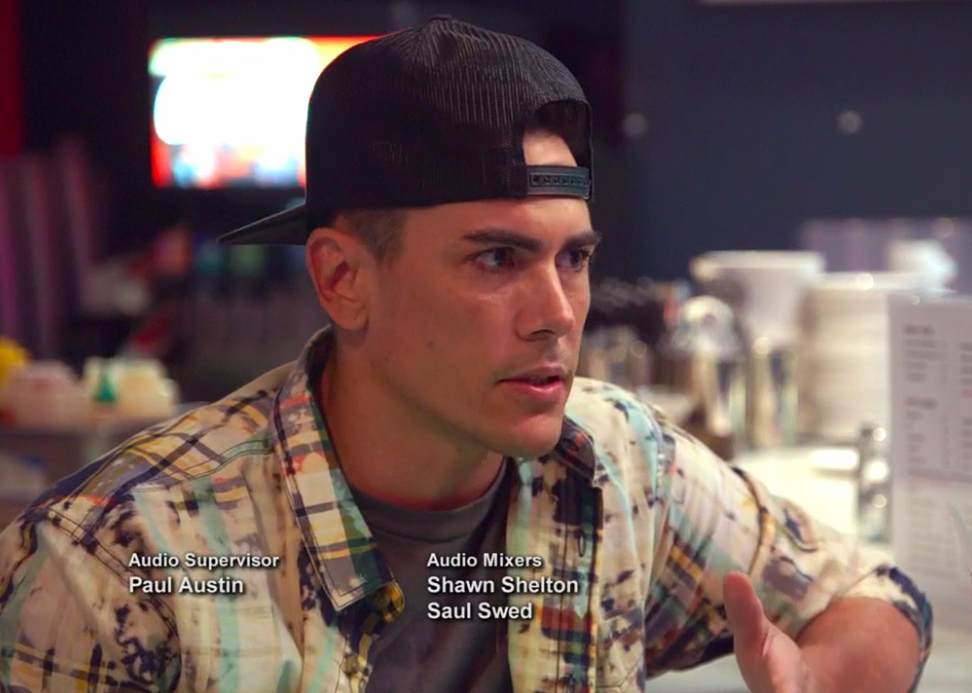
Tom Sandoval’s Plaid Tie Dye Shirt

Tom Sandoval’s Plaid Tie Dye Shirt

Vanderpump Rules Season 8 Episode 7 Fashion

We’ve had an increasing amount of request for men’s clothing, and since my husband never likes what I pick out for him, I’ve decided to steal his Instagram handle and start @BigBlondeHusband, dedicated to men’s Reality TV fashion. That way when we find good pieces we can put them up there to share with the world.

Our first post will be dedicated to Bravo’s most stylish man, Tom Sandoval and his plaid tie dye shirt on tonight’s Vanderpump Rules.  And although it’s sold out, I still think it’s totally tie-dye for

The Realest Housewife,

Big Blonde Hair

Tom Sandoval's Plaid Tie Dye Shirt

Zara Plaid Tie Dye Shirt Sold Out


Originally posted at: Tom Sandoval’s Plaid Tie Dye Shirt

Read More

Ariana Madix’s Black Crochet Lace Top

Ariana Madix’s Black Crochet Lace Top

Vanderpump Rules Season 8 Episode 7 Fashion

Ariana Madix’s black crochet lace top talking to Dayna Kathan is a super cute take on classic lace that we always love. Ariana always brings it in the fashion department, and this look is no exception.

This scene was a super cute moment between the two blondes that have both come out as bi-sexual. Ariana is having a tough seasons so it’s great to see her back behind the bar bonding with someone who understands something about her that some of her cast mates don’t seem to (Cough, cough Jax Taylor). And we’re also quite happy to bond with her over love for this top.

The Realest Housewife,

Big Blonde Hair

Ariana Madix's Black Crochet Lace Top

Click Here to See her Pink0 Blouse

Originally posted at: Ariana Madix’s Black Crochet Lace Top

Read More

How to Write Condolence Notes: 8 Tips That Might Come in Handy

Writing-Condolence-Notes-Tips

I recently poured out my heart to a colleague about my guilt at two condolence notes left unwritten. One note was intended for a colleague whose sister had died, though I’d heard about the death long after the funeral had taken place.

The sisters had shared a close bond that I hoped to capture in writing. Choosing a plain condolence card onto which I would add my own personal sentiments, I sat down to write.

Days became weeks, and the card remained blank as I battled with indecision about what to say. In a sad turn of events, the surviving sister died suddenly, leaving me with great guilt for not having reached out in writing to let her know that I cared.

That same year, another colleague lost his wife to cancer. This time I attended the funeral service but felt a personal expression of sympathy was in order. For several hours, I painstakingly wrote and rewrote that note only to set it aside in frustration.

After all, what comforting words could there possibly be to express my sentiments about this beautiful woman taken too soon from this life? I tried again on the first anniversary of her death, and still the words would not come.

I had missed two opportunities to express my sorrow. Later, I saw my colleague and realized that he would never know how much he had been in my thoughts.

It would seem that the combination of my careers – funeral director and writer – would endow me with an effortless ability to write such notes. After all, I reasoned, funeral directors are around death all the time and should know just how to console others.

Well, despite my stock and trade, I struggle. And, I am not alone.

So, what is it about condolence notes that makes them so difficult to write? Do we fear offending in some way? Are we afraid of saying too much, or too little? Do we worry that they are not personal enough, or too personal? Do we fear falling short?

A Little History

The word “condolence” has been in the vernacular since the 1600s when it was defined as “sympathetic grief” and “sorrowing with another.” But such letters go back much further. There is archaeological evidence that the ancient Greeks wrote such letters, mostly after the death of a child.

The Victorians elevated condolence letters to an art form, writing in an elegant cursive script on high-quality mourning stationery rimmed in black. According to the book Death in the Victorian Family, “Victorian condolence letter writers offered affection and sympathy in abundance.”

In more recent times, writer Edith Wharton wrote a six-page letter to President Theodore Roosevelt upon hearing of the death of his son Quentin during WWI.

She included the important components of a condolence note, expressions of sympathy and comfort, along with a personal recollection: “We had a delightful long talk after lunch, which gave me such a sense of his vitality, his understanding, his happy face.”

While Wharton’s letter to Pres. Roosevelt flowed fluently, that is often not the case for the average letter writer, especially in this day and age of short texts and tweets. Still, there are some guidelines we can all follow.

8 Tips to Writing Condolence Notes

  • Social media expressions of sympathy aren’t enough. Nothing takes the place of a handwritten note.
  • Steer clear of clichés and platitudes. Telling a mourner that their loved one is in a better place may be met with “Where, the ground?” by the less spiritual.
  • Well-intentioned as it may be, resist the urge to reassure the bereaved that time will lessen their grief, and they will find closure. There often isn’t any closure.
  • It’s okay to admit when words fail. In fact, there are some deaths so tragic that there are no adequate words of consolation. A simple, “There are no words for this,” is honest and direct.
  • Share a personal recollection, perhaps something the mourners did not know about the deceased. These reminiscences serve to remind family and friends that their loved one touched many lives.
  • Quote from the great writers and poets like Shakespeare, Kahlil Gibran, Henry Wadsworth Longfellow, and Emily Dickinson, who wrote, “Unable are the loved to die. For love is immortality.”
  • Offer something tangible. Reassure the mourners you are “there for them” – whether to lend an ear, run an errand, or spend some time together.
  • Resist the impulse to try to compose the perfect note of sympathy. As philosopher Voltaire said, “The perfect is the enemy of the good.”

So, there you have it. It isn’t always easy to write condolence notes, but doing so will bring you peace, and may be a ray of sunshine for those who read them.

What is it about condolence notes that makes them so difficult to write? Do you fear you might offend? Or do you worry they’re not personal enough? Please use the comment box below to share your experience and thoughts.

Read More