Month: June 2020

Organic Aloe Vera to Soothe & Heal Irritated Skin

Aloe vera has long been touted as an after-sun skin healer for burns and irritation after skimping on the SPF during a long day in the sun. However, aloe vera has a slew of other uses too. From calming redness from irritation to delivering a surge of moisture without relying on heavy oils and other humectants, this, multi-use skin healer is definitely the underrated ingredient missing from your current lineup. Aside from healing painful sunburns and rashes, this secret beauty ingredient functions as an all-natural anti-inflammatory, chock full of skin-loving antioxidants that lifts redness an discoloration, offers non-greasy moisture and refines pores, just to name a few key benefits.

Aside from its vast range of skin-enhancing benefits, aloe vera is also amazing for hair as well. Aloe vera-infused products are especially great for natural hair types, thanks to the plant’s plethora of polyphenols, which block bacterial growth and help strands retain moisture. Whether you use it on your skin, scalp, or strands, aloe vera is one of the best ingredients that offers endless beauty benefits. Ahead, we’ve selected a few of our favorite formulas to try out for yourself.

Our mission at STYLECASTER is to bring style to the people, and we only feature products we think you’ll love as much as we do. Please note that if you purchase something by clicking on a link within this story, we may receive a small commission of the sale and the retailer may receive certain auditable data for accounting purposes.

Read More
Non-Irritating Eyelash Glues For Beginners

Whether faux eyelashes are a part of your everyday makeup routine or you reach for them only on a special occasion or photo opportunities, you probably already know that while the quality, fit, and style of the lashes are undoubtedly super important when it comes to getting the look right —and without the hassle, of course—the glue that you select to apply them with is actually equally as key.

I mean, no one wants to have their falsies peeling off on them in the middle of a fancy work event or during photos at your cousin’s wedding right?
Aside from their ability to hold your lashes intact for an extended period, the wrong lash glue can also be super irritating to your eyes, leaving them red and watery. If you’re a newbie to the at times, daunting world of fake eyelashes, you really do want to do your research when it comes to choosing your adhesive of choice. There are endless options and formulas on the market, and if you’re having trouble trying to figure where to event start the search, we’ve rounded up a few long-wearing and foolproof options to get you started.

Our mission at STYLECASTER is to bring style to the people, and we only feature products we think you’ll love as much as we do. Please note that if you purchase something by clicking on a link within this story, we may receive a small commission of the sale and the retailer may receive certain auditable data for accounting purposes.

Read More
Can Castor Oil Really Help Your Lashes & Brows Grow?

Hair loss is a well-known and wide-spread issue. Thinning hair can be caused by a vast array of different things, from genetics to stress to diet and prescription medications. However, while we typically think of the hair on our head when it comes to this concern, our lashes and eyebrows can also be impacted by the same reason the hair on heads begins to thin. Castor oil has been generating buzz lately, touted for its apparent ability to help promote accelerate eyebrow and eyelash re-growth. Unlike Biotin and other B-vitamins, there isn’t a ton of clinically backed research vetting the alleged connection between castor oil and accelerated hair regrowth. On the other hand, the anecdotal research is pretty compelling, with plenty of before-and-after pics scattered throughout the web.

While the academic research and clinical trials examining the oil’s ability to promote hair re-growth may be scant, that doesn’t mean the connection is to be completely discredited. In fact, castor oil does have natural anti-bacterial and anti-fungal proprieties, which can thoroughly cleanse and remove dead skin and product buildup from the scalp. When the hair follicles on the scalp are clogged, this inhibits normal hair growth. Just like congested pores on your face, congested follicles on your scalp are simply no good. And, according to some castor oil manufacturers, it functions as an effective growth accelerant because it’s penetrated easily, delivering a saturated dose of Vitamin E, triglyceride fatty acids, and bond-building proteins. In short, while more research needs to be conducted for castor to earn  the FDA’s seal of approval, if you’re like us, the vast amount of “true stories” documenting its benefits are enough to convince us to try it out for ourselves.

After experiencing a month or two of non-stop stress and lack of sleep, I woke up one morning and as I looked in the mirror, I realized that my brows were noticeably thinner than a week or two ago. Of course, given my non-stop schedule that had taken over my life during the past weeks, it makes sense that the thinning brow situation would go unnoticed until that very moment. In panic mode, I immediately began to research what type of disease could be at the root of my suddenly skimpy brows, only to settle on the conclusion that it was in fact, probably stress — a very common cause of hair loss according to my bible, WebMd. Anyways, after learning that a few friends of mine had also been battling this sudden onset of thinning brows, I began to try out the oil myself to see what I could glean. I’m not sure if my restored brows were courtesy of my return to a more balanced schedule or the castor oil, but there was a visible improvement in the fullness of my brows. While I can’t speak to its impact on eyelash growth, I would imagine it would have same effect and the products below all claim to help in this department. Here are some of our favorite formulas.

Our mission at STYLECASTER is to bring style to the people, and we only feature products we think you’ll love as much as we do. Please note that if you purchase something by clicking on a link within this story, we may receive a small commission of the sale.

Read More

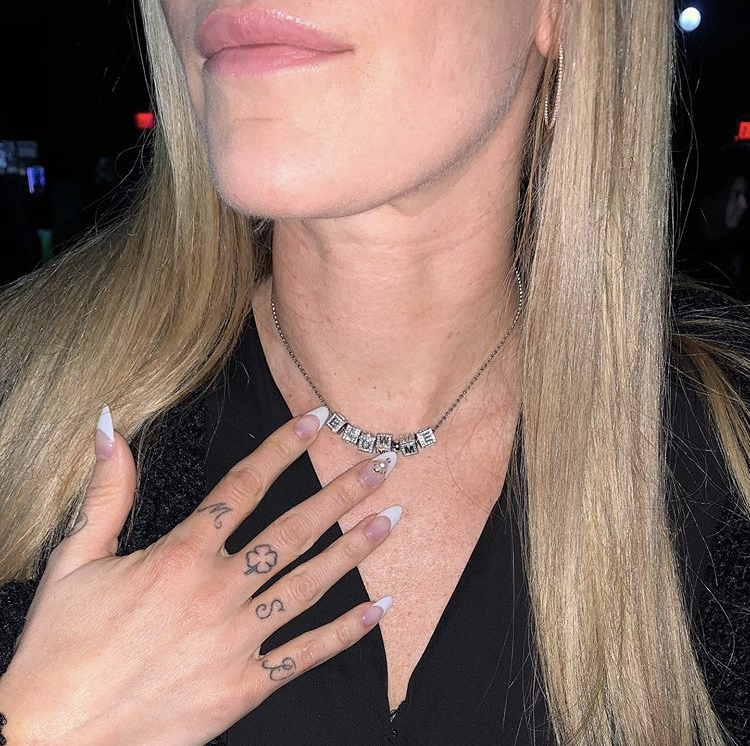
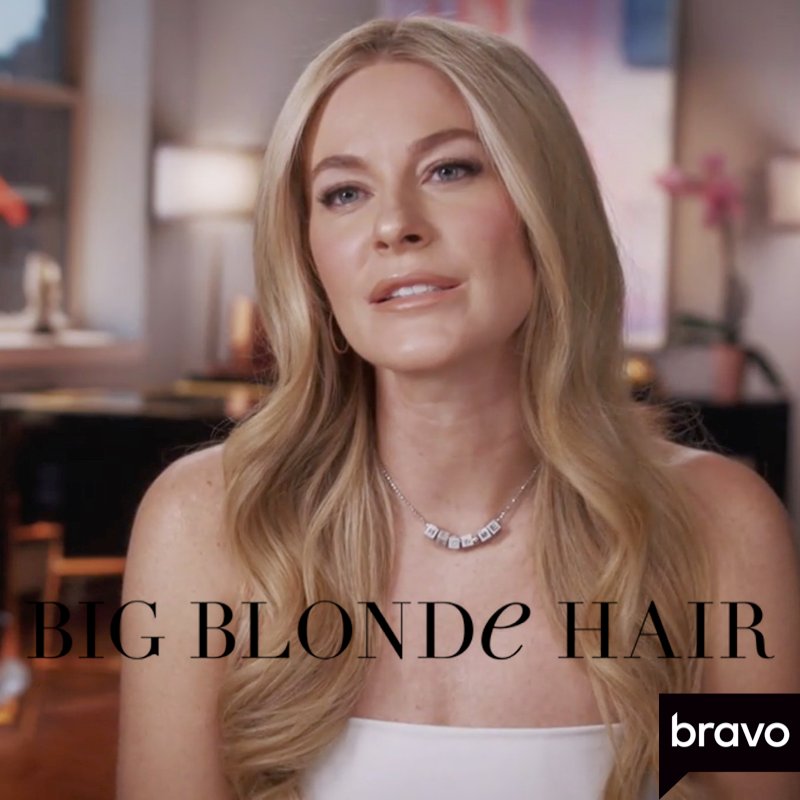
Leah McSweeney’s Block Necklace

Leah McSweeney’s Block Necklace on RHONY

Real Housewives of New York Season 12 Fashion

Considering we’ve been getting a lot of inquires about Leah McSweeney’s block letter necklace that she wears in her confessionals on The Real Housewives of New York this season (which we decided not to spell out in this post out of respect for our grannies who read the site), we figured that the time has come for us to finally report on it. And while Leah’s is a custom made piece by Drake’s jeweller and possibly a taddd out of your price range (the bracelet version is listed online for $6,500), no worries because we’ve included some more affordable options down below that should totally help soften the blow.

Fashionably,

Faryn

 Leah McSweeney’s Block Necklace

Leah McSweeney’s Block Necklace

Necklace is Custom By Greg Yuna (Not Available Online)

Click Here to Shop it in a Bracelet

Photo #2 & Info: @LeahMob

Originally posted at: Leah McSweeney’s Block Necklace

Read More

Elderspeak in the Time of Corona – What the Nuns Can Teach Us

Ageism Elderspeak in the Time of Corona – What the Nuns Can Teach Us

The Corona pandemic has exposed hidden prejudices and a cultural bias of ageism. Part of that discussion is “Elderspeak.” It occurs when an older adult is spoken to by health care workers, service personnel, neighbors, or even family members as if he or she is a child with limited understanding. 

Anna Corwin, Ph.D., an anthropologist and professor at St. Mary’s College of California, says that elderspeak sounds like baby talk or simplified speech and is, in fact, a symptom of how older adults are perceived.

Dr. Corwin’s work focuses on understanding how cultural practices and communication shape older individuals’ experiences of their lives, their bodies, and aging.

Characteristics and Problems of Elderspeak

Elderspeak sounds like baby talk, with elements like elevated pitch, slow pronunciation, and diminutives like sweetie and honey. It’s a uniquely North American phenomenon, according to Dr. Corwin.

She says that we do not see baby talk around the world. In other cultures, adults will speak to babies in the same type of speech that they use with adults with perhaps some simpler vocabulary.

Elderspeak a problem for a number of reasons. For one, older adults often don’t like it. It feels condescending and increases loneliness, both of which lead to bad health outcomes.

It’s also associated with cognitive decline. Basically, if you’re not exposed to complex language, you lose the capacity to really engage. Of course, in cases of severe dementia, it can be hard to engage this way. However, for adults who are cognitively competent, it is important that you speak with them the way you would with any adult.

Lessons from Nuns on How to Overcome Elderspeak

Dr. Corwin does work with Catholic nuns. Catholic sisters have been found to age more successfully than the rest of us. They live longer lives and have fewer chronic conditions at the end of life. They have fewer instances of depression and they report greater emotional well-being.

In shadowing the sisters who were caregivers, Dr. Corwin found three strategies in play to avoid elderspeak, all of which worked with the other nuns regardless of their cognitive ability.

Use Stories

The nuns would go in, state what they were going to do, then jump into a story. They might start by saying “I ran into Betty in the hallway and she reminded me of this or that.” That would progress into a story.

While stories are linguistically complex, they do not require particular responses. The older sisters sometimes did respond and sometimes they would laugh or sometimes they would tell a story of their own. But everyone avoided elderspeak.

Telling Jokes

The caregiving sister would tell a Biblical joke or something culturally relevant for nuns. That would often produce laughter – the greatest way to engage.

Bestowing a Blessing

At the end of an interaction, the caregiver would bestow a blessing. Because they were speaking to God, it didn’t require the older adult to respond in a particular way. Maybe they would say ‘amen’ with them.

Often, the older adult could not be understood but made sounds that indicated to the caregiver that they acknowledged the blessing and in their own way were speaking to God. Perhaps a corollary strategy in secular environments would be to express gratefulness for something.

The point of all of these strategies is that the nuns provided empathy, figured out how to engage, and never once talked down to someone. We all can figure out a way to tell relatable stories and jokes and even express gratefulness. And it doesn’t take up any more of our time in doing so.

Concept of Aging Impacts Communication

Nuns don’t think about aging as a problem in the way that much of the rest of the United States does. Dr. Corwin says we think of decline as a problem or moral issue that we need to solve. Nuns think about decline as a natural part of life.

Cultures that revere their elders treat them with dignity and respect both in action and language. So, our perception of aging impacts how we communicate to older adults. Unfortunately, that narrative of decline and being dispensable is something that has creeped in even more during the pandemic.

The Catholic nuns treat the end of life as a life stage. It’s as natural as any other life stage. We’re pretty comfortable imagining children preparing for adulthood as sort of a natural thing that children should be anticipating.

These sisters prepare for older age and decline in a similar way. This idea perceives decline as a meaningful and natural stage.

Application in Our Daily Lives

The use of stories can translate into almost any setting. It doesn’t have to be a brilliant or fascinating story. Any kind of simple story provides an opportunity to bring in language and engagement without alienating the person or setting them up for communicative breakdowns.

People also tend to speak more loudly and slowly to an older person, reinforcing stereotypes that every older person has a hearing issue or cannot understand you if you speak too fast. Every situation is different. Speak in a normal volume and cadence, gauge the response, then adjust accordingly.

Dr. Corwin believes that we could benefit from accepting decline. We don’t need to seek it out, and we should absolutely try to be as healthy as we can for as long as we can. Accepting the idea of meaningful decline could reduce a lot of stress for people.

What do you think? Have you been the victim of elderspeak? How did it feel? How are cultural biases and ageism impacting you and has it been worse since the pandemic? Please share your thoughts with the community and let’s have a conversation.

Read More