Month: May 2021

Watch Hailey Bieber Get Glam For A Big Event In 30 Minutes

When we talk about how celebrities look on the red carpet, we really have no idea what it took to get them there. Sure, we might see a quick BTS snap but what happens hours before? How do they decide what to wear? Hailey Bieber’s new Get Ready With Me video shows exactly that and more. It’s part of her YouTube series, produced by OBB Pictures, which just surpassed one million subscribers.

Bieber begins the video by introducing her glam squad: makeup artist Denika Bedrossian, stylist Maeve Reilly and hairstylist Jen Atkin. The trio talks about how they work together to plan Bieber’s look, each taking turns to have a big moment. If Bieber has head-turning hair, makeup and wardrobe, it might be a little overwhelming. Of course, she has a say in her own look, too.

“When Hailey’s going to an event, a lot of the time she has an idea of what she wants to wear,” says Reilly. “I’ll go off and do my job and bring all these dresses and then she’s going to choose which she prefers.” Atkin then shows a laid-back hairstyle idea, while Bedrossian gives Bieber a few options on makeup. Since often they have to work on the fly or at the last minute, Atkin has an idea for them all to finish the look in 30 minutes or less.

“I definitely will say I’ve had times where I’ll be in hair and makeup where so many people are touching me at once that I get really really overwhelmed and it starts to give me bad anxiety,” admits Bieber with just over three minutes left on the clock.

“One of the things I learned as a stylist is to really actually step out of glam unless your client wants you there to like chat or whatever,” adds Reilly. “Like she said it can be really overwhelming in a small space and so like I’m not needed so just you know let them do their thing.”

Watch the entire process and see the ultra-glam finished product, above.

STYLECASTER | Ashley Benson Interview


Read More

Jennifer Aydin’s Yellow Floral Sleeve Bodysuit

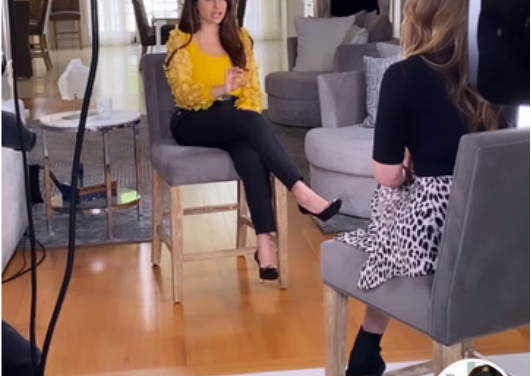
Jennifer Aydin’s Yellow Floral Sleeve Bodysuit Filming Entertainment Tonight

Real Housewives of New Jersey Instagram Fashion

Jennifer Aydin looked like a million bucks in a $22 top filming a segment for Entertainment Tonight that she gave us a sneak peek of on her Instagram stories. The yellow flower appliqués on the sheer puff sleeves added that extra detail that made it totally Jennifer. And while we know she enjoys her Chanel, she certainly loves a deal, just like us.


The Realest Housewife,

Big Blonde Hair


Jennifer Aydin's Yellow Floral Sleeve Bodysuit

Jennifer Aydin's Yellow Floral Sleeve Bodysuit

Click Here to Shop her Romwe Square Neck Mesh Bodysuit

Photo: @JenniferAydin

Originally posted at: Jennifer Aydin’s Yellow Floral Sleeve Bodysuit

Read More

5 Books to Curl Up with This Spring

many book choices

So many books, so little time! How I wish I could read every single book that appeals to me. How do we pick and choose?

Here is a smattering of books I’ve enjoyed in the last few weeks. One non-fiction, an Australian mystery, a historical fiction novel, something rather juicy, and a thought-provoking novel I found unsettling at times.

A potpourri of books! I hope you find a title to bury yourself in. 

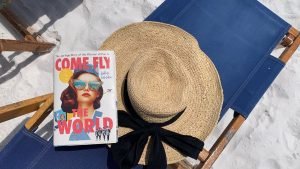
Come Fly the World by Julia Cooke

“Stewardesses Wanted – Must want the world,” read a 1967 advertisement for Pan American Airways. Unbelievably, female applicants (only!) were required to have a college education, speak two languages, and meet height, weight, and age requirements. 

Everyone has a story. The author weaves the experiences of four Pan Am stewardesses who worked hard, played hard, and paved the way for future flight attendants. These women wanted more out of life than the pressure to get married, raise a family, and let the men have all the adventure and fun. And they got it. 

Sashaying the globe, they averted hijackings, flew in and out of war zones, and ferried children out of Vietnam when Saigon fell. An overload of details in some spots caused the story to drag, but as my good friend always says, “Skim right through that muck!”

The Survivors by Jane Harper

If our circumstances had been different, does it mean our lives would be better?

In this page-turning mystery, Australian author Jane Harper transports readers to the Tasmanian coast. In small-town Evelyn Bay, everyone knows everyone else’s business.

With his girlfriend and baby in tow, Kieran returns to his hometown for a visit. Seeing his parents, old friends, and the rugged coastline, he’s overwhelmed with guilt… again. But, when a body washes up on the beach, long-held secrets unravel.

Now that I’ve discovered Harper, I’m anxious to read her blockbuster, debut novel-turned-movie, The Dry (published in 2016). The film, released in Australia earlier this year, arrives in US theaters in May.

The Wartime Sisters by Lynda Cohen Loigman

I have learned when Fiona Davis loves a book, I will love it too! Yes, another war book, but this historical fiction novel approaches World War II from a different angle than I’ve read before. 

Can we ever break free from the roles assigned in childhood? 

This story follows Ruth and Millie, disconnected sisters, from Brooklyn to the Springfield, MA armory campus. Their lives intertwine with Lillian, the commanding officer’s wife, and Arietta, a singing cook in the armory cafeteria. 

The women soon discover we don’t keep secrets. Secrets keep us.

The Swans of Fifth Avenue by Melanie Benjamin

I am not a fan of reality TV, and I couldn’t get intoBridgerton. But, because I adored Carnegie’s Maid and The Aviator’s Wife by this best-selling author, I took a chance on her fluffier-sounding historical fiction novel.

And – snicker if you want – this was a delightful read!

Readers travel back to the 50s and 60s, to the glamour and gossip and power of New York City’s social scene. The story weaves the adventures, scandals, and so-called friendships of playwright Truman Capote and his wealthy flock of Manhattan high society swans.

This privileged clique attends all the right parties and shops at all the right places. But even when you have anything money can buy, happiness is not a given. 

Especially for Babe Paley, the wife of CBS founder William Paley and a woman searching for real love. 

Published in 2016, this book may be readily available at the local library. 

The Book Woman of Troublesome Creek by Kim Michele Richardson

From 1935-1943, President Roosevelt’s Packhorse Library Project put women to work and books into the hands of impoverished people in the Appalachian hill country.  

Cussy Mary and her coal-mining Pa are not black. Or white. Their skin is blue. Methemoglobinemia, a real blood disorder, results from a missing enzyme that oxygenates the tissues. Without the enzyme, the skin is blue.

To escape ridicule and hate, they live deep in a wooded Kentucky holler. Astride her mule, Cussy Mary travels miles each day to bring books, and the chance of a better life, to remote mountain cabin-dwellers.

“For the first time in my life I feel necessary,” she says.

The story, filled with rich descriptions and imagery, picks up steam when Cussy Mary agrees to medical testing. 

Another book, The Giver of Stars by Jojo Moyes, also revolves around the Packhorse Library Project. Reader opinions vary on which novel they like best. Both are thought-provoking and, at times, unsettling to read. But, with different plot angles and information, I liked them both! 

Do you have a large pile of books to read? What’s been your favorite book of the last year? Do you read more than one book at a time? Me – always. Cheers to always having a good read nearby!

Read More

Boomers and the Risks of “Polypharmacy”

polypharmacy risks

Many people may not know that prescribed medications have potential side effects. But knowing about the side effects of medications, as well as how they may interact with each other, is very important information – especially for boomers.

What Is Polypharmacy?

“Polypharmacy” refers to when an individual is taking multiple medications to treat a variety of acute or chronic conditions.

Boomers tend to take more medications than their younger counterparts. In fact, while boomers represent around 12 percent of the U.S. population, they account for more than a third of all prescription medication use.

The number of prescriptions we take can be staggering. The average American in her 60s may be taking over 10 prescription medications over the course of a year.

In addition to the increased potential side effects and interactions of the medications, polypharmacy may decrease physical and cognitive ability (increasing risk of confusing medications or taking them incorrectly).

Many older adults don’t take medications correctly, contributing to more than 100,000 deaths a year. It can increase risk of falls or accidents while doing even simple tasks such as cooking.

As we continue to age, the concern is we will take even more medications. One study suggested that over the course of 22 years, the number of prescriptions taken by adults over 65 doubled and the proportion of adults taking five or more medications tripled. One quarter of admissions among older patients to one New York hospital was attributable to polypharmacy.

“Prescribing Cascade”

Another side effect of taking multiple medications is a “prescribing cascade.” As the name implies, this happens when you take one medication to reduce the side effects of another which you may be taking to deal with the side effects of yet another. Often, these side effects are misdiagnosed as a new medical condition.

Let’s say you take a medication that makes sleep difficult, as can happen with nasal decongestants or depression medicines. You tell your doctor you are having trouble sleeping; she diagnoses insomnia and gives you sleeping pills.

You are now taking sleeping pills to counteract the insomnia caused by your decongestant. While the sleeping pill helped, it also caused constipation. Your doctor gives you something for constipation. You are now taking three medications.

Many of us are taking medications for ailments such as hypertension, depression, chronic pain, diabetes and arthritis and run a constant risk of falling into a “prescription cascade” – especially if we see multiple doctors. The risk increases if we use different pharmacies since such a cascade could go unnoticed if a pharmacist only knows of one or two prescriptions.

Another risk of polypharmacy is when two medications either magnify or reduce the effects of others. A good example of the former is taking aspirin at the same time as a blood thinner, such as warfarin or Coumadin. This may cause excessive bleeding.

Antacids, contrarily, may prevent blood-thinners, antibiotics and heart medications from being adequately absorbed into the bloodstream, rendering them less effective or even ineffective. Iron supplements may impact how well antibiotics work.

The risk for side effects and medication interactions is also increased by changes in how our bodies metabolize and eliminate medication with age. Some medications may build up quickly in our bodies while others may not have intended effects. This is one reason why doctors will usually start with lower doses to see how we react.

We Can Better Protect Ourselves

Knowing all of the above can be the beginning of paying better attention to our medications and how they affect our health. Here are some tips that can help prevent the “prescribing cascade.”

Be an Active Partner to Your Doctor

Don’t assume that it is the sole responsibility of our doctors and pharmacists to make us understand why we take medications, how to take them and what side effects we can expect.

One poll revealed that 11 percent of participants believed the pharmacist is responsible, 26 percent said the doctor and 63 percent said both. Interestingly, no one said “I have a responsibility” to understand these issues.

Keep Records of Your Medications

It is a good idea to always keep records of your medications. Jot down any side-effects you experience – and when experienced – so that you can discuss with your doctor. Use one pharmacy so that it has a record of all medications. This will help you anticipate, prevent, and manage possible side effects and interactions.

Research Your Medications

To help better prepare for conversations with either your doctor or pharmacist, research medications online. There are sites that explain medications in non-medical language.

Evaluate Your Medications Annually

Many medical professionals suggest an annual “brown bag” with your doctor. Rather than lunch, put all prescription and nonprescription medications and supplements in a bag and take it with you when you visit your doctor.

The doctor can see everything you are taking. This allows her to identify potential interactions and side effects as well as see if any can be eliminated (or dosage reduced).

Ask for Fewer Medications

Talk with your doctor about how to treat a condition with fewer medications. For example, high cholesterol or hypertension may respond to diet and exercise.

Watch Your Alcohol Intake

Be careful with alcohol consumption since it interacts with many medications, which can reduce effectiveness or increase risk of side effects.

Take Care of Your Diet

Many medications may deplete your body of nutrients, which can cause inflammation, new health risks or worsening of symptoms. For example, Metformin (type 2 diabetes medicine), may deplete vitamin B12 and coQ10, which increases the risk for heart disease.

Certain hypertension medicines can reduce amount of water-soluble nutrients, such as B vitamins, in your body. Another common medicine taken by boomers for managing cholesterol, statins, can deplete coQ10 which may cause heart failure, mood swings and depression.

How well would you say you understand the possible side effects and interactions of the medicines you take? Why or why not? How often do you talk with your doctor about your medications? Do you ever talk with your pharmacist about your medications? Do you ever do your own research about your medications? Do you feel you may be taking more medications than you need? Please join the conversation.

Read More

How Ageism Is Revealed in Family Aging “Scripts”

ageism

As a healthy aging writer, speaker and consultant for the past 20+ years, I’ve spent a great deal of time campaigning against ageism and identifying how easily it can creep into our subconscious and influence personal health beliefs and behaviors.

I’m happy to say that there have been substantial gains in ‘calling out’ ageism since Dr. Robert Butler coined the phrase in 1969.

At the time, he defined ageism as: “a systemic stereotyping of and discrimination against people because they are old, just as racism and sexism accomplish this with skin color and gender.”

Persistent Attitudes

However, the gains are deeply overshadowed by how many things haven’t changed. There is a disturbing stubbornness to the issue – from the ever-growing, multi-billion-dollar anti-aging industry, to age discrimination in employment, and even continued acceptance of negative stereotypes of aging.

For example, I found a greeting card with a bunny on the front wrinkling its nose. Inside it said, “I smell an old person – Happy Birthday!” I use this card in my speeches and many audience members laugh at the message.

When I suggest replacing the word “old” with “handicapped,” or with a word describing any ethnic or religious group, people immediately recognize that any card with that type of message would be considered wildly offensive!

Aging Scripts – Culture and Community

Consider where our ideas about aging come from. None of us ages in a bubble. We learn about aging in family, in community, and in culture.

Cultural images of aging build a framework of aging expectations, but our earliest impressions of aging likely come from the community we live in, and from family members and close friends.

I live in a very active community where it’s common to see people over 70 skiing downhill and hiking in the mountains. There’s even a women’s group who’ve been meeting for 20+ years twice a week to go hiking in the summer and skiing in the winter.

It started with a group of 10 women and now has 100+ members. Everyone self selects hikes ranging from short strolls to vigorous 8-10-mile hikes in difficult terrain. I can tell you that running into a group of people over the age of 75, high in the mountains, reinforces that lifelong vitality is attainable!

Family Aging Scripts

Each family has what amounts to “aging scripts” that inform our first experiences with aging and impact our expectations. Consider, for example, what you have learned about aging from your parents and grandparents. What are your children and grandchildren learning about aging from you?

Both sets of my grandparents retired in their early 60s, following the expected path of “work hard then retire to a life of leisure.”

But within eight months, my maternal grandparents – who had sold their ranch and moved to town – got bored with city life. They bought a “fixer upper” ranch, where they had to install plumbing, and started over, raising Herford bulls. They did this into their 90s!

My paternal grandparents lasted a year before buying and remodeling a motel on the edge of town. They ran it for over a decade. So, my personal aging script is influenced by believing it’s perfectly normal – and preferable – to stay fully engaged in something challenging throughout your entire life.

Expectations

Family aging scripts can be positive or negative. They can play a role in whether you expect to remain healthy and active through your full lifespan or expect to decline into dependence as you age.

Family aging scripts can also determine what happens if a family member needs assistance due to an illness, injury, or permanent functional challenge.

Some families may rally around the individual and cheerlead! With a positive mindset about aging, they will go about seeking adaptive strategies to help a loved one overcome a health set-back and recover as fully as possible.

Other families may be more likely to rally around a loved one to offer care-giving with a mindset of keeping their loved one comfortable and safe, helping them cope with the health challenges.

Sometimes the family’s response is different depending on age – and that’s how ageism can dramatically impact outcomes.

I’ve made this point before, but it’s worth repeating: Why are young people with disabilities given resources, tools, and encouragement to overcome challenges and live fully in spite of their condition, while older people are often only given resources and tools to cope with challenges?

Those are two very different mindsets, resulting in very different outcomes.

Become consciously aware of your cultural, community, and family aging scripts. Then focus on embracing aging scripts that support rather than diminish your chances of lifelong vitality.

What are some of your family aging scripts? Would your family’s reaction to an illness/injury be different if it was a young versus older family member requiring assistance? If so why? Please share your ageism story in the comments below.

Read More