
Month: November 2022

What Is Travel Time Good for?

travel time

I was chatting to one of my grandsons, aged 12. He has just started at a new secondary school, which ­– in contrast to two previous schools he attended ­– is roughly five minutes’ walk from his house.

After asking about his new friends, new teachers and what he is learning, I commented, “And isn’t it nice that it is so close! For once, you don’t have a long trip to get there.”

“Well, yes,” he answered immediately and then stopped. “But I did really like the long walk to the bus for my last school – both going out and coming back. It was a nice time to think. I miss it sometimes.”

That was a surprise. To actually value the time it takes to travel from one place to another.

And then I thought, yes, he is on to something.

Travel Time

Travel time is that wonderful time when you have no obligations except to continue on your way. It is ‘me’ time in the best sense of the word.

At its worst, of course, it is terrible. There is the regular commute ­– that dreaded routine of getting into the car and down to the station or catching the bus and then the train. At rush hour – too many people, often no chance to sit down.

In fact, we did whatever we could to avoid the emptiness of that time by filling it with something useful. Audiotapes in the car, books and newspapers on the train. Anything to help us to get through to the next stage of our lives.

No one can miss that.

Yet at its best, travel time is a bit of space to think your thoughts, smile quietly about some memory or simply empty your mind. Time when you don’t have to present yourself to others as you want to be seen. Time when you don’t have to respond to others in any way. Time simply to be yourself.

Travel time also gives you a short break between what you do here and what you do there. From being the child at breakfast to being the pupil at school. From being the mother in the house to being the busy nurse at the hospital. And so forth.

These are not small changes in your persona. The travel time gives you the chance to adjust yourself, to prepare for the oncoming role.

But We All Have Plenty of Alone Time

Ah, you say, but surely, we all have plenty of time to ourselves. We don’t have to be on our way somewhere in order to enjoy being on our own.

Well, yes and no. For many of us, our home is full of other people – whether siblings or partners or extended family or all sorts of other people who come and go. These people tend to intrude on us in one way or another, sometimes good, sometimes less so.

It is very hard to forget they are there.

If you go out of the room, you are likely to be pressed to do something. As a child, to get on with your homework or piano practice or even come chat when you are not necessarily in the mood. As an adult, to make the lunch or fix something or, again, to chat when you are not necessarily in the mood.

Or it may well be something pleasurable: “Come see this interesting programme on the TV,” “Come taste this pudding I am making for dinner.”

Nonetheless, it intrudes on those quiet inner moments.

True Alone Time

And even when we find ourselves completely alone, we are pulled in many different directions. For those with an inbuilt sense of duty, there is the correspondence to be answered or the bills to be paid or even the plants to be watered.

For those who are easily swayed by the things they enjoy, there is that programme taped from last night’s TV, that book you are enjoying or even a simple lie-down on that very comfortable looking bed.

Always diversions in another direction.

This is even more so if you work from home, as I did for many years before it became fashionable, because I was self-employed. When people discussed how they got to work, I always said I went to work by the stairs.

And go to work I did. Sat down at my desk and got on with things until I was too tired to continue. No time to stare at the walk and think.

In principle, I could have done what I wanted with my time, but I inherently felt that work came first.

Back to Travel Time

Which brings me back to travel time. For those of us who like to reflect, it can be the perfect time to do so. Whether walking a distance, driving or sitting on a bus or train, we are – in our minds – on our own, away, far away.

Sometimes, that is a nice place to be.

Let’s Have a Conversation:

Do you value travel time or is it just a nuisance? Do you use it as a chance to reflect on your life? Do you wish you had more or it?

Read More
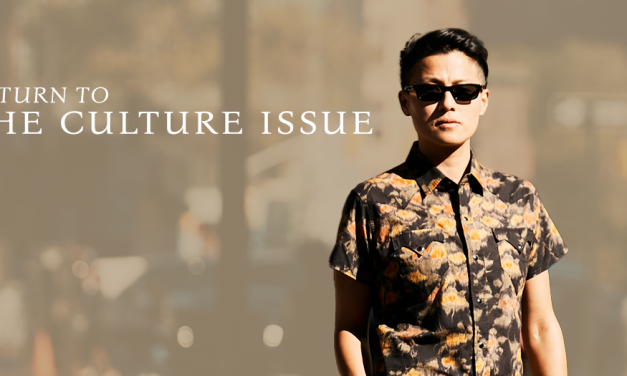
Peloton’s Emma Lovewell On Her Favorite Travels & No-Stress Exercise Philosophy

One look at Emma Lovewell’s Instagram account and it’s clear to see that the Peloton instructor travels nearly as much as she exercises. Hiking in St. Lucia, riding a motorcycle in Nicaragua, canoeing in Patagonia, wielding a samurai sword in Japan (yes, a sword)—the 35-year-old has seemingly been everywhere and done it all. But for her, traveling the world and having these experiences is about so much more than just the photo opp. “I didn’t travel internationally until I was 18, but once I started I was hooked. My mom is an immigrant, and there’s something about traveling that helped me understand her—and myself—better,” she says. “Growing up in a multicultural environment and comparing myself to my other friends, I always felt ‘other.’ But once I started seeing the world and realizing that there are so many different ways of living, I felt more resolve within myself.”

Lovewell’s social media posts also make it abundantly clear that her travels almost always involve some type of physical activity. Snowboarding, surfing, horseback riding—you name it, she’s done it. Yet despite her career as a fitness instructor (if you haven’t yet taken one of her Intervals & Arms rides, you’re missing out), Lovewell’s attitude towards staying fit while traveling is surprisingly relaxed for someone with a killer six-pack. The goal: Doing things that allow her to move her body, without having to spend time in a hotel gym. 

Here, Lovewell talks to STYLECASTER about some of her all-time favorite vacation destinations, how she stays active while traveling, and how to squeeze in a 10-minute workout anytime, anywhere.

Instagram PhotoSource: Instagram

SC: Based on your Instagram, it looks like you’ve been all over the world. What have been some of your favorite destinations and travel experiences?

EL: I recently went to Japan and that was the trip of a lifetime. It was incredible. The culture there is so strong and the people are so nice. We were there for 11 days and spent a few days in Tokyo, then the rest in Northern Japan, which isn’t really a common spot for people to go. We went to Niigata, where they’re known for their knives and went to these Japanese knife factories and saw incredible craftsmanship and metalwork. We saw a Maiko performance of apprentice geisha. We stayed in a Buddhist temple and took a cooking class.

It sounds like you really immersed yourself in the local culture. Is that something you prioritize when you travel?

I feel like it’s so important for people to travel and get away from their homes in order to get a better perspective on life. When we can experience another environment and culture it really helps us understand ourselves, and the world, better. So seeking out authentic, cultural experiences when I’m traveling internationally is incredibly important. I’m from Martha’s Vineyard, a super popular tourist destination, and so I know that the locals always know what’s best. Whenever I travel somewhere, I always like to talk to locals and ask what they suggest I do, so that I can really get that local perspective. 

Instagram PhotoSource: Instagram

Let’s talk about how you’re staying fit during all of these travels. Are you making it a conscious priority to carve out time to exercise?

My boyfriend Dave, whom I travel with a lot, and I are both generally active people. We love to move our bodies. So when we’re traveling, I’m totally a proponent of adding in that movement and physical activity and fitness into things we’re doing and experiences we can have. I’d rather do that than spend an hour in a basement hotel gym. Like in Japan we did this samurai class, where we got to learn martial arts moves and hold a samurai sword. When something like that is a part of my vacation, then I consider that my workout. I’m up and moving. 

What kinds of physical experiences have you had at other places you’ve traveled?

We recently went to San Sebastian, Spain and there we rented electric bikes. Everyone was making fun of the fact that I’m a spin instructor and was riding an electric bike, but it’s an amazing way to see a city. I’d also go for runs there. I’d be stopping every five minutes to take pictures so it wasn’t my most intense workout, but I was moving my body and seeing the city at the same time.

On beach vacations, I’m always swimming or wake surfing and staying active in that way. We’ve been to the Galapagos twice, Dave’s sister used to live there, so we really got the local experience. The scuba diving there is incredible, I got to dive with hammerheads all around me. We’ve also done surfing trips to Nicaragua and Mexico. Those were trips planned specifically around the destinations being good surf spots, and surfing is the hardest workout ever.

One of my favorite US trips was Alaska. I went in the middle of winter and had pretty low expectations, but was completely blown away. It completely surpassed my expectations. You see mountains coming straight out of the ocean into the sky and the most incredible sunsets. There I was hiking and snowboarding every day.

So, what happens when you’re on a trip and there isn’t a lot of physical activity built in? Do you still work out?

There have definitely been some vacations where I wasn’t moving that much. And I do start to feel kind of stuck and like I need to do something. So that’s when I’ll literally take just 10 minutes to do something in the hotel room that gets my body moving. Even just some planks, squats or lunges, and push-ups—that’s abs, legs, and upper body. I have to plug the Peloton app, because there are great 10-minute core classes on there. I’ll do those, even if it’s my own. All of the Peloton body weight classes, even the five, 10, or 15-minute ones, are great. You can also put on some music and have a dance party in your room. Most songs are about three minutes long, so cue up three of your favorites, and that totally counts as a 10-minute workout right there.

culture issue stylecaster chase sapphire

Photo: Weston Wells. Design: Sasha Purdy/STYLECASTER.


Read More

Jackie Goldschneider’s Blue Floral Pants

Jackie Goldschneider’s Blue Floral Pants on Instagram

Real Housewives of New Jersey Instagram Fashion 2022

According to IG Jackie Goldschneider showed off her cooking skills on Amazon Live the other day. Anddd also evidently Kendall Jenner’s 818! these chic blue floral pants, which are definitely the perfect outfit ingredient to add for a dash of cuteness.


Fashionably,

Faryn


Jackie Goldschneider’s Blue Floral Pants

Click Here to Shop Her Alice + Olivia Pants

Click Here For Additional Stock

And Here For More Stock

Photo: @JackieGoldschneider

Originally posted at: Jackie Goldschneider’s Blue Floral Pants

Read More

Tracy Tutor’s Red Strapless Asymmetrical Dress

Tracy Tutor’s Red Strapless Asymmetrical Dress on Instagram

Million Dollar Listing Instagram Fashion 2022

I think it’s safe to say that Tracy Tutor looks absolutely sizzingggggg in her red strapless asymmetrical dress here on vacay in Cabo recently. And if the real deal is outta your price range, well no worries because our Style Stealers below are totally still muy caliente. 🌶🔥


Fashionably,

Faryn


Tracy Tutor’s Red Strapless Asymmetrical Dress

Click Here to Shop Her David Koma Dress on Sale

Photo: @TracyTutor

Originally posted at: Tracy Tutor’s Red Strapless Asymmetrical Dress

Read More

3 Ways to Organize Your Financial Records as a Responsible Mature Woman and Have Fun Too!

Organize-Your-Financial-Records

The last quarter of the year can become quite stressful, especially for those of us over 60. In some parts of the world, October is filled with more outdoor events with family and friends because the weather turns cooler while the sun is still generous.

November brings traditional Thanksgiving dinners, often with large family gatherings and lots of cooking. We buy more food and cook more, which results in higher utility bills. During December, many of us exchange gifts with family members, friends, and clients.

All of this will cost us more money than we spend in any of the other months of the year.

We love our families and want to be engaged with them, but most of us need to do it in a cost-effective way. If we plan ahead, the financial part can be managed. Here are some things to consider.

Tip #1: Organize Your Records Year-Round

Take time to organize your financial records year-round in ways that are fun, so that you will love doing it. Start by looking for the best organizer tools that will make your life easier.

If you are a ‘paper’ person, we suggest that you shop for a cool three-ring notebook in your favorite color, colorful 1-15 numbered tabs, and clear sleeves that can hold documents with several pages. (Estimated cost = $30 US for materials plus an hour of your time to shop.)

Just so you know, my favorite color right now is lime green and my notebook is so cool!

One three-ring notebook should last for an entire year. Label it on the outside so that you can find it easily. For instance, you could write: “Your Name – 2018 Records.” Set up your tabs to organize “Cash In” and “Cash Out.”

Tabs can be named for things like monthly bank statements, monthly credit card statements, important receipts, past years tax returns, a cash budget, real estate records organized by property address.

If you are a ‘digital’ person, set up these same tabs as a folder on Dropbox.com or on Google Drive.

To get you started, a sample Table of Contents for your tabs or digital folders is shown below:

  • Bank Statements (including copies of cancelled checks and deposit information)
  • Credit Card Statements
  • Child Care Costs, if you take care of one or more grandchildren
  • Transportation Costs
  • Insurance Policy and Monthly Receipts
  • Charitable Contributions Receipts
  • Cash Budget – Current Year
  • Retirement Account Statements and Contribution or Withdrawal Documentation
  • Tax Return – Last Year and Year Before
  • Income Records – such as Pay Stubs
  • Medical & Healthcare Records – such as Explanation of Benefits, Invoices Received/Paid, Lab Reports
  • Birth Certificate & Passport
  • Property Deed and Real Estate Information – by Property Address
  • Automobile, Other Vehicle – Titles and Other Information
  • Calendar of Deadlines for Filing Taxes and Dates to Pay Bills

Tip #2: Annual Cash Budget

Prepare a cash budget annually for each month during the year. This is a tool that you can print to keep in your three-ring notebook (or digitally) to refer to from time to time. Your budget will help you stay on track so that you are able to sleep at night and not worry about finances.

I recall the year 2008 when I closed my coffeehouse. We had been open for five years and, although it was a lot of fun, the coffeehouse did not make a profit. At that time, I put together a monthly cash budget to manage “Cash In” and “Cash Out.”

I used a one-page Excel spreadsheet and printed a copy to carry in my purse. That way, when I did have money to spend and needed food, clothing, or gas for my car, I would pull out this one-page budget to help me prioritize what to buy with the money that I had.

This budget tool was a life-saver for me and it helped me save my personal credit also – by being able to pay bills on time, using my budget as a guide.

These days, I still use a monthly cash budget to estimate how much I will need to pay bills, when they are due and what amount should be left over for savings or to put back into my business. Your budget should include all “Cash In” and “Cash Out.”

Be sure to include necessities like food and medicine, plus auto repairs and gas if you own a car, or transportation costs. It should also include entertainment and planned discretionary expenses. (Estimated time to prepare budget = 1 to 3 hours annually and half-hour updates monthly.)

Tip #3: Use Event Calendars

Consider developing an Entertainment, Birthday, and Special Events Calendar to help you track all activities a mature woman must engage in. This will help you plan ahead so that you can manage your money and organize your expenses.

If you own a business in your 60s, this type of calendar becomes even more helpful. It will help you know how to plan your spending on activities that are sporadic as well as spontaneous.

Use these ideas to help you do what you love and enjoy what you do! Be blessed.

Let’s Have a Conversation:

How do you organize your finances? Have you tried going at it on a monthly basis rather than doing it annually? What tools do you use to help you organize your finances? Please share any strategies that you find useful!

Read More