Month: May 2023

This Biotin Hair Growth Serum Stops Shedding After 1 Week—& It’s $15 RN

Hair shedding can be difficult to talk about, but it’s important to note just how many people deal with problematic scalps. While it’s relatively normal to lose between 50 to 100 hairs a day, according to the American Academy of Dermatology Association, anything beyond that may be considered excessive. Treatment options ultimately do vary depending on several factors, but if you are experiencing a reduction in growth, investing in an effective biotin serum may be a solution.

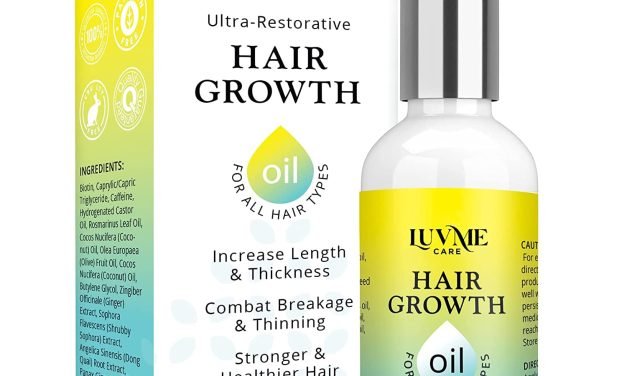
While you’re assessing all the options available at your fingertips, consider the Luv Me Care Biotin Hair Growth Serum on Amazon. The under-the-radar formula is not only on sale for 40 percent off but has thousands of shoppers backing up its claims.

Packed with essential vitamins and botanical ingredients, the serum stimulates growth at the roots while boosting their hair’s natural texture, volume and strength. It also rejuvenates the scalp and strands to prevent thinning and breakage, therefore dry, damaged and frizzy locks will only appear smoother, shinier and healthier with time. 

Luv Me Care Biotin Hair Growth Serum

Amazon

Luv Me Care Biotin Hair Growth Serum

Just take one reviewer’s photo evidence as proof: “I’ve always had very thin hair and I was shedding like a husky on a hot summer day! These pictures were taken after one week, ONE FREAKING WEEK,” they wrote. “I was very impressed, my hair was shedding less, it felt stronger and fuller…I also applied the product at night on the corner of my lashes and eyebrows, with an eyebrow brush and I started noticing a difference when I put my mascara on, my lashes looked fuller and longer with just one coat!”

RELATED: Shoppers Are Ditching Hair Products For This $7 Treatment That Makes Strands ‘Feel More Alive’

Consider our minds blown. Though, with highly-nourishing additives like biotin, caffeine and castor oil included in the serum, we’re not surprised it actually provides results. In fact, reviewers say it has the ability to fill out a range of sparse areas, including the hairline, bald spots and eyebrows. One person even noted that it has the power to greatly minimize dandruff with continual use. 

“This product has been unbelievable for my hair,” shared another. “I had Covid over a year ago, and had the unpleasant afterwards side effect where my hair was falling out in clumps. My fiancé originally got this for me as a test run, and now I can’t live without it. I was skeptical but I can see the difference already. If you’re suffering from Covid related hair loss please try this. I hope it works for you the same way it did for me!”

Say no more—the Luv Me Care Biotin Hair Growth Serum just may be worth a try. Grab it while it’s down to $15 on Amazon.

StyleCaster Shopping Newsletter Sign Up

Read More

Does Your Money Spending Align with Your Values?

money spending and values

Everyone has personal values that have shaped and formed over the years through their experiences, relationships, and education. Unfortunately, many people struggle with finding happiness simply because their actions and values aren’t aligned.

For example, someone who wants to be debt-free shops and racks up a big credit card bill. Or someone who wants to transfer their wealth to their kids has yet to set up a will.

If you want to feel in control over your finances and feel good about your relationship with money, focusing on your financial values is essential. Positively and actively aligning your money with your values can shape money decisions that will make you happy and financially secure.

When Are You Not Aligning Your Money with Your Values?

Too many of us live life to keep up with the Joneses. Whether it’s the way you were brought up or societal influences, you may have predetermined notions about how you should spend your money.

Keeping up with what society thinks you should spend your money on often harms your money values and creates a divide between your decisions and what is essential to you.

Aligning your money with your values starts by understanding your feelings and desires. Are your values yours or someone else’s?

How to Align Your Money with Your Values

There are several ways you can align your money with your values; here are the three most common:

Values-Based Budgeting

The best way to start is by aligning your values with your spending. Values-based budgeting is an opportunity to illustrate what things you find important in your life. To begin this process, I recommend discovering your values.

For example, what brings you the most value, what makes you get out of bed every day, or what brings you happiness? Once you have determined your values, review your monthly spending to see if it matches. For example, if you would like to be eco-friendly, buy a compost bin or save to buy an EV car.

Pro Tip: When evaluating your spending, consider the items on your credit card statement that don’t bring you joy. For example, if you have a subscription that you don’t use regularly, cancel it. Find ways to replace the expenses that don’t bring you joy with ones that do.

Charitable Giving

If you are passionate about supporting organizations and causes that matter to you, consider adding charitable giving into your monthly budget to make it part of your routine spending. Consistent giving can positively impact how you view money and make you feel more confident about other money decisions.

Before donating, run your charity through a Charity Navigator to ensure it’s not a scam or doesn’t use its donations for causes you wouldn’t support.

Pro tip: Being part of the process to see what your money is helping to accomplish can improve your happiness. For example, gifting assets to family while you are alive can allow you to spend more time as a family and instill the value of giving.

Values-Based Investing

Values-based investing, like ESG and SRI investing, helps people focus on investing their money in companies that make a positive impact. In other words, your investment portfolio would be built to reflect your values while supporting your long-term goals.

For example, if you are passionate about being eco-friendly, you can invest in companies that use renewable energy and limit waste. In the beginning, value-based investing can be complicated. If this is the case, take it slow and invest 1 or 2% of your portfolio in one or two companies that match your values.

Pro Tip: Don’t limit your investing to big companies. Investing in start-ups, local businesses, or your community can be an excellent opportunity to give back and actively be involved in the investment.

How to Get Started

Determine Your Values

Although you may already know your values, talking to a friend or family member can be helpful if you need help determining your values. Once you have defined your values, select a few that are most important to you.

Review Your Budget

Evaluate your expenses and categorize them to match the values that you have identified. If most of your expenses don’t match your values, values-based budgeting can help you become more thoughtful about your spending.

Revisit Values Over Time

As our lives change, it’s natural for values to shift as well. Consider setting a date every year to reflect on your values and evaluate what is most important to you. There’s nothing wrong with making a few tweaks or starting new.

Let’s Have a Conversation:

Do your finances reflect your goals and values? If not, how would you change it?

Read More

Get More Benefit from Your Walking Workout!

walking workout

Walking is a great activity to help you clear your mind, easily get more exercise, improve your endurance and digestion, as well as work your muscles and burn some calories. Did you know that walking can also help you to boost your immune system and reduce sugar cravings?

As a personal trainer for women over 55, one of the most common complaints is, “How do I get rid of sugar cravings?” Studies have shown that going for a 15-30 minute walk each day can help to reduce the intense need for sugar. As a bonus, walking can also ease aches and pains in your joints. Check out these tips to get more out of your walking. 

Get More Out of Your Walking

Human beings are creatures of habit who take the same route, at the same pace, around the same time each time we go for a walk. If you are relatively consistent with your walking, your body will adapt to the challenge and could plateau. Your body may not continue to see as many benefits from the same activity and may be ready for you to push it a little harder. 

If you want to continue to burn more calories, build muscle tone, and improve your endurance, you need to mix it up a bit. If you are walking on a treadmill, pick an interval program, adding one with hills or an incline helps even more! If you are walking outside, mix up your workout pace or intensity or route and add some intervals as you walk.

After warming up, walking at a moderate pace for at least five minutes, add intervals of 30 seconds to 1 minute of more intense movement: walk faster, go up a hill, add some step up and downs on the curb, or stop for some bodyweight squats, then return to your moderate pace of walking. Try adding a few intervals to burn more calories and get more out of your workout! 

Build Bone Density and Balance with Walking

Biking, swimming, and using the elliptical will not help to boost your bone density. To build bone density you need to add more weight bearing and some light impact activities such as walking, hiking, climbing stairs, and weight training.

To build bone density with walking you also need to mix up your intensity and the challenge for your body while walking. Try adding a weighted vest: one of the best ways to improve your bone density, vary up your route to add more hills, add some step up and downs on the curb, or body weight squats to challenge your body and build bone density. 

Another way to work your muscles and challenge your balance is to try walking sideways and backwards for a short distance. Be careful and check your surroundings first, but adding walking in various directions can help to strengthen the muscles around your hips even more to build more stability, balance, bone density, and protect your joints. 

To improve your balance, add some agility movements. Most people think of balance as standing on one foot. However, balance is made up of many components such as your stability to stand still, your ability to quickly react and change directions, the strength in your muscles, your vision, and your proprioception, your body’s awareness to space and stability.

Add a balance challenge to your walking by quickly changing directions, walk heel to toe and toe to heel, or walk in a monster walk with wide stance then switch to a narrow stance like you are walking on a runway. Check out this video for a few more ideas to challenge your balance! 

How to Stay Motivated

Walking is an easy to access workout, but even so, it can be tough to stay motivated. One rainy day, a lot of pollen in the air, too much snow, or a busy schedule can be enough to ruin your motivation for walking.

Stay motivated by joining a walking group or gather a few friends to form your own walking group or grab a walking buddy. Save your favorite podcast, audiobook, or playlist to use while walking. If you are outside, be sure to keep your volume so that you can hear your surroundings for safety.

Save this indoor walking routine for when the weather isn’t cooperating:

Or join a step challenge! A step challenge is a fun way to stay motivated to get more steps in each day. I’m hosting a Free 7 Day Step Challenge starting May 22nd. Don’t miss the date!

Let’s Have a Conversation:

Do you have a daily walking routine? How often do you vary your routine? How do you challenge yourself? Is there a particular tip you use that helps you stay motivated to keep walking every day?

Read More

Two Nations Divided by the Same Language (Attributed to Bernard Shaw)

language differences American and British English

Back in 2010, the British Guardian newspaper published a selection of angry letters from readers complaining about the increasing use of what they called ‘American slang’ in its articles. As one of them wrote:

“Once again, I am driven to write and complain about the increasing use of American slang in your journalists’ articles (…) examples include upscale, lickety split (what does that mean?) and double dipping. The ghastly schlepping has made another appearance as well. American English is fine when living in America, but please stick to British English when writing for a British readership.”

He Wasn’t the Only One

Other readers objected to words such as ‘scuzzy’, ‘happenstance’, ‘vacation’, ‘staycation’, ‘gotten’ and, most surprising of all, ‘teenager’. ‘Appealing a conviction’ should contain the preposition ‘against’, insisted another reader. And so on and so on.

Many of the Objections Sounded a Tad Snobbish

After all, language changes all the time, as it should, and only purists and pedants – of whom I occasionally count myself – complain about it. Personally speaking, I love the word ‘schlep’ and use it constantly. And besides, as the Guardian itself pointed out, it’s a Yiddish word, not American, and ‘gotten’ is an old English word that the Americans now use more than we do.

Sometimes It’s the Accent That’s the Problem

Some years ago, in a restaurant in Washington, my ‘teenage’ son asked for some butter. The waiter was confounded. My son repeated the word several times, to no avail, and then decided to say it with an American accent as in ‘budder’. “Ah!” the waiter’s eyes lit up. “Budder! Coming right up, sir.”

Some Expressions Can Cause Confusion

I don’t know America that well, but I have had some experience of teaching American students, and I confused them one time by telling them before they arrived here for a summer school course on English theatre that there was no need to dress up to go to the theatre but they might want to bring their ‘glad rags’ for the farewell party at the end. That seemed to result in a lot of Google flurry.

Likewise, I found their use of the word ‘smarts’, well, weird. I realise now it was a compliment, it means they thought I was clever, but at the time I was convinced they were referring to my clothes.

American Influence Is Everywhere

I have found American influence is everywhere. This was evident even more in my experience in Australia, where they weirdly refer to what we call trousers as ‘pants’, and they pronounce the word ‘router’ (the thing that operates your broadband) in the American way, as in ‘rowter’. (There is a reason for this. In Australia the word ‘root’ can mean sexual intercourse. When I tried to buy a ‘router’ – as in ‘rooter’ – in Sydney a few years back, I got some very funny looks.)

Americanisms Will Always Be Part of Our Language

Many Americanisms now feel natural, as do Australianisms such as ‘whinge’, ‘a big ask’, and of course ‘uni’ and ‘footie’ etc. Australians love to shorten words where Americans like to lengthen them. ‘Transportation’ instead of transport, ‘elevator’ rather than lift, ‘automobile’ for car, etc.

So far, those words aren’t part of our daily lexicon in Britain, and we continue to be confused by ‘gas’ rather than petrol, ‘trunks’ of cars when we say boots, ‘diapers’ for nappies and ‘suspenders’ for braces.

‘Theatres’ here refer to buildings housing live performances, not the ones on screen, and the word ‘bathroom’ to mean a room which as often as not does not contain a bath is frankly baffling. At the same time very few Americans seem to know what a lorry is (a ‘truck’).

There are other obvious influences, particularly when it comes to coffee. I believe an ‘Americano’, which for us Brits indicates a simple coffee, doesn’t exist in the States. Just as the ‘English muffin’ is an entirely American invention.

It’s Part of the Joy of Our Two Nations

That we speak the same language only up to a point is part of our two nations’ joy of communication. Vive les differences, to borrow from the French. You gave us hamburgers, Cole Porter, Elvis Presley, Marilyn Monroe and Mark Twain. We handed you Shakespeare, the Beatles, Jane Austen and Monty Python. It’s a pretty fair exchange and long may it continue.

And of course where would any of us be without the word ‘teenager’?

Let’s Have a Conversation:

Have you conversed with people from other English-speaking countries? What was your experience like? Was there confusion with certain words/phrases? What funny story can you share regarding language use?

Read More

How to be Retired and Happy… and Alcohol-Free

happy, retired and alcohol-free

Many of us have looked forward to retirement during those busy years of managing a career and bringing up a family.

The first few months may well be spent savoring the freedom of not having to get up at a certain time and manage the demands of a busy job.

However, the novelty of freedom can soon wear off, and we can be left feeling a little “flat.” If we’ve loved our jobs, then we’ll be missing a sense of purpose. If we’ve had children, they’ve probably left home so we have an empty nest.

We may also feel we’ve lost our identity and status when we retired. Our career created meaning and purpose in our lives… and now it has gone.

3 Pitfalls of Retirement

Boredom

With time on our hands, we may find ourselves drinking too much, eating too much, shopping too much and watching too much TV! This can lead to restlessness, dissatisfaction and even depression.

Health Issues

We are more at risk of health issues as we age, but if we have become sedentary and less active, then the risk is even greater. Increased stress and anxiety can also contribute to a variety of physical and mental health problems.

Social Isolation

Even if our work colleagues were not our best friends, they did provide a built-in social network. That network has now vanished, which can be especially challenging for those who don’t have family or friends nearby.

The Void

If we are hit with one (or all) of these pitfalls, then we may feel a bit “flat” – as if we are in a void. As if we have fallen off a cliff and landed in a place without structure or purpose.

We may suffer from anhedonia which is the inability to enjoy everyday pleasures. That’s when sunsets, walking on the beach, meeting up with friends/family just don’t hit the happy spot. That’s when we start to worry that “retirement” may not be the golden period we were anticipating.

Why Anhedonia? The Neuroscience

Our brains are not wired to make us happy all the time – our brains are wired to motivate us to survive. They motivate us to take a step towards a goal and feel happy when we achieve it. Of course, that good feeling is transitory, and we’ll need to take another step to release it again.

Think of our ancestors who were wired to look for food and got a dopamine hit when they spotted an animal they could eat. They would bring the animal back to the cave and then light a fire to cook it and to keep themselves warm. They were always busy, and their life was full of purpose. The purpose being their daily fight for survival.

The Solution

We no longer have to continually fight to survive but our brains are still wired in the same way as our ancestors’. Just as they had to go hunting to survive, we have to have something to aim for – a goal.

We need to find a passion, to set a goal and start working towards it. A passion which will alleviate boredom, keep us active and connect us with other people. A passion which will enable us to avoid the pitfalls of retirement.

How I Avoided the Retirement Void – A Personal Story 

My retirement was complicated. I had been dependent on alcohol for many years. The structure of working and raising a family had (just about) kept it under control. If I was an alcoholic then, I was a high functioning one.

My worry was that during retirement my drinking would increase and that my bottle of wine a day could easily become two. I would have plenty of time on my hands to drink and to recover from hangovers.

I also knew that the health risks of alcohol were greater now that I was older.

You can read more about my 6 reasons to ditch the booze after 60.

The Alcohol Free Life

My first few months of sobriety were tough, very tough.

The benefits of quitting alcohol started to appear as promised. I lost weight, slept better, my skin looked great, eyes were clearer. I saved money, and I even learned to love mornings.

Yet in spite of all that good stuff, life felt rather flat. I seemed to have a lot of time on my hands – time I wasn’t quite sure what to do with.

I felt like I was facing a void.

I worried that this dull and miserable place was “sobriety” and was on the verge of drinking many times. If this was sobriety, then I wasn’t sure it was for me.

I decided to hang in there for a few months in the hope that the low would pass.

So I just kept going, day after day, but the low mood continued for at least three months. I tried to smile and use the “fake it till I make it” strategy. I agreed with my sober buddies that yes, sobriety was awesome whilst thinking, Really?

My Light Bulb Moment

Sitting with the void was hard but one day inspiration hit. I learned about liminal space and realised that I’d been in a transitional state. Since ditching the booze I had been on the threshold of a new kind of life.

That’s when the magic happened, and I had a light bulb moment.

I decided I would design and facilitate a workshop for people who wanted to quit drinking. After all, I had 25 years of corporate experience in training and development. That was the day that tribesober.com was born.

I began to feel alive again – my head was buzzing with ideas. I’d always loved learning new things and now I had to learn how to create a website and how to market the workshop. That was seven years ago and running and developing Tribe Sober means that I’m always setting new goals and working towards those goals.

A process which keeps my happy brain chemicals firing.

The knowledge that we are helping so many people to change their lives has also given me so much satisfaction and a real sense of purpose.

How to Stay Happy in Retirement

Recognise that your “happy brain chemicals” don’t just start working on their own – we have to do something to stimulate them. They motivate us to take a step towards a goal and to feel happy when we achieve it. Of course, that good feeling is transitory, and we’ll need to take another step to release it again.

The Key Is to Find a Passion

If your career has been all consuming, then you may have lost touch with what you really enjoy. Think back to your childhood – what did you spend your free time doing?

Be curious, try lots of things until you discover what lights you up. Here are 3 ideas to help your research:

Learn Something New

There are so many affordable online courses available these days. Check out Udemy.com for ideas. There is nothing like learning something new to release those happy brain chemicals.

What Do Other People Do?

If you go to meetup.com you’ll be amazed at the list of interests on there. No longer are “hobbies” confined to knitting and stamp collecting!

Join a Sobriety Group!

The “low risk” limit of alcohol for older people is just one drink a day. If you can’t stick to this limit, then retirement is an ideal time to get sober. Tribe Sober is an international community enabling people to thrive in their alcohol-free life.

Sixty and Me readers can claim a 20% discount on Annual Tribe Sober membership by using coupon code sixty.

Let’s Have a Conversation:

Is your retirement close to what you had expected it to be? Have you experienced anhedonia? Have you managed to avoid the three pitfalls mentioned in this article? What kind of hobbies and interests do you have now that you are retired? Do you drink more than a bottle and a half of wine a week? Are you aware of the health risks of alcohol for older people? Have you ever thought about quitting?

Read More