Month: January 2024

Nicole Martin’s Pink Cropped Top & Belted Pants

Nicole Martin’s Pink Cropped Top & Belted Pants / Real Housewives of Miami Season 6 Episode 11

Nicole Martin got the memo on tonight’s episode of Real Housewives of Miami that on Wednesdays we wear pink. Her pink cropped top and belted pants are one of my favorite sets that I have laid eyes on. As always, the neon trend makes a bold statement. But an even brighter spot is discovering that you can snag her top and pants, each under $100! So shop with me and you’ll be all set for spring…or your next trip to Miami. 💖

Best in Blonde,

Amanda


Nicole Martin's Pink Cropped Top and Belted Pants

Click Here for Additonal Stock in Her Set
Click Here for Additional Stock in Her Pants / Here for More Stock



Style Stealers


Originally posted at: Nicole Martin’s Pink Cropped Top & Belted Pants

Read More

Yes, You Can Design Your Mind

design your mind

The human mind is a complex and powerful entity that has been a subject of fascination and exploration throughout history. In our quest for self-improvement and personal growth, we often seek ways to design and shape our minds to become better versions of ourselves.

The brain is malleable, and the subconscious mind believes anything that is fed into it. This allows us to shape our thinking and attitudes. We are not at the mercy of whatever has been imprinted on our brains by our parents, teachers or culture. It is up to us to be free thinkers and decide for ourselves what we want to believe.

Historical Perspectives on Mind Design

The idea of consciously designing one’s mind is not a recent phenomenon.

Ancient Views on Mind Design

Ancient philosophers and thinkers from various cultures have pondered the nature of the mind and how it can be cultivated to achieve a more fulfilling life.

The Stoic philosophers of ancient Greece and Rome, including luminaries like Epictetus, Seneca and Marcus Aurelius, emphasized the importance of mastering one’s mind. They believed that by practicing self-control, rationality and the acceptance of things beyond one’s control, individuals could attain inner peace and eudaemonia (flourishing).

Eastern Views on Mind Design

Eastern philosophies like Buddhism and Taoism have long explored the concepts of mindfulness and meditation as tools for shaping the mind. These practices focus on cultivating mental clarity, inner balance and a deep understanding of oneself. They bring an objectivity to life and open up a realistic perception of human nature.

Later Philosophies

The Renaissance and Enlightenment periods brought about a renewed interest in human potential. Thinkers like René Descartes, John Locke and Immanuel Kant explored the mind’s nature and its potential for self-improvement. Descartes expounded his idea that the human mind and body are two separate entities. Locke put forward the theory that the self is a rational, thinking being. And Kant called for free thinking.

Curiously, the first psychologists did not primarily study the brain’s workings with a view to helping people fulfil their psychological potential. Instead, they fixated on disorders of the mind, developing a framework known as the disease model. But then Abraham Maslow came along. In his book Motivation and Personality (1954), he introduced the world to the concept of positive psychology, which is all about understanding habits and conditions that allow people to achieve mental well-being.

Cognitive Behavioral Therapy

Operating within the premise set out by Maslow, other psychologists have developed techniques specifically aimed at achieving well-being through mental reprogramming. One of the most important contributions has been the American Albert Ellis’s development of cognitive behavioral therapy (CBT).

Guided by the proposition that our emotional distress at an event lies in our thoughts about the event rather than in the event itself, CBT is a set of tools that allow us to reframe those thoughts and so relieve ourselves of our distress. (Incidentally, that guiding proposition can be traced all the way back to Epictetus, one of the Stoics. I found Dr. Donald Robertson’s book Stoicism and the Art of Happiness [2014] to be a very interesting and helpful practical guide to acting upon it.)

Why Design Your Mind?

The goals of personal growth, well-being and the pursuit of happiness within a meaningful life can be found in cultures across the globe and down the ages. Achieving them is the broadest motivation for designing your mind.

But let’s try to be more specific. In a world filled with challenges and uncertainties, a well-designed mind can help you develop emotional resilience, enabling you to navigate life’s ups and downs with greater equanimity. Designing your mind involves setting clear goals, values and priorities; this clarity can lead to a more purposeful and intentional life, in which you focus your energy on what truly matters to you.

A well-designed mind can improve your interpersonal relationships by fostering empathy, effective communication, and the ability to manage conflicts constructively. And mind design can help you tap into your full potential, leading to a sense of personal fulfilment and a deeper connection to your passions and talents.

A Framework for Mind Design

To embark on the journey of designing your mind, consider a framework that combines the wisdom of Stoicism, self-help principles and the knowledge found in books.

Incorporate Stoic principles into your daily life. Practice self-awareness, acknowledge what is within your control, and develop the resilience to accept what is not. Embrace the Stoic virtues of wisdom, morality, courage and moderation as guiding values. Explore contemporary self-help literature and resources.

Techniques such as setting goals, practicing mindfulness and developing a personal growth mindset can provide practical tools for mind design. And books are a treasure trove of knowledge and wisdom. Read widely across genres and time periods to gain insights into different perspectives and worldviews. Seek out works that resonate with your goals and values.

All that said, reading books and understanding principles is not enough. We have to do the hard work necessary to change our thinking. This can be done by incorporating daily rituals and practices that promote self-reflection and growth. Journaling, meditation, mindfulness and gratitude exercises can help you cultivate a thoughtful and purpose-driven mindset.

You will probably find it helpful to share your mind-design journey with a trusted friend, mentor or therapist who can provide guidance and hold you accountable for your goals. There is also scope for you to build your own support group with other people who want to grow psychologically and improve their lives. Mindfulness Together by Alainnah Robertson (yes, that’s me!), offers guidance on how to do this.

Conclusion

A lifelong endeavor, designing your mind is all about combining ancient wisdom with modern insights. Drawing from the principles of Stoicism, self-help and the knowledge found in books, you can craft a mindset that fosters resilience, clarity of purpose, enhanced relationships and personal fulfilment. Embrace this journey as an opportunity to become the architect of your own mind and, in turn, shape the course of your life for the better.

Let’s Have a Conversation:

Do you know yourself? Are you living an authentic life? Are you on the narrow path of self-development?

Read More

Piano Lesson 27: Can you Play the Can Can?

piano lesson, play the can can

Welcome to Piano Lesson 27! Today we will be learning some new notes and playing some new songs including Jacques Offenbach’s Can Can. Be sure to think about your posture this week, keeping your back straight, your shoulders relaxed, and your wrists horizontal, and your feet flat on the floor, as you play. It is always a good idea to go back to review posture in Lesson 1, Video 2.1.

NOTE: If you are just joining us for the first time, you can find my previous Sixty and Me Free Piano Lessons on my Author page. You can join our lessons any time and move at your own pace!

27.1 New Notes B5 and C5 and Stem Direction, p.76

Today you will be learning two new notes on the Treble Staff – woohoo! B5 which is the B above middle C, and C5, the C which is one octave (eight notes) above middle C. When you move from middle C to C5 in your music, your hand has to make a stretch or a jump (depending upon how big your hand is). I have small hands, but I have no trouble reaching an octave.

I also discuss stem direction – the rule is that notes BELOW the middle line of the staff (treble and bass) have stems going UP on the RIGHT of the notehead. Notes ABOVE the middle line have stems going DOWN on the LEFT of the notehead. Notes ON the middle line have stems that can go up or down, and align with the notes nearest to them in the measure.

That means if Treble B5 is followed by high notes, its stem will go down to match the high notes’ stems, and if it’s followed by notes that are low on the staff, its stem will go up. Watch my video for clarification:

27.2 Highlighted Top Line with Random Notes, p.76

The top highlighted line on p.76 presents random notes A5, B5 and C5. Practice playing this line forward and backward, and say or sing the notes when you first play them. The idea is to begin to recognize the notes on site. After you have played it a few times on your own, try playing along with my demonstration video:

27.3 Country Garden, p.76

Country Garden is an old traditional tune you might recognize. It begins with your new note C5, the C above middle C. After you have played it a few times forte and piano, try playing it with me:

27.4 Can Can! p.76

Now that you are learning C5 you CAN play the Can Can! This song is super fun and will teach you a lot about fingering. Notice that sometimes you will play a note twice, changing your fingering the second time playing the note.

For example, in the first line, third measure, you play G with your 5-finger, then the same G with your 4-finger. That’s because you are playing a full octave of notes, and your hand will have to keep moving and adjusting to get to them all.

Similarly, in the last measure of the first line there are two Ds. You play the first D with your 1-finger, then play the second D with your 2-finger so that your hand will be in the optimum position for the following two measures. This type of fingering, along with crossing fingers over other fingers is common, so enjoy practicing these skills in the Can Can!

*Always pay special attention to the circled fingerings, which alert you to move your hand or fingers.*

Passion Practice

  1. Play Exercise #1 in A, E, and B, with hands together! Play the 5 notes of each position before playing the exercise to be sure you have the correct notes (B position is still the trickiest one to play!) Play each exercise once forte (loudly), and once piano (softly) with your eyes open, then closed, if possible.
  2. p.76 – Play the highlighted random notes in the first line forward and backward, playing and saying the notes. Play Country Garden once forte and once piano. Play the Can Can at mezzo forte (mf– moderately loud) slowly, watching the fingering. Be sure to watch my demonstration video (above) for rhythm and fingering.
  3. Chord Calisthenics #5, Appendix viii – Play each set of minor and diminished triads, in E and B, alternating hands. Also review C, G, D and A. See Lesson 26 for a demonstration of Chord Cali #5.
  4. If you have time, review Spring, by Vivaldi, on p.63. You can watch the Spring demonstration video from Lesson 20. Or review Taps on p.65.

Let’s Have a Conversation:

Congratulations on learning two new notes! These two little notes will expand your musical horizons enabling you to play Bach’s Minuet and Blue Bells of Scotland in Lesson 28! How does it feel to stretch to these two new notes. Does it feel natural and comfortable for your hand, or do you have to make a leap? Remember I am always happy to answer your questions in the comments below.

Read More

Nicole Martin’s Pink Cropped Top & Belted Pants

Nicole Martin’s Pink Cropped Top & Belted Pants / Real Housewives of Miami Season 6 Episode 11

Nicole Martin got the memo on tonight’s episode of Real Housewives of Miami that on Wednesdays we wear pink. Her pink cropped top and belted pants are one of my favorite sets that I have laid eyes on. As always, the neon trend makes a bold statement. But an even brighter spot is discovering that you can snag her top and pants, each under $100! So shop with me and you’ll be all set for spring…or your next trip to Miami. 💖

Best in Blonde,

Amanda


Nicole Martin's Pink Cropped Top and Belted Pants

Click Here for Additonal Stock in Her Set
Click Here for Additional Stock in Her Pants / Here for More Stock


Style Stealers


Originally posted at: Nicole Martin’s Pink Cropped Top & Belted Pants

Read More

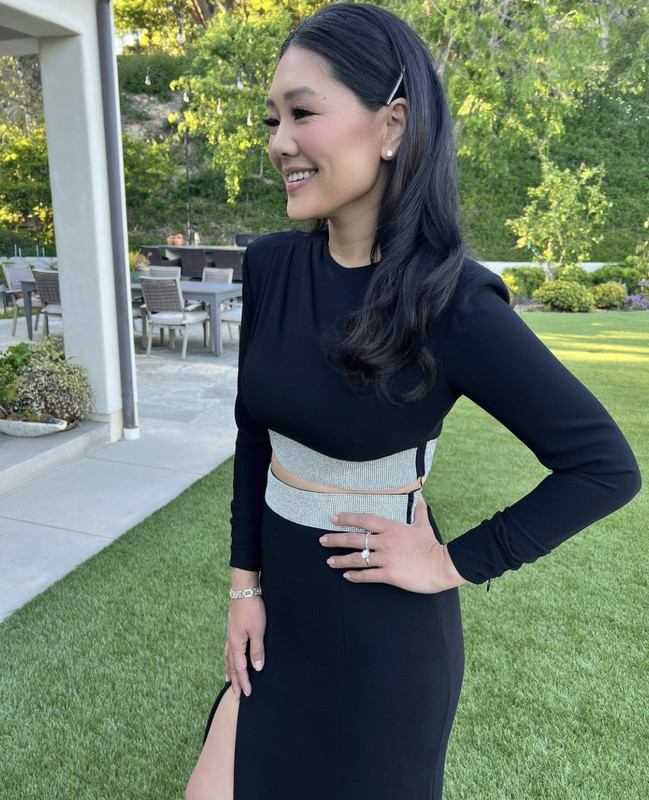
Crystal Kung Minkoff’s Black Embellished Crop Top and Skirt Set

Crystal Kung Minkoff’s Black Embellished Crop Top and Skirt Set / Real Housewives of Beverly Hills Season 13 Episode 12 Fashion

On tonight’s Real Housewives of Beverly Hills it is the infamous Homeless Not Toothless Gala. This year Crystal Kung Minkoff nails her look in a black embellished crop top and skirt set. And the fact that her ‘fit has such fab Style Stealers means we need to give one of them a full set of teeth home stat.

Sincerely Stylish,

Jess


Crystal Kung Minkoff's Black Embellished Crop Top and Skirt

Photo: @crystalkungminkoff


Style Stealers


Originally posted at: Crystal Kung Minkoff’s Black Embellished Crop Top and Skirt Set

Read More