
Month: January 2024

January Book Reviews: 11 Titles to Spike Your Interest

January book reviews

As I write this blog, snow is whirling around my high-rise – our first real storm of the season. Our high temperature by Saturday will be zero. What a fun time to settle in your comfortable chair with an enjoyable read. There are some worthy new releases here and dips into the backlist that rewarded me with excellence.

Father and Son, a Memoir by Jonathan Raban (Knopf 2023)
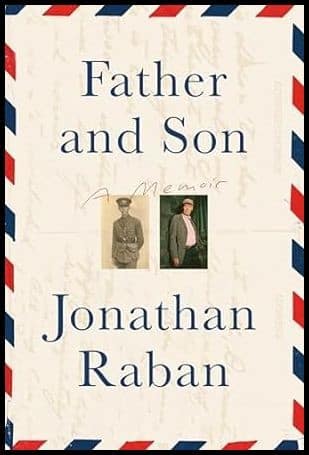
A beautiful book – a tribute to Raban’s father and mother as they exist through WWII, and a chronicle of Raban’s stroke and rehabilitation as he was drafting this book. Spoiler alert: Raban died right as Knopf published the book last year. His parents were prolific letter writers and most letters remained as source material for the 1940s.

Raban’s father, Peter, was an RA officer at the front (Italy, Africa, Palestine) and could write little about his situation for security reasons. But his letters provide love and support for his wife, Monica, left in Norfolk with his newly born son and his mother-in-law. Raban fills in the gaps with authentic memoirs of other British officers and soldiers written after the war.

The class separations in the British military are eye-opening, as is the general acceptance of anti-Semitism. As readers, we share the intimate but separated family life of the WWII Rabans and the humorous, frustrating, and inspiring story of Jonathan’s stroke. I could not put it down.

Feared by Lisa Scottoline (St. Martin’s Press, 2018)

This is a legal mystery – a cozy mystery. Three female partners and several associates, one of whom is a handsome man. Chaos ensues when a job applicant sues the firm for reverse discrimination involving actions by their one male associate.

Scottoline’s writing is competent and breezy – the book zips by. But I did not care for the main characters, all of whom were a bit overdrawn. My next Scottoline book is a stand-alone mystery. Feared is the beginning of a series, but I will not be reading more.
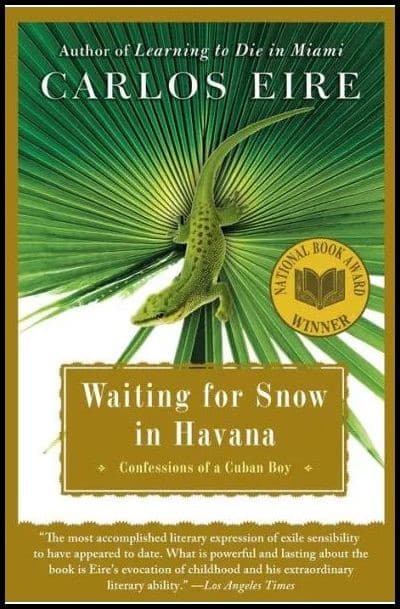
Waiting for Snow in Havana: Confessions of a Cuban Boy by Carlos Eire (Free Press, 2003)

A beautiful, sad memoir of childhood age 7–11 in pre-Castro Cuba – paradise lost. In the preamble, Erie says, “This is not a work of fiction. But I would like it to be.” The chapters are not consecutive, but they build on one another as you become familiar with Carlos’s world.

He does not apologize for his family’s affluence – they are not as wealthy as many in Havana. But they live in a bubble crushed by the Castro Revolution. Erie has a sarcastic sense of humor developed as an immigrant to the U.S. This book won the National Book Award for nonfiction in 2003. I have ordered the sequel, Learning to Die in Miami. Recommended.

American Dirt by Jeannine Cummins (Flatiron Books 2019)
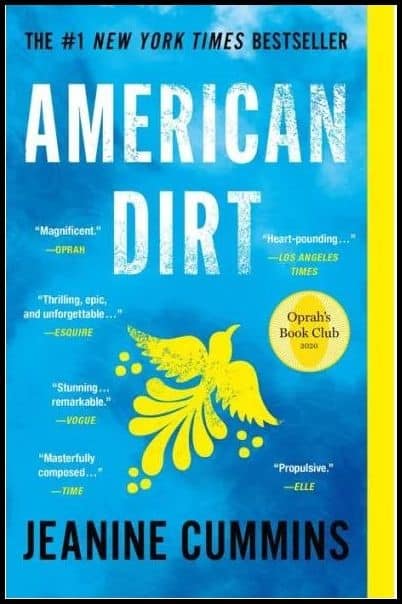
My friend Lynn suggested this as a good, quick read. I recognized American Dirt as the 2019 novel that caused an embarrassing furor in the publishing world. The U.S. was in the depths of the cultural appropriation miasma.

Non-literary critics were quick to condemn Cummins for writing a book about Mexicans when she is not Mexican. They condemned Flatiron for publishing such and book, and for paying Cummins an unheard of $1 million advance. Apparently, Flatiron liked the book and saw nothing inappropriate about the author’s background. Until they were gob smacked by the culture police and then fell to bended knee begging forgiveness. Cummins even apologized.

American Dirt is not a brilliant book. It’s not worth $1 million advance. It is not cultural appropriation. Those who have experience on the U.S. – Mexico border know the book speaks the truth about the violence of the cartels. Killing 16 people at once at a party is not an unlikely story. And, folks, it is a novel, not non-fiction. Here is what I found inappropriate:

  • Migrants ride on top of the freight train for hours on end with no mention of how they manage calls of nature. Authors do not explain this in most “thriller” books and movies.
  • That sweat soaks their clothes. In the desert, you sweat, and it quickly evaporates.
  • The gangsters molested and released the beautiful sisters. Sorry, sicarios (cartel killers) kidnap and kill women. There is no moral compass in the cartels.
  • That an eight-year-old boy behaves so beautifully.

Enjoy American Dirt for what it is: a good, quick read.
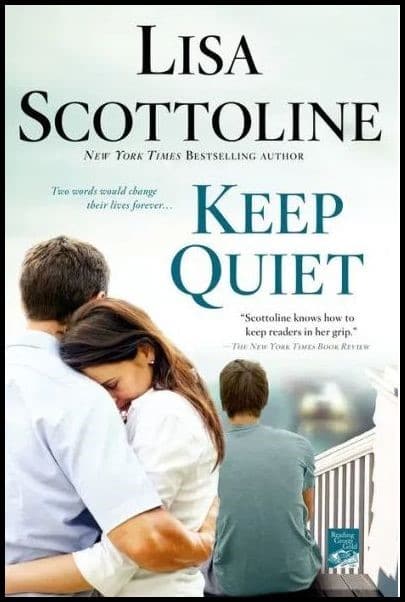
Keep Quiet by Lisa Scottoline (St. Martin’s Press, 2014)

The second Scottoline book arrived quickly from the library. On a day when I was feeling puny, I pulled it out and read it in the day. Keep Quiet reveals the undoing of a family following a tragic accident. I swear she writes the entire book and then goes back and breaks the narrative into chapters because the story continues from the period at the end of one chapter right into the first sentence of the next. It is a good story, a bit too neatly tied together at the end. If you want a fast read to take your mind away from reality, pick this one.

The Professor’s House by Willa Cather (Vintage Classics, 1990 – originally published in 1935)
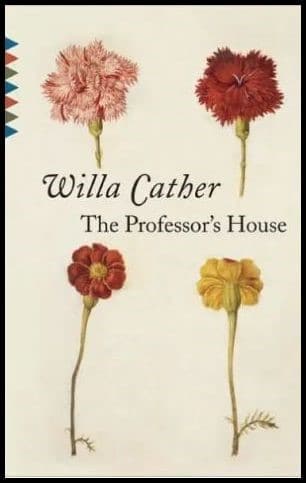
If you want a book to savor, where you reread sentences because the wordplay is so captivating, slip into The Professor’s House. This is Cather at her best. No rollicking plot, no in-your-face characters. The Professor’s House takes us inside a post-WWI midwestern family. There is the professor who teaches at the local university and wrote an award winning eight-volume history of the Spanish in the Americas in the 16th and 17th centuries.

His two lovely daughters are well married, and his wife loves him, but will become more entwined in her future as a grandmother. The plot reveals the professor’s growing need for time on his own, in his own house. Here, with his family in Europe for the summer, he recalls the story of his former student and friend. A rewarding read for a frigid day.
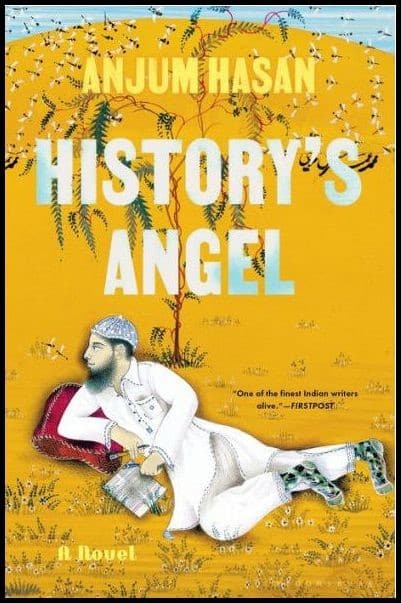
History’s Angel by Anjum Hasan (Bloomsbury 2023)

This was a tough read, but worthwhile in several aspects. First, we do not see too many books about contemporary, middle-class life of Muslims in New Delhi. The wife is a striver – working, studying, saving to move to a larger flat. The husband is a dreamer – an academic teaching middle-school history, trying to tie contemporary situations to the Mugul Empire.

There are wonderful character studies of the old people, yearning for the way of life before the separation of India and Pakistan. Are they better or worse off being the minority in India? If you enjoy contemporary Indian novels, read this; otherwise skip it.

First to the Front: The Untold Story of Dickey Chapelle, Trailblazing Female War Correspondent by Lorissa Rinehart, St. Martin’s Press, 2023

Reading the introduction, I did not get caught up in the story of Dickey, but by the end of the first 50 pages, I could not put it down. What a woman! Rinehart does a masterful job of combining the extensive writings by Chapelle, including her autobiography, with creative non-fiction touches that only enhance the narrative.

Since national magazines widely published her war coverage, and there are archives of her unpublished work, there seems an opportunity for a book of her personal writing. Who knew Readers’ Digest was a large supporter of original content creation? This is an excellent book about a war chronicler from WWII through the end of the Viet Nam era.

The Pole by J.M. Coetzee (Liveright Publishing Co. 2023)
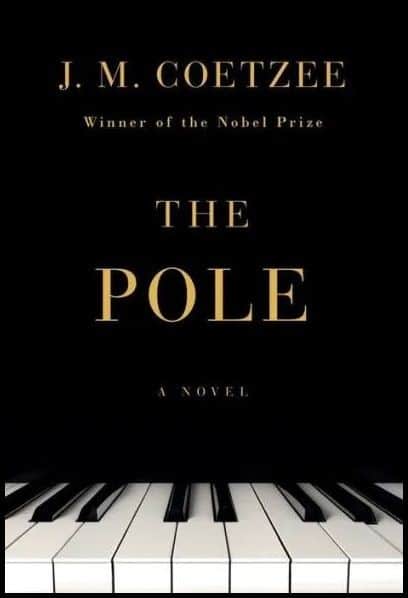
I read this one in an afternoon. The Pole is as tight and terse as you’d expect from Coetzee. The story is hard and dry, yet it is a love story about a Barcelonian middle-aged woman, Beatriz, and a Polish musician, Wittold, known as an interpreter of Chopin. The musician is in his early 70s.

They communicate in English, a third language. The conversation is simple, so they do not make mistakes. Told from the point of view of Beatriz, I wondered about female approbation, as Coetzee develops her so stoically, so coldly. There is no intimacy, joy, or animation in her, as there is in Wittold. He is a horny old man who obsesses as Dante did over his Beatrice. I enjoyed this book by a great writer. Think about languages and communication as you read it.

Fierce Ambition: The Life and Legend of War Correspondent Maggie Higgins by Jennet Conant (W.W. Norton, 2023)

Another biography of a “first woman on the front lines” reporter from WWII through most of Viet Nam. This book is chock full of ambition, sex, bravado, sex, egoism, jealously, and more sex. What a woman! Higgins was a reporter. Dickey Chapelle was a photo-journalist. The difference between the stories is that Dickey stands back from the action to frame the picture. Maggie had no restrictions and barges onto the front lines, whether she is welcome or not.

Most of the soldiers love her. The brass is embarrassed by their lack of control over her. Of course, she charms the highest generals and admirals. I am glad that I read both books, though Fierce Ambition is a better read. What I would like to see now is their writing. Neither book includes lengthy quotes. Time for a deep Google dive.

The Crime of Father Amaro: Scenes from the Religious Life by Eca de Queiros (first published in Portugal in 1878, this translation published by New Directions in 2003)

Recommended by my friend Paul, an iconoclast who loves poking fun at religious life. To fully enjoy this satire, you need to have the experience of a religious education that has produced skepticism, not sainthood. Eca de Querios makes it clear in the first chapters that Father Amaro (the Portuguese word means bitter) became a priest by the design of his benefactors, not because he felt a calling.

So, you could forgive him for falling from grace and dragging down others with him. But not many of the priests in late 19th century Portugal live by the letter of the canon. And the Catholics whom they minister are either hysterical relic lovers or content to keep their eyes down and perform only the Church’s minimal expectations.

Then there are the liberals, influenced by the Third Republic in France, who defy the government, the church, and the clergy. It makes for good soup – a 19th century soap opera. Enjoyable if you like Trollope or Dickens, with a heavy dose of religious cynicism.  

Let’s Have a Conversation:

Have you started any new books this January? What title(s) are on your 2024 read list? Please share below and let’s exchange favorites!

Read More

All Aboard: Uncover the World’s Most Breathtaking Train Journeys

the World's most breathtaking train journeys

Have you ever dreamt of seeing the world in a different light? Swapping the rush and stress of airports for the romantic charm and stunning landscapes only a train journey can provide? Here are some of the top train journeys in the world.

The Eastern Oriental Express Train

The Eastern Oriental Express Train, regarded as one of the most luxurious train journeys in the world, is a trip back in time to the era of glamorous and romantic travel. Traveling across Thailand, Malaysia, and Singapore, it provides a chance to experience the diverse and striking landscapes of Southeast Asia in absolute comfort.

The train, a vision in green and gold, is amplified by its signature polished wood-paneled carriages and cabin suites that exude an old-world charm. As one traverses through lush jungles, ancient temples, and quaint villages, the Eastern Oriental Express is not just about travelling from one destination to another, but a journey steeped in luxury, elegance, and unforgettable experiences.

The Blue Train – South Africa

South Africa’s Blue Train promises more than a journey. It offers a five-star “hotel-on-wheels,” with breathtaking views of diverse landscapes – from Cape Town’s Table Mountain and Pretoria’s Jacaranda City. Onboard, experience personal service, delectable cuisine, and luxury accommodation. The vibrant landscape features dramatic mountain ranges and green vineyards. You’ll find yourself lost in a world of tranquility and luxury, offering a truly unique and unforgettable experience.

Glacier Express – Switzerland

Glacier Express, “the world’s slowest express train,” lets you fully take in the extraordinary panorama of Switzerland’s Alpine scenery. Travel through 91 tunnels and cross 291 bridges, as you journey from Zermatt to St. Moritz, in glass-top carriages.

This exceptional journey makes you feel a part of every town, river, mountain, and forest it passes. Travelling comfortably at a slow pace, you get to witness the detailed beauty in every curve. It’s an unforgettable rendezvous with nature’s masterpieces!

The Ghan – Australia

The Ghan, named after the Afghan cameleers, takes you on an epic trip across Australia. Witness the stunning diversity of landscapes – from the fertile countryside surrounding Adelaide to the rusty-red expanses of the Outback and the tropical allure of the Top End.

As the landscapes transform before your eyes, you transition between bustling city life to serene solitude, immersing in Australia’s spirit. Witness flocks of colorful birds take flight at dawn, sleep under a blanket of stars and wake up to a stunning sunrise over the Outback. It’s a true testament to Australia’s dramatic contrasts.

Rocky Mountaineer – Canada

Ride the Rocky Mountaineer and experience Western Canada’s rich diversity. Traverse through the Rockies’ magnificent peaks, lush rainforests, and valleys teeming with wildlife. Enjoy this ride in a bi-level glass-dome coach while partaking in gourmet meals. With optimal comfort and extraordinary scenic beauty, every new site offers an adventure, filling your heart with lasting memories. It’s a captivating expedition across endless horizons, promising a unique perspective of Canada’s wild majesty.

Venice Simplon-Orient-Express – Europe

Embark on a journey of romance and adventure on the Venice Simplon-Orient-Express. In an art-deco setting, take in the breathtaking Alpine vistas, indulge in world-class cuisine, and immerse yourself in the art and culture of the spectacular cities it traverses: London, Paris and Venice.

As you make your way through the heart of Europe, you are transported to a time of opulence and elegance. With every turn, journey back in time, unveiling the romance and admiration of Europe’s golden age of travel.

The Northern Explorer – New Zealand

Fill your senses with nature’s grandeur as you travel across the North Island of New Zealand, from Wellington to Auckland. The Northern Explorer takes you through farmland, dense forests, and across towering viaducts to discover remarkable coastlines. New Zealand’s amazing landscapes seem to have been designed for a breathtaking train ride, and you get it all with the Northern Explorer. Witness nature at her best, all in the comfort of your seat.

The Royal Scotsman – Scotland

Travel the scenic landscapes of Scotland in luxury aboard The Royal Scotsman. This grand highland chariot offers breath-taking views of castle ruins, shimmering lochs, and ancient highland clans. The journey offers guests a chance to step back in time and immerse themselves in the tales, history, and culture of this majestic nation. A ride through the land of the brave has never been so evocative.

The Belmond Hiram Bingham Luxury Train

Named after the explorer who rediscovered the Inca city, this luxury train gives travelers a unique experience enroute to Machu Picchu. The elegance of 1920s Pullman carriages combined with gourmet, on-board dining and intriguing landscapes in the background makes this trip truly special.

The train travels from Poroy Station in Cusco to Machu Picchu. The journey weaves through the Sacred Valley, revealing stunning Andean landscapes, passing by terraced fields, rural villages, and towering mountains, before culminating at the breathtaking Inca citadel. This gives you the chance of witnessing the ever-changing landscapes, and some of the world’s most spectacular archeological sites.

Seven Stars Kyushu Japan

Embarking on a journey with the Seven Stars in Kyushu is stepping into a realm of unparalleled luxury, tradition, and natural beauty. Known as “Nanatsuboshi” in Japan, this grand voyage is Japan’s first-ever luxury sleeper train that offers visitors an unforgettable experience of Kyushu’s diverse and rich cultural heritage intertwined with extraordinary scenic beauties.

This opulent 7-car train was launched in 2013 and takes its passengers through all seven prefectures of Kyushu, providing breathtaking views of both coastal landscapes as well as mountainous terrains. What sets Seven Stars in Kyushu apart is its exquisite craftsmanship that is evident in every detail. The interiors are adorned with intricate detailing, with each carriage showcasing the work of Kyushu’s local artisans.

These journeys manifest that train travel isn’t about moving from point A to point B; in fact, it’s a rejuvenating experience par excellence that one must undergo.

Also read 8 USA TRAIN TRIPS FOR SOLO WOMEN OVER 50.

Let’s Have a Conversation:

I would love to hear your thoughts. Have you been on a train journey? What was your experience like? Which train did you choose and why?

Read More

What If You Did Not Have a Choice to Age Well?

What If You Did Not Have a Choice to Age Well

A new year is upon us. Yes, that means
the hands of time are moving as they have throughout eternity. For those of us
who are in the sunset and twilight of our lives, we recognize that sooner than
later time ticks toward the midnight hour.

Many people lament getting older.
Others who are younger prefer not to associate with people of a certain age
because it reminds them that they too will eventually reach the later days of
their life. Some hope that maturity will bypass them, and the fountain of youth
will ensue.

As we know, no matter how much we
maintain a healthy lifestyle and obtain cosmetic enhancements, mortality in
this lifetime is our destiny, and our presence on earth will come to an end.

Now, you might wonder why I am being
so blunt and, maybe to some, dire. Do I need to be so front and center to those
who are of a certain age?

I say yes, because of the purpose of
my message. You may ask, “What is that?” Unlike many of our peers deprived of
the choice, we have succeeded in living as a sexagenarian.

Some Areas of the World Are Not So Fortunate

Many years ago, a young man came to
see me for some support after re-entering the United States. He had been in a
third-world country for an extended period and returned because he realized how
easily his peers forgot him after being away for that length of time.

As we know, in our fast-paced,
youth-oriented society, people easily become preoccupied, and at times, the
adage “out of sight, out of mind” rings loudly. This young man was relieved to
be back home ensconced in his milieu.

I talk about my brief encounter with
him because of something pivotal he shared, which I never forgot. This young
man noticed, as he lived and worked in a less-advanced foreign country, that he
saw few if any older adults.

A few years after this memorable
exchange, I was sitting with another client who, at the time, was a
sexagenarian, as was her slightly younger sister.

This lovely client informed me that
her sister preferred not to be around “old” people. I looked at my client and
said, “Really now. Well, she has a choice to continue to age or not.” My client
agreed.

Aging Has Its Challenges

Now, as I’ve mentioned in other articles, I am not naive in recognizing that the aging process has its challenges. Although I am healthy, individuals with disabilities and illnesses have been a part of my inner circle throughout my life.

Also, I am well aware that growing
older can be wrought with increasingly chronic health problems, memory loss,
and fragility.

Although medical innovation continues
to bestow us with amazing treatments, we have a long way to go before we tackle
some very damaging illnesses, including the scourge of Alzheimer’s disease and
the giant umbrella of dementia.

Another issue is that our world tends
to get smaller as we age. Consequently, we must strive to find purpose and
connection. If our brains still work, why not take advantage of using those
precious brain cells to preserve the abilities still available to us as we age?

When asked, many people say they want
to live a long life. That is fine, but is there much thinking about purpose
during those waning years?

Some people are blessed with abundant
families who continue to include them and keep them a part of their world.
Others are not so endowed. Yes, life can be vastly unfair, but you still have a
choice.

Would you immerse yourself in sadness
and despair, which could contribute to withering, stagnation, and earlier death,
or would you rather tap into some hidden talent or desire and explore?

If you choose the latter, be open to
the possibilities, because you never know where they can lead you. Just think
how exciting that might be!

Slowing Down Does Not Mean Stopping

No matter how you view senescence,
longevity is your gift. I say, take advantage of what is ahead, and even if you
tire more often and need more time to restore your energy, heed the ageless
advice of the great Confucius: ”It does not matter how slowly you go so long as
you do not stop.”

Let’s Have a Conversation:

What is most important to you as you
age? Do you think yourself privileged to be a sexagenarian? Do you consider
yourself old? Do you want to grow older? How do you go about it? Do you see
yourself stopping? Please share your thoughts and let’s have a chat!

Read More

The Taboo Topic of Politics: Loving Someone with an Opposing Point of View

taboo topic politics

“Politics make strange bedfellows” says a mid-19th century proverb, meaning people of widely differing views come together when they have a common cause. It’s certainly true of my husband and me. We are on opposite sides of the political spectrum, and for years, I despaired of ever discussing elections without walking away from him in disgust.

A Little or a Lot Mismatched

Before we were married, he said, “So what if you’re a little to the left of center and I’m a little to the right of center.” We were falling in love and that seemed a good enough reason to let it go. But as the years passed, and the political landscape became more fraught and contentious, those differences seemed “more than a little.” I became frustrated with him for sticking to his more conservative views.

I wished we could be like James Carville and Mary Matalin, the political commentators from different parties who have been married for decades. What’s their secret? I wondered. A 2016 article at fivethirtyeight.com stated that 30 percent of married households contain a mismatched partisan pair. “Mismatched partisan pair” sounds dire, doesn’t it? But does it have to be?

Look for Common Ground

Relationship expert Anita Chlipala says it’s important to look for common ground where your beliefs may overlap. Like many “strange bedfellows,” my husband and I agree that poverty and homelessness should be eradicated, but we disagree on how that should be accomplished. He doesn’t see my way is best, but I get nowhere trying to force him to change. It only makes us both tired of talking about it.

In her book, Beyond Your Bubble: How to Connect Across the Political Divide, Skills and Strategies for Conversations That Work, Tania Israel advises not shaming your partner or throwing opposing facts at them but asking questions instead.

Questions like:

  • What have you seen that causes you to feel that way?
  • What do you want to see in our country’s future?
  • What worries you about the current political climate?

Listening vs. Agreeing

Over time, I have found that making myself listen, and trying to understand his point of view, does not mean that I agree with my spouse. It just means I love him and want to get along.

Listening to his answers without jumping in with my counterargument, as I used to do, preserves his dignity and brings us closer, as I learn more about his motivations, many of which are not that different from my own. We both want the best for people, peace in the world and our country, and enough resources to enjoy our lives.

Challenging Our Own Beliefs

Over a long relationship, we have both moved a tiny bit closer to the other’s views. Sometimes, I share with him articles I find online that are closer to his beliefs than mine. Reading them has helped me understand the conservative philosophy. If I just stick to my own, likely biased, outlets, I’ll never learn anything new or challenge my own beliefs. And sometimes I do need to challenge myself.

Voting for different candidates has no effect on our daily life together and scoffing because he reads a very conservative newspaper is really belittling him and his intelligence, something a loving partner should not do. If you feel that’s happening, and your partner is contemptuous toward you because of your political beliefs, try a different approach. If that’s impossible, you may want to consider ending the relationship.

“Criticism and contempt are toxic relationship behaviors, and if they aren’t stopped, [they] can create irreparable damage,” says Chlipala.

The Propaganda Factor

These days, there’s another very damaging phenomenon going on: propaganda and misinformation. If your partner is adding politics to more and more conversations, exhibiting frightening anger, spending time alone in chat rooms, and mentioning conspiracy theories, they may be influenced by propaganda.

Former cult member and deprogrammer Steve Hassan advises against trying to talk them out of it which can make them feel belittled or persecuted. Instead, he recommends reconnecting over shared interests and experiences, like hobbies or vacations, to remind them of who they are outside of these beliefs.

Another technique is to redirect them toward legitimate organizations working on issues they care about, like ending human trafficking or having safe and secure elections.

Bottom Line

Keep the lines of communication open, but don’t put up with talk that is damaging to the well-being of your marriage or your own emotional health.

It’s a crazy world out there, and we need our bedfellows now more than ever. Let’s make sure they feel welcome and ‘agree to disagree’. We may both learn something and even change a little bit in the process – a good thing at any age.

Let’s Have a Conversation:

What are some taboo topics in your marriage/partnership? Are you and your spouse on different ends of the political (or other) spectrum? How do you handle those differences? Have you searched for professional help?

Read More