Author: Admin01

Pandemic Pet Behavior: Are Your Pets Acting Strangely?

pandemic pet behavior

Kismet is lying on my feet. Since the pandemic, that is her favorite place to be while I write. My study is the warmest room in the house, and for most of her 10 years of life my companion Border Collie has spent the daylight hours sleeping on the soft rug under my large desk under the window where my mostly unused 27-inch iMac resides.

I prefer my laptop or tablet for writing, so I am sitting at a small table crowded with reference materials, a lamp, headphones, my iPhone, and a cup of coffee. Once I settle into my chair, Kismet sits on my feet. Nothing too strange there. It’s kind of sweet and keeps my feet warm.

Pandemic Pup

What is strange – and new since the pandemic – is that whenever I rise from my desk, instead of settling under the big desk while I stretch my legs, she follows me wherever I go. She follows me to the sink while I wash the dishes, to the garage while I load clothes into the washing machine.

She stands and stares at me while I make the bed. If I don’t return to the study within 10 minutes or so, she goes there herself, and stands in the middle of the room barking, demanding that I return.

My Muse?

At first, I thought she was acting like a muse, encouraging me to write. But now I believe she simply feels safer curled up beside me as I tap the keys in search of the perfect scene.

In the last six months we have gone from buddies who saw each other mostly in the mornings and late at night to being the closest of friends, together now 24 hours a day. And the more we are together, the less Kismet wants to be alone. I supposed that following me from place to place was triggered by our new routine, and it turns out that research supports this.

In Search of Consistency

Dogs of the Border Collie breed like a consistent schedule, and they need a lot of exercise. We have always gone out in the morning after I feed her, but my schedule has relaxed a bit since I’m not racing out the door to work.

If I start clearing away the detritus of the previous day and forget to pour out her feed, she will stand by her bowl and bark. Once she eats, she goes straight to the front door and waits for me to come and open it.

She used to wait patiently by the door until I came. But now, if I don’t move fast enough, she barks until I come over and snap on her leash. An hour later, she’s back at the door again, barking to go on another walk.

It’s as if she’s trying to get our old routine back. I used to leave for work after our walk. Perhaps if we go for another walk, I will leave, she is thinking, and the old world, the one she understood and felt safe with, will return.

Safe – for Whom?

I found myself feeling pressured into behaving in ways that brought Kismet comfort and made her feel safe. That meant I was writing more but neglecting my chores. Sitting too long in one position, writing beyond cognitive overload.

Then Kismet began running to the front door and barking several times a morning. Sometimes she announced the arrival of a package, but mostly it was a dog and its human walking down the street.

She started barking at my colleagues during Zoom calls. As soon as someone began to speak, Kismet would bark repeatedly. It got so bad that the administrator would remind me to mute my mike as soon as I joined the group. I began wearing headphones so she couldn’t hear the other participants. But then when I joined a conversation, she’d bark again.

Finally, I turned to the Internet to see if I was the only one experiencing these new and annoying behaviors.

Pandemic Pet Behavior

It turns out that Pandemic Pet Behavior is a thing. As early as April 2020, journalist Michael Waters, writing for Vox, reported clingy dogs, cats “pouncing on exercise equipment, gliding across countertops or hiding in corners and shooting their owners concerned stares.”

New Walking Routine

Waters consulted Dr. Leanne Lilly, assistant professor of veterinary behavioral medicine at Ohio State University. She suggested that by being at home 24/7 owners had increased the number of interactions a day taking place between owners and their pets.

Because so many people are bored from being contained in their homes all day, they began walking their dogs more often, just like me. The increase in foot traffic outside my home was triggering Kismet’s alarm reflex, leading her to bark at every little noise. Including the voices coming over my screen when I was on a Zoom call.

Clinginess

Dr. Lilly explained Kismet’s clingy behavior too. Pets, she said, just like children, can sense our moods and our psychological well-being. Fabricio Carballo, an animal cognition researcher at the University of El Salvador, published a paper in January reporting that dogs experience higher levels of anxiety when their owners are experiencing stress.

Combining that with a disruption of typical schedules and the increase in togetherness caused by sheltering in place may result in what veterinary researchers call displacement behaviors. Those can include licking, biting, whining, barking and – I suspect – hovering – when there seems no reason for those behaviors.

Pet Conditioning

In August, Maura Judkis, a reporter for the Washington Post, described Miles, a small mixed-breed dog, who in April began barking at anyone wearing a mask. Miles’ human had worked closely with him when he was first adopted and understood how to deal with troublesome behavioral issues.

With the help of two friends, she conditioned her pet to accept the masks on these familiar people, and eventually he ignored mask-wearing strangers when they went on walks.

Tracy Krulik, a dog trainer and behaviorist in Northern Virginia, suggests the use of conditioning to extinguish other troublesome displacement behaviors. She’s working with Daniel Mills, a veterinary behaviorist and professor at the University of Lincoln in the UK, to study the long- term effects of the pandemic on dog behavior – particularly whether it creates separation anxiety in dogs that didn’t have it before.

Meanwhile she encourages people to get out of the house more, to help their animals get used to their absences in small doses. “If people can’t go back to work,” Krulik says, “go sit under a tree, go in your car, just get out of your house.”

The most important lesson I learned from reading the findings of these animal behaviorists, is that Kismet is no weirder than the other pets reeling from these confusing times. And there are solutions.

I have started keeping a bowl of treats on my crowded worktable. When Kismet barks, I now command her to sit and lie down. When she settles, I give her a treat. It’s a small thing, but it’s a start.

How are your pets behaving since the pandemic started? Are you seeing these displacement behaviors? Let’s swap stories!

Read More

Tayshia Adams’ Black Sequin Romper

Tayshia Adams’ Black Sequin Romper on The Bachelorette

The Bachelorette Season 16 Episode 12 Fashion

Although Tayshia Adams’ black sequin romper on tonight’s episode of The Bachelorette may have been worn in a romantic fantasy suite trailer, I think we can all agree that it’s definitely anything but trash. However considering she’s already been seeing wearing it on national television, we do recommend that she immediately throw it out donate it to us.


Fashionably,

Faryn


Tayshia Adams’ Black Sequin Outfit

Tayshia Adams’ Black Sequin Outfit

Click Here to Shop Her Retrofete Romper on Sale

Originally posted at: Tayshia Adams’ Black Sequin Romper

Read More

Sephora Just Upped Its Birthday Gift Offerings for *All* Tiers

We’re ready to say goodbye to 2020 in more ways than one so any exciting 2021 news, no matter how small, is extremely welcome. Yes, this includes beauty news, especially when it means free products. It’s always fun to pop into Sephora to grab your birthday gift and now, we have the details on Sephora’s birthday gifts for 2021—and they’re good no matter what tier you fall into.

Normally, Insiders have a choice of three birthday gifts, while VIB and Rouge have a choice of four, including the online rotating gift. For 2021, all Insider, VIB and Rouge members will have access to the rotating gift. That gives you more options to find the travel-size product you want to try from the makeup, skincare and haircare categories. We love to see it.

Curious about the exact gift offerings? We’ve got you! Peep them all below and shop the full-size favorite for a last-minute gift idea.

Our mission at STYLECASTER is to bring style to the people, and we only feature products we think you’ll love as much as we do. Please note that if you purchase something by clicking on a link within this story, we may receive a small commission of the sale.

Sephora. birthday gift

Sephora.

Kérastase

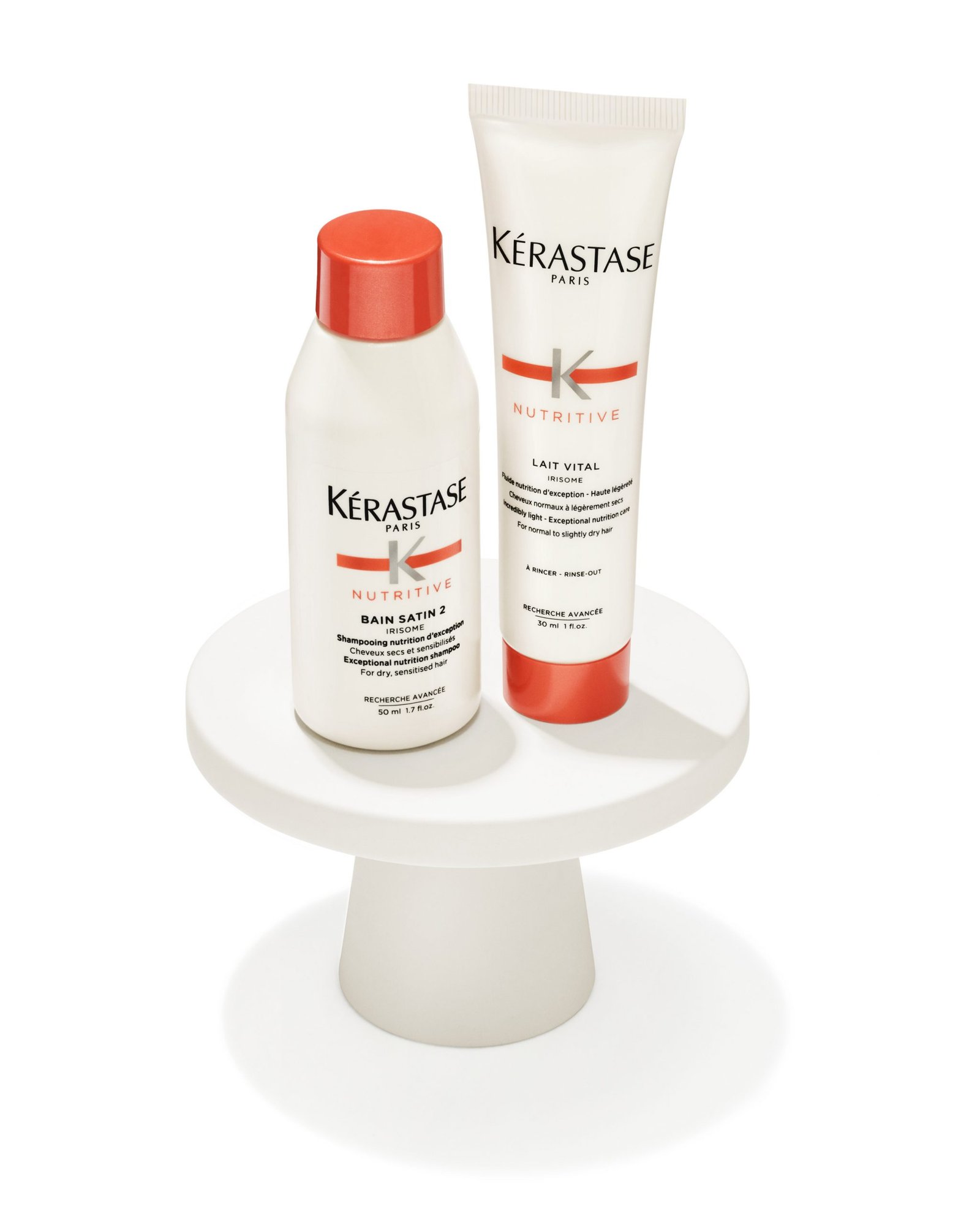
The first rotating gift of 2021 is this Kérastase set including the Nutritive Shampoo and Conditioner. Each leaves hair silky-soft and protects it from dryness.

Sephora. birthday gift

Sephora.

Moroccanoil

This set will give your hair all the moisture with the Hydrating Styling Cream to condition, Moroccanoil Treatment for less frizz and Night Body Serum to soothe skin.

Don’t forget, Moroccanoil has body products, too!

Sephora. birthday gift

Sephora.

Laneige

Grab this gift for the cult-favorite Water Bank Moisture Cream to strengthen the skin’s moisture barrier, Water Sleeping Mask for extra hydration and Lip Sleeping Mask for a softer pout.

Lip products make great gifts!

sephora birthday gift

Sephora.

Nars

This luxe gift includes two favorites: Mini Laguna Bronzer and Mini Laguna Lip Balm for glowy skin and hydrated lips.

STYLECASTER | Ashley Benson Interview

Read More

Strength Versus Stretch – Is This the Right Question?

stretching and strength training

Traditionally, many trainers and movement teachers have considered strengthening and stretching to be opposites. But I would like to tell you why they are not, and how reframing your thinking will support you in more well-rounded exercise and movement.

Often, we think one or the other is more useful to our bodies, and that simply isn’t true.

Balancing Strengthening and Stretching Is a Thing of the Past

In the past, even I have talked about the balance of strengthening and stretching in a class or in the context of a well-rounded day. It’s a common theme in training sessions.

I had good intentions with my goal of offering both types of movement in a class. However, I think I may have perpetuated a few myths by continuing to reinforce that they are opposites.

I still believe that both are useful movement options, and we should all incorporate them into our day, but let me explain why you and I may want to change how we think about stretching and strengthening.

Seeking a balance between strength and flexibility is rooted in a paradigm where strength is viewed as an activity that ends up shortening and tightening our muscles. In contrast, stretching is viewed as an activity that ends up lengthening muscles, and possibly weakening them.

So, in that sense, we’re looking at the two activities as though they are opposite sides of a coin. From that point of view, we might draw a conclusion that too much strengthening will shorten all our muscles and make us muscle-bound.

Similarly, we would think that doing too much stretching might create an imbalance in our body, and we might have hypermobility issues.

From this lens, it would seem that we might need to bring ourselves back to balance by bringing in a lot more strength work or stretching work to counter what we have been doing. This means we see the balance as a middle point between strength and flexibility. 

Our Muscles Are Affected, Just Not the Way You Think

However, we now know from movement science that that’s not an accurate way of looking at strengthening or stretching. These are not activities that change the physical length of our muscles from end to end.

In fact, our muscles have fixed attachment points, and unless we undergo some surgical procedure which might relocate an attachment point, we are not changing the length of our muscles from end to end.

So, strengthening the muscle tissue does not change the muscle length. Yet, strengthening does have effect on our muscles!

How Does Strengthening Affect Our Muscles?

When we strength-train we increase the ability of muscles to produce force, because we have actually increased the number of active muscle cells. Strength training makes our muscles stronger, not shorter.

How Does Stretching Affect Our Muscles?

Stretching makes our muscles more flexible and more extensible. So, stretching decreases resistance torque and increases our tolerance for stretching. Thus, we increase our flexibility, but it doesn’t make our muscles longer. 

The funny thing is, we often hear people say that stretching weakens the muscles. But we know that the main way that we weaken our muscles is to not use them.

Stretching and Strengthening Are Not Opposites

Hopefully, it’s becoming clear that stretching and strengthening are not opposites. They don’t have a binary relationship in which they work against each other.

Instead of thinking about strengthening and stretching as opposites, let’s think of strength and flexibility as two separate qualities, alongside many other qualities that we can possess to different degrees in our body. We desire strength, flexibility, balance, coordination, and endurance in our bodies.

Thus, it’s not so much that we elevate strength and flexibility and think about them as two opposites, but instead as two features among many. Every individual’s body is made up of some mix of these traits, in terms of their bio-motor abilities.

What Does This Mean for You?

We know that the body is not as simple as pairs of opposites. If we want to be practical about this more complex way of looking at our body, it makes sense to fit all of this into the life we see for ourselves.

In order to do the activities you want, for as long as you want to, try this plan:

  1. Be as strong as you need to be and place force on your bones for bone health.
  2. Be as flexible as you need to be.
  3. Work on your balance.
  4. Maintain good coordination.
  5. Keep up your endurance.

As always, I recommend small, doable daily steps toward your goals of strength, flexibility, balance, coordination, and endurance. Seeing your body as an evolving, ever-changing blend of traits helps you choose right-fit activities that move you toward your unique goals.

Have you tried to do either stretching or strength-training? Which of these have you done more of and why? How do you balance your exercise routine for the best effect on your whole body? Please share with the community!

Read More

7 Ways To Be Happy When It Gets Dark Early

Let’s be honest: There’s nothing fun about the “falling back” portion of Daylight Savings Time. Turning the clocks back an hour means darker days and longer nights, which can often make for a rough transition for some people. The onset of winter can also cause Seasonal Affective Disorder—or SAD—to kick in, a very real condition that affects more than 10 million Americans (75 percent of which are women.) Real talk: When it gets dark at 4:30PM, focusing on how to be happy is sometimes easier said than done.

According to research, where you live plays a big role in how you deal with darker days—East Coasters, for example, are way more likely to be affected by SAD than folks who live in sunnier climes like Florida, California, or Arizona, and are more at risk for things like depression, social withdrawal, lethargy, and anxiety once it stars to get darker earlier.

Why? It mostly has to do with the fact that when we detect darkness, a small gland in our brain called the pineal releases melatonin, which is responsible for our sleep cycles, so our bodies are being forced to be awake when the brain thinks it should be asleep. When we detect light, conversely, our melatonin levels wane and serotonin takes over, which is a natural mood elevator.

Even if you don’t suffer from from full-on SAD symptoms—which can be treated with the use of light boxes that mimic outdoor sunshine and can cause a chemical shift in our brains that lifts our moods—you’ve probably felt down at some point or another throughout the winter.

Here, we’ve highlighted how to be happy during the bleak winter months by laying out seven ways to naturally boost your mood.

STYLECASTER | Happy During Daylight Savings

Adobe.

1. Make Time to Move

It may seem intuitive, but exercise really does boost your mood and your energy levels. According to the Mayo Clinic, even a short workout at the gym or a brisk walk can do the trick, as physical activity stimulates various brain chemicals that usually leaves you feeling happier and more relaxed. Winter workouts also can make you feel better about your appearance, which in turn, boosts confidence.

Not really a gym person? Make it a point to walk for 30 minutes on your way home from work, around your block, or around a park. On weekends, Recruit a friend, a sibling or your partner to make it fun.


STYLECASTER | Happy During Daylight Savings

Adobe.

2. Eat Whole Foods

Yeah, you always hear about the benefits of eating clean, and shunning things like processed and sugary foods, white flour, and artificial sweeteners, but it’s extra-true this time of year. Processed foods and sugar have been proven to cause inflammation and drops in mood and energy.

Instead, it’s key to eat plenty of leafy greens, lean protein, good fats, and complex carbs, as these macronutrients help keep our blood sugar levels in check, according to MindBodyGreen. When they plummet, so does our mood! Good fats like olive oil, avocado, even a little dark chocolate, as well as complex carbs like whole grains and brown rice also help to create feel-good serotonin.


STYLECASTER | Happy During Daylight Savings

Adobe.

3. Cook Dinner on Weeknights 

For those of us who get winter blues, weekday nights can be an especially difficult time. You’re done with work, and a long night stretches ahead. One way to fill it? Cook dinner! Ordering in night after night can be depressing, so make it a point to head to the supermarket after work a few nights a week, and make your own dinner. Put on music, relax, and just enjoy it.


STYLECASTER | Happy During Daylight Savings

Adobe.

4. Keep Drinking (Water, People!)

Dehydration has been shown to cause agitation, fatigue, and general unpleasantness, so keep a large bottle of water at your desk and sip throughout the day. If you’re freezing and craving something hot, drink green tea, which is packed with antioxidants due to its high content of flavonoids.

Conversely, don’t drink too much booze: While a glass or two of wine may actually help you relax occasionally and can have some health benefits, too much alcohol has been proven to be a serious-mood buster. Plus, morning hangovers will not help you feel great about the day ahead.


STYLECASTER | Happy During Daylight Savings

Adobe.

5. Smell an Orange

Several studies have found that the scent of oranges can reduce stress and improve mood. Try eating a fresh orange for breakfast every morning (and inhaling its scent), or dab some orange oil on your wrists a few times a week.


STYLECASTER | Happy During Daylight Savings

Adobe.

6. Make Your Home a Place You Want to Be

Yes, the prospect of facing a long cold night can be stressful, but not if your home is truly a place you want to be. Spending a little time and money tweaking your crib to make it feel more comfortable is key, and small things can can make a huge difference. Like what? For starters, try swapping out the lighting—replace all gloomy yellow-casting bulbs with those that emit white light (they’re the same price) or try “full spectrum” bulbs, which mimic natural light.

All-white walls can be depressing, and paint is the cheapest way to completely change your space, so why not find a shade you love and spend the weekend redoing your walls? From there, add a couple of new rugs, hang things on the wall, and decorate your desk, coffee table, or bedside table with fresh flowers and a stack of cool books.


STYLECASTER | Happy During Daylight Savings

Adobe.

7. Have Something To Look Forward To

Don’t be afraid to make plans—whether it be a girl’s night in, a Zoom happy hour, a blind date or even just regular brunch plans—keep your winter calendar packed with realistic things you enjoy doing.

Always wanted to take a writing/dance/acting/science class? Now’s the time to do it! You’ll meet new people, have assignments to complete, and have somewhere to go regularly.

Similarly, if you’re single and on the fence about joining Tinder, Match, or any other dating site, why not try it out now? At best, you’ll meet some nice people with romantic potential, at worst, you’ll have some classic dating stories that’ll make you laugh.

A previous version of this article appeared in November 2018.

StyleCaster newsletter

Read More