Author: Admin01

The Best Zinc Supplements You Can Still Stock Up On

We know there isn’t an instant cure for most fatal illnesses, there are ways to simply make healthier choices for an overall boost to your health. And right now, it seems everyone is looking for the best zinc supplement with the hope of improving their immune system, even if it’s the smallest adjustment. Though it isn’t exactly “groundbreaking” news, a lot of us are only just learning about the nutrients that are especially helpful to the body’s healing process, whether it’s for common illnesses like the cold or flu or something as simple as a cut or bruise.

For instance, probiotics help regulate cells within the gut that just so happen to aid the immune system. Vitamin D is another key nutrient found in immune system receptors. Zinc is similarly beneficial to the immune system and several other bodily functions. According to Dr. Josh Axe, zinc “catalyzes nearly 100 enzymes and is essential for proper protein synthesis in the human body.”

And although you can get zinc through a number of healthy foods (lentils, chickpeas, cocoa powder, etc.), the truth is…most of us aren’t following perfectly healthy diets and could benefit from a daily supplement. With that being said, here are 7 top-rated options that are actually still in stock.

Bio Schwartz Immunity Boost

Bio Schwartz.

Bio Schwartz Clean & Ultra Pure Immunity Boost

By now, you’ve probably heard that zinc isn’t the only vitamin or mineral especially equipped to boost your body’s immune system. In that case, if you’re looking for something that includes a handful of all-stars, this supplement features zinc, vitamin C, elderberry and more.

Buy: Bio Schwartz Clean & Ultra Pure Immunity Boost $24.97

Zhou Gummies Eldermune

Zhou Nutrition.

Zhou Nutrition Elder-Mune Gummies

These delicious three-in-one berry-flavored gummies deliver a daily dose of elderberry, zinc and vitamin C to the body for aiding the immune system against common illnesses including the cold and flu.

Garden of Life Vitamin Code Raw Zinc

Garden of Life.

Garden of Life Vitamin Code Raw Zinc

This completely gluten-free and dairy-free supplement is housed in a vegetable cellulose capsule and made without binders, fillers and synthetic nutrients. In addition to 30 milligrams of zinc, there are mineral, probiotic and enzyme blends made up of raw veggies and other natural sources.

Solgar Zinc 50 MG

Solgar.

Solgar Zinc

This vegetarian-friendly supplement, which provides 50 daily milligrams of zinc, is also free of dairy, gluten, and artificial preservatives.

Nature's Plus Mega Zinc

Natures Plus.

Natures Plus Mega Zinc 100 MG Supplement

A super-sized amount of zinc (100 milligrams) is included in this daily supplement, powered by a special base that releases the ingredients over a longer period of time.

Ancient Nutrition Zinc

Ancient Nutrition.

Ancient Nutrition Ancient Nutrients-Zinc

Dr. Axe’s supplement is inspired by traditional Chinese medicine with enzyme-activated zinc, probiotic-fermented vitamin C and herbal extracts.

MegaFood Zinc Supplements

MegaFood.

MegaFood Zinc Supplements

MegaFood’s zinc supplement is paired with the brand’s Nourishing Food Blend, a mix of veggie-derived vitamins and minerals for a more well-rounded dose of daily nutrients.

Our mission at STYLECASTER is to bring style to the people, and we only feature products we think you’ll love as much as we do. Please note that if you purchase something by clicking on a link within this story, we may receive a small commission of the sale and the retailer may receive certain auditable data for accounting purposes.

Read More
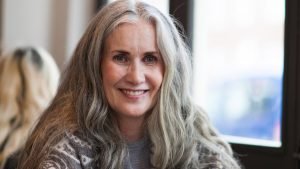
Everything You Always Wanted to Know About Grey Hair (#4 is Harder Than is Sounds!)

grey hair

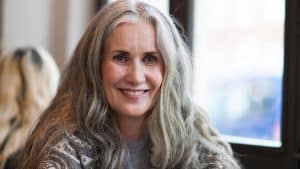
Having finished my book Grey Hair & You, I came to the realisation that the greatest prejudice against grey hair in women comes from women themselves.

There is an incredible number of women who believe they look younger with dark hair. I have yet to figure out why that is. In reality, dying your hair can be too harsh once you’re past a certain age.

These same women believe, along with many of their sisters, that grey hair makes them look older. This is true for some women because they fail to consider the two most important factors in dealing with the challenge of grey hair.

There are just two considerations – yes, only two.

Your One Shade of Grey Hair

White-looking hair is fabulous; scaffold-grey is not. Simple, really.

Of course, white hair isn’t white; it’s clear in colour. The difference between the white and the grey hair is caused by the pigments eumelanin (dark) and pheomelanin (light).

More often than not, you will find both eumelanin and pheomelanin in hair. In grey hair, though, that’s largely unlikely as eumelanin is the more common.

The range of colours produced by melanin is limited to shades of yellow, brown, red and black. Grey hairs contain only a few melanin granules spread throughout the hair, and those granules are likely to be eumelanin.

White hairs contain no melanin at all: their whiteness is an optical effect, due to the way in which they reflect the light.

Make-Up Changes and Grey Hair

Silver or grey hair is an excellent backdrop for a complete make-over in the make-up department. Since grey hair can make you look washed out, using warmer tones in your makeup will make you look and feel brighter!

This is the perfect time to have fun in some of the major department stores. Also, remember that in this instance, less isn’t always more. You can afford to be a little heavier handed when you have grey hair but please, do not forget to use blusher-without-sparkle – you want to look brighter not like a Christmas Tree.

In Grey Hair & You we have included an entire chapter on Makeup Tips For Looking Great With Grey Hair. We’ve also added a chapter with Tips for Colouring Grey Eyebrows, which isn’t as easy as it sounds.

Steel Grey

A colour always deserving of special mention, steel grey is often reminiscent of scaffolding! Loved or loathed, trying to colour any hair that is predominantly non-pigmented usually results in a flat-looking colour.

Since grey hair is technically hair that has no pigmentation, a natural look calls for some variation in the shades – as it does with any hair colour. This can be achieved by using translucent dyes which leave the hair’s true colour variations visible under the added shades.

If you actually want steel grey hair, you can achieve it with foils – small, random strands throughout the hair – and a dye which will provide you with steel grey. Your best bet is to consult a professional colourist who can recommend the right colour application.

Instant Santa-White Hair

Snow-white hair is almost impossible to achieve unless you’re prepared for some torture. Really, it’s best to wait and hope your genes do the right thing.

In reality, you can’t make the snowy white colour of Santa’s hair because he is 100% grey. His hair lacks any pigmentation whatsoever and is therefore slightly translucent.

To get somewhat similar results, you may be able to lighten your hair to the lightest possible hue, and then tint it using a platinum blonde tint. Also, you will have to use a toner (which is purple but doesn’t look purple).

However, the operative word here is may: the effect you accomplish largely depends on the colour of your natural hair. So, you should definitely see a colourist!

Does grey hair make you feel invisible? Have you changed your makeup to go with your grey hair? Do you see grey hair as an opportunity to re-style and re-invent your look and even, to some extent, your persona? Please join the conversation!

Read More

Why You May Live to 120… and 4 Implications for Your Retirement Plan

Why You May Live to 120… and 4 Implications for Your Retirement Plan

One of the most important numbers that we need to consider as we build our retirement plans is our life expectancy. After all, our expectations regarding how long we are going to live influence everything from how aggressive we can be with our investments to when we should start taking Social Security.

The problem is that the way that we look at life expectancy, in my non-professional opinion, is somewhat backward looking and may not fully account for potential developments in biotechnology, medicine, nanotechnology and artificial intelligence. Ok, that’s a mouthful. Basically, what I’m trying to say here is that at the rate at which technology is improving, we may live much longer than we are planning for.

In this article, I’d like to talk about some of the implications for our financial lives if, as I suspect, we are at the beginning of a longevity revolution. But, first, a couple of caveats.

I’m Not a Doctor and I Don’t Play One on TV

Because life expectancy is such an important concept when it comes to planning for our financial future, I want to be clear that I am not providing specific financial advice.

I am not a statistician, doctor or financial professional. As a result, it’s best to think of the information in this article as a “what if”… something to explore with the medical and financial professionals you normally rely on.

Ok, all that said, let’s dig into this topic more deeply!

Why Living to 120 May Become “Normal”

According to Our World in Data, “In practical terms, estimating life expectancy entails predicting the probability of surviving successive years of life, based on observed age-specific mortality rates.”

The key words here, in my opinion, are “based on observed age-specific mortality rates.” Statisticians (and scientists, more generally) like to work with observed data. They can’t just speculate about how long people will live if researchers cure cancer or biotechnology is able to modify our genes to reverse the aging process.

But, according to many experts, from a longevity perspective, we may be just years away from transitioning from linear progress to exponential progress.

For example, in an interview, technologist, Ray Kurzweil talked about the fact that our bodies are now being looked at as information systems that can be analyzed and reprogrammed for optimal health. As he said, “We will reach a point, 10 to 20 years from now… where we are adding more than a year (to our life expectancy) every year, not just to infant life expectancy, but, to your life expectancy.”

Think about that for a second. If you can hang in there for 10 to 20 years, which most of us can, your life expectancy could start to change *in real time*!

I’m using 120 as an example of the kind of life expectancy that even our generation might be able to expect, but, the truth is none of us really know how long humans can survive.

So, now, let’s assume that we are dramatically underestimating our life expectancy and talk about how this might impact our financial future.

Will Social Security Be There for You at Age 120?

In a word, no. Even with current, arguably ultra-conservative, estimates of life expectancy, Social Security is a dead man walking. It is only a matter of time before the government is forced to cut benefits, raise the retirement age or, more likely, both.

One thing that I can guarantee is that none of the existing models for how long Social Security will last consider the fact that many of us will likely live to age 120 or older. Even if you think you can count on Social Security to be there for you until age 85 or 90, you should be highly skeptical about its ability to support you if people start living to 120.

This is not intended to scare anyone. It’s a simple fact that Social Security wasn’t designed to support people for 55 years in retirement.

So, as you think about your retirement, it is even more important that you have multiple sources of income and significant savings to weather the coming storm.

Do You Need to Rush to Retire at Age 66?

One of the reasons that many of us rush to retire as soon as possible is that we feel like we have a limited number of years ahead of us. More importantly, we feel like the number of years of good health and independence that we still have left are limited. We want to experience as much as we can, while we still can.

But, consider this. It’s not just our life expectancy that will improve in the coming decades. The same technological forces that I mentioned earlier in this article will be working to keep us fitter and healthier longer. If I had to make a prediction, I would say that, by 2030, it will be possible for 85-year-olds to have the bodies of 55-year-olds… if they can afford it.

So, the question is this… if you agree with the assumption that people are going to start living until 120 in relatively good health, does it still make sense to retire at age 66? More importantly, could you afford to retire at age 66 if you had to stretch your savings until 120? That’s 54 years of income free life to plan for!

Are Your Risk Assumptions In Line with Your Longevity Assumptions

One of the reasons that older adults tend to move their money into “safer” investments over time is that they feel like they have fewer years ahead of them to ride out any bumps in the stock market. In a world where you are planning on living 10-15 years, this makes a lot of sense.

But, would you look at your investment strategy slightly differently if you thought that there was a high probability that you would live for significantly longer? Would it make sense for you to look at your investments in multiple buckets – one short term, one medium-term and one long-term, with a different risk profile in each?

Once again, I am not giving specific advice here. I am simply suggesting that you discuss your longevity assumptions with your financial planner. After all, their advice can only be as good as the data that it is based on. If you think that you will live for longer than 20 years, they need to know that.

Are You Ready for Your Second Life?

Through my work with thousands of retirees, I have come to understand that the transition to retirement is a complex and often emotional experience. Many men and women that I know who have reached retirement age, describe going through a process of reinvention.

Imagine a world in which 65 was the new “middle age.” Would it make sense to see “retirement” as a time of taking it easy and relaxing? Or, would it make more sense to see this as a completely new phase of life, one in which we could start over and really focus on our passions, businesses and causes?

The problem is that you won’t know whether you really are going to have the opportunity to live until 120 until you are in your 80s. So, you will need to make this decision early.

If like me, you believe that 120 is going to be the new 80, you will want to act aggressively now to build a financial, social and psychological foundation for your life. Instead of looking at life after retirement as a time for slowing down, see it as a time for speeding up. This is the only way to position yourself to take advantage of everything that the future has to offer.

Do you think that you will live to 120? Why or why not? How would living to 120 impact your financial future? Do you think that you are ready, socially, financially and psychologically to live to 120? Let’s have a conversation!

Read More

7 Things We Can Do To Protect and Enhance the Aging Brain

7 Things We Can Do To Protect and Enhance the Aging Brain

As women over 60, we can’t ignore the fact that age is taking a toll on our brains. Words and names become more elusive. Misplaced items become more common. Our friends start repeating things they told us just days ago.

So what can we older women do to protect or improve our brain function? Plenty, according to Dr. John Medina, a developmental molecular biologist, natural storyteller and the author of Brain Rules for Aging Well. He shares his scientifically-supported insights with Margaret Manning in today’s delightfully tongue-in-cheek video interview.

The Usual Suspects: Diet and Exercise

After an extensive review of the scientific
data, Dr. John is convinced that a Mediterranean diet is the only truly
brain-healthy one. As he puts it, “Eat sparingly, plant-based foods.” Chow down
on fresh veggies, fruits and nuts. Get your proteins from fish or chicken and
your fat from olive oil.

Don’t, however, marry this or any diet; it’s fine to cheat once in a while. In fact, cheating may be essential for your emotional well-being. Who sticks with a diet of constant deprivation?

As to exercise, forget everything you’ve heard
about the brain benefits of strengthening exercise. Stick with moderate aerobic
activity, such as brisk walking. Think 5,000 steps per day for brain health;
double that for weight loss.

Decentering Techniques

Decentering is the practice of shifting your
focus to somebody else’s world so that you can stop thinking about the problems
in your own. To significantly reduce your risk of all-cause mortality, try
decentering through one or more of the following techniques:

Sitting Down with a Good Book

Reading first-rate literature in the form of
paper, audio or single-use e-reader books is a most pleasant ways to decenter.
But it has to be exceptional literature!

Think J.R.R. Tolkien’s Lord of the Rings and Middle Earth, Barbara Kingsolver’s The Poisonwood Bible and the 1960’s
Congo or Howard Spring’s These Lovers
Fled Away
and post World War I Cornwall

The richer its visual descriptions and
character development, the stronger its decentering effects are. Spending just
30 minutes a day engrossed in a book lowers your risk of mortality from all causes,
including cancer and cardiovascular disease, by 23 percent.

Going Dancing

As an all-around brain booster, ballroom
dancing is hard to top. First, it’s terrific aerobic exercise. Second, it provides
a decentering social interaction complete with non-exploitive touch.

 In Dr.
Medina’s experience, skilled-care facility residents long for both. Without
them, they feel invisible.

Finally, the coordinated movements of ballroom
dancing improve your vestibular function. It’s what controls balance — and
research associates a 37-percent reduction in falls with regular dancing!

Arguing with Someone You Trust

Think back to the delightful
1958 film Gigi and this musical
exchange between Maurice Chevalier’s Honore and Hermione Gingold’s Mamita:

We met at nine

 We met at eight

 I was on time

No, you were late

 Ah, yes, I remember it well!

We dined with
friends

 We dined alone

 A tenor sang

 A baritone

 Ah, yes, I remember it well…

They didn’t realize it, but Honore, Mamita or
both were suffering episodic memory lapses. We’ve all had episodes — usually
involving other people — etched in our memories down to the smallest detail.
But our ability to retain them erodes with age.

To preserve episodic memory function, Dr.
Medina recommends engaging in friendly but heated arguments. Let someone you trust
challenge your assumptions and question your biases, while you leave your world
and attempt to understand a different point of view.

 In one
study group, this “productive engagement” technique improved episodic memory
function by 600%! But be careful to reserve it for the people closest to you. Casual
relationships might fail under the strain!

Feeling and Sharing Gratitude

When you concentrate on what you’re thankful
for instead of what bothers you, you’re decentering. If things aren’t going
well, Dr. Medina advises, simply write down three things that make you grateful.
Perhaps start a journal and record them at the end of each day.

To magnify its impact, share your gratitude! Are there
deserving people in your life to whom you have never expressed your thanks? Then
do so in detail with handwritten letters.

Even better, deliver and read the letters to the recipients face-to-face.
If that’s not possible, use the phone or Skype. Letting these people know you cherish
them can improve your brain function for up to a year!

Practicing Mindfulness

Mindfulness is the technique of focusing your brain on the present moment. As
a form of decentering, it’s a top-notch stress reducer. And prolonged stress,
as we know, invites a host of other problems!

For a deep dive into the art of mindfulness,
Dr. Medina recommends the Robert Teasdale’s eight-week online course, The Mindful Way. Available through
Amazon, the research-verified program teaches you to control your release of
the stress hormones cortisol and adrenaline. (That’s epinephrine to American
readers).

Mindfulness reduces your risks of cancer,
cardiovascular problems and depression or anxiety. That’s an enormous payoff
for simply learning to focus on things like raisins!

Which of
Dr. Medina’s’ rules for aging well are you already practicing? And what other
brain-protecting rules do you follow? Please share them in the conversation!

Read More

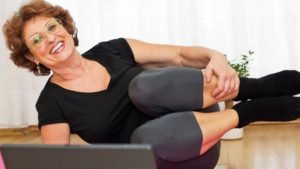
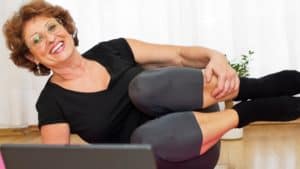
5 Reasons Live Online Yoga Lessons Are Awesome for Seniors, Especially in Challenging Times

5 Reasons Live Online Yoga Lessons Are Awesome for Seniors

The coronavirus has shaken us up. Even
if you never get it, and don’t know anyone who has, the virus and our reactions
to it have changed us individually and collectively. I’m an eternal optimist
(my middle name is Hope), and I see one very positive and powerful trend – live
online yoga classes.

We all know that there are a zillion yoga videos on YouTube. At this moment, I see 388,000,000. Sixty and Me created gentle yoga videos. I’ve made some myself. Those videos are a wonderful resource. I’m glad to know I can find so many yoga videos at any hour of the day.

But something new is happening. Plato
said, “Necessity is the mother of invention.” Because many are home-bound, yoga
teachers are offering classes and 1-on-1 sessions online.

Keep reading to find out why live
online yoga lessons are awesome for seniors (and everyone else). I’m offering
my lessons on ZOOM, so any technical references below are for that platform.

Accountability

Something’s missing in those
388,000,000 YouTube videos, and that’s accountability. The lovely yogi or
yogini who recorded the videos might know that you watched it when you press
“like” or leave a comment, but they won’t really know if you did the yoga.

With the coronavirus, or really
anytime, most of us benefit from some commitments in our week. Retirees often
float a while in the bliss of not going to work, but then find they need some
structure to make life work.

We need to schedule time for important
things like exercise and self-care, so that we don’t let it drift too late in
the day and skip it.

With live classes, you generally have
to register in advance and pay a fee. That small commitment makes you far more
likely to continue committing when you put it on your calendar, get ready, and
actually do the class.

I’ve recently started teaching online.
I “arrive” to the video room early and check in with each of my students. I see
them. As we are doing the class, I see them. If it’s a small class, I can notice
when they are a bit off track with their alignment.

I may say their name and invite them
to adjust. This ability will vary depending on the teacher and how many
students are on the video connection. Just like in a local class, I will notice
if a registered student does not show up.

Efficiency

When I started teaching online, I was
extremely pleased with how efficient it is for me and my students. You can put
breakfast, lunch, or dinner in the oven, do the class, and wrap up just in time
to walk straight into the kitchen and eat!

You don’t have to drive in traffic or
park your car. You can fold your laundry or walk your dog up until class time,
and just plop down in your living room to do the lesson.

If you are a caregiver for kids,
grandkids, a spouse, or another loved one in your home, you can take a short
break from being a caregiver without travel time. It is good for your loved
ones to see you doing something for yourself.

Privacy

Live online yoga lessons are ideal for
people who prefer privacy. You may be an introvert. You may love being at home.
Maybe you don’t want to chit-chat with people before or after class at the gym
or yoga studio. You may feel a bit shy about going in public in yoga pants. You
may have cat or dog fur on your yoga pants.

These are all excellent reasons to do
yoga at home, in whatever clothes you want to wear.

If you don’t want anyone to see you
doing the poses, simply turn off your webcam. In Zoom the individual users have
the ability to turn off their audio and video at any time for privacy.

You’ll still benefit from the
accountability because the teacher knows you are there even if he or she cannot
see or hear you. You’re “in the room,” doing the yoga, and getting the
benefits, on your terms.

There’s another element of privacy. It’s mental privacy. When you aren’t
near other people, you won’t watch them do their yoga poses. You can focus
internally, breathe, and feel what your body needs.

Yoga was designed as a personal
spiritual practice and path. Practicing at home is ideal for that quiet mental
space.

Global Impact and Connection

Online, amazing teachers and students
can connect from anywhere. My yoga teacher lives only a 90 minute drive from my
home. I have not made the trip in almost a year. When she offered online classes
due to the coronavirus, I was happy to connect with her in that way.

I am now also taking online classes
with a teacher in California, 3000 miles away. You can pick and choose from the
best instructors in the world!

We can also connect with fellow
students and dear friends. Depending on what video format your teacher uses,
there may be a time and opportunity for students to see each other as well. In
my first few online classes, I cried with joy to see friends and students
joining me from other states and countries.

You can see your local friends at
online yoga class, even if you are still home-bound.

Safety

Online lessons are safe for seniors
because you choose your teacher and your class. You can choose a teacher with
experience working with older adults.

It’s safe because you can stay home if
you have a weakened immune system or allergies. You can stay home if you are
self-quarantined because you’ve traveled.

And finally, of course, it’s safe
during the coronavirus. You practice in your own space, on your own mat, with
peace of mind.

What You Need to Know to Get
Started

You will need some level of technical
skill. You will likely need to register for the class online and feel
comfortable paying online with a credit or debit card. You will receive an
email confirmation. Usually you will have a link to click to view the class.

In my case, I allow 15–30 minutes
before each class to make sure my students have logged on and can see and hear
me.

An added bonus of live online yoga
classes is that you have to make a space and put your mat on the floor. You
have created a space for yoga in your home. This is a powerful step towards
creating a habit!

Eckhart Tolle said, “Adversity is a
great opportunity to deepen spiritual awareness. Use it, don’t waste it.”
Adversity is also a great opportunity to try new things. We will all be glad
when the coronavirus is over.

I cannot see ahead much further than a
few days. I see live online yoga classes as a huge positive that has come from
this situation. I am certainly open to continuing online classes even when we
have the option to go to class locally.

I invite you to join me in online yoga classes and wellness services. Click here to book a complimentary phone or video consultation with me. I look forward to meeting you online!

What are you doing to stay connected
to your favorite teachers and wellness guides? What online classes are you
taking from home? What do you enjoy most about them? Please share with our
community!

Read More