Author: Admin01

Tracy Tutor’s Black Long Sleeve Swimsuit

Tracy Tutor’s Black Long Sleeve Swimsuit

Million Dollar Listing LA Fashion

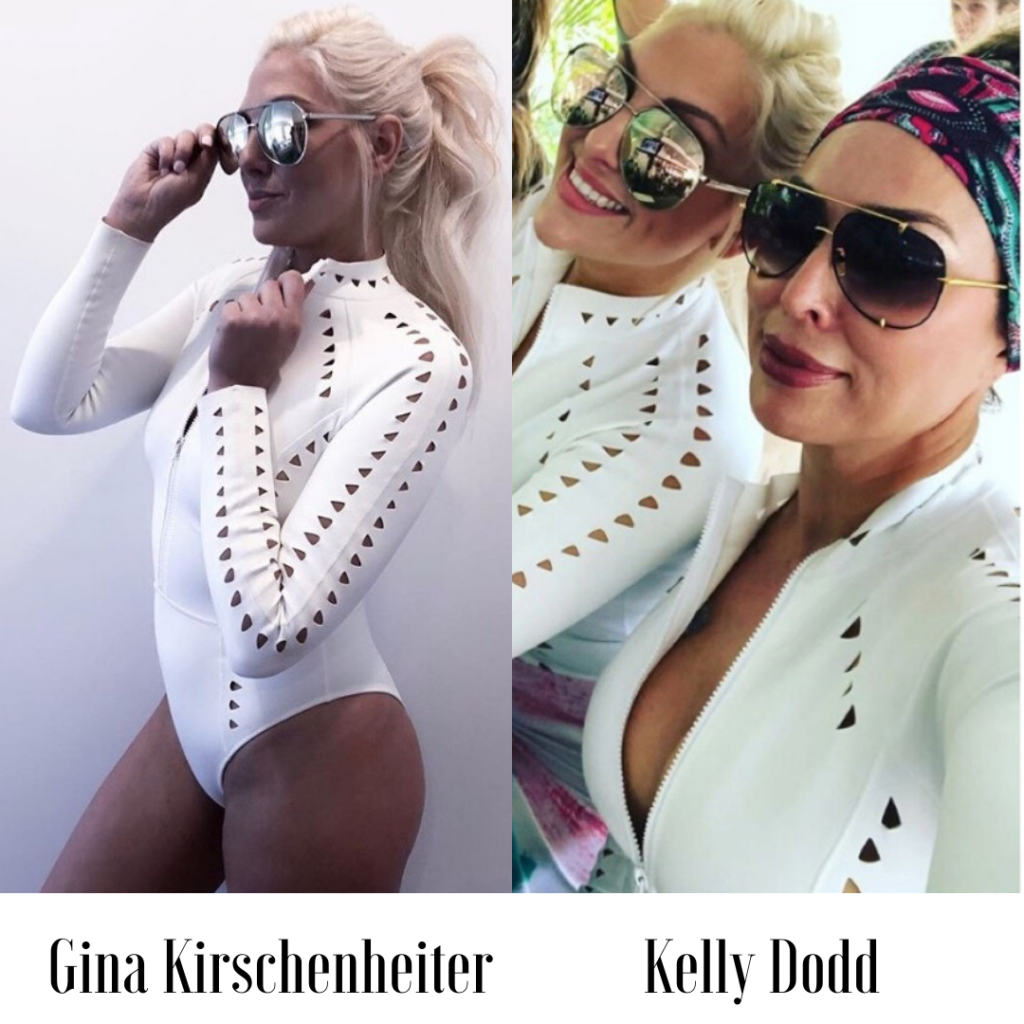
If you’re a part of the Blondetourage you probably recognize Tracy Tutor’s black long sleeve swimsuit from her Instastories because you saw it and loved it in white on Kelly Dodd and Gina Kirschenheiter on the Real Housewives of Orange County. I feel that we all need to thank Tracy for reminding us how great this suit is because it is back and stock just in time to hit the beach and it even covers up that I never got around to those ab workouts I swore I was going to do.


The Realest Housewife,

Big Blonde Hair


Gigi C Riley Swimsuit


Tracy Tutor's Black Long Sleeve Swimsuit

Click Here to Shop her GIGI C Riley Surf Suit 

Click Here to Shop it in White

Photo 1: @GinaKirschenheiter

Photo 2: @KellyDDodd

Photo 3: @TracyTutor

Originally posted at: Tracy Tutor’s Black Long Sleeve Swimsuit

Read More

Tinsley Mortimer’s White Lace Dress

Tinsley Mortimer’s White Lace Dress on Instagram

Real Housewives of New York Instagram Fashion 2020

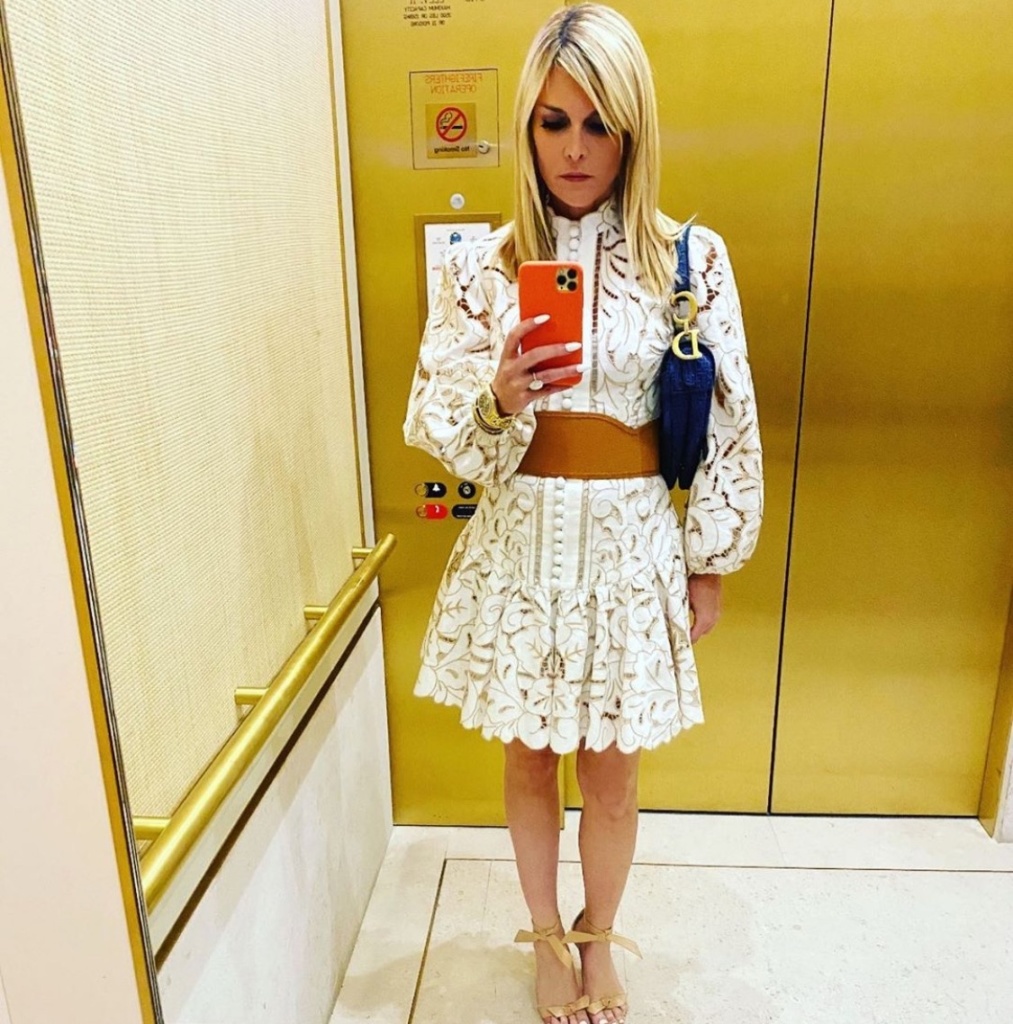
Considering the world is going through a very scary time, seeing Tinsley Mortimer post this #tbt on Insta of her in this white lace dress from a few weeks ago was honestly a very welcome distraction in our opinion (as BBH’s Lauren aptly put it, “everyone’s thinking of better times when they were all dressed up and looking hot” lol). So while we’ll definitely still be watching the news this weekend, we’re just glad that we can still rely on stars like Tins along with old episodes of RHONY to provide us with a great temporary escape from reality (well, you know what we mean).

Fashionably,

Faryn

Tinsley Mortimer’s White Lace Dress

Click Here to Shop Her Zimmermann Dress

Click Here to Shop Additional Stock

Click Here to Shop Her Alexandre Birman Sandals

Click Here to Shop Additional Stock

Purse by Christian Dior

Photo & Info: @TinsleyMortimer

Originally posted at: Tinsley Mortimer’s White Lace Dress

Read More

Do You Feel Too Old to Follow Your Bliss?

Too-Old-to-Follow-Your-Bliss

A friend asked me a question the other day: “This writing thing of yours; is it a hobby or do you see it as a profession?”

Even after I’d given him my answer, I chewed on the question for a while. It didn’t really matter what my answer was – encore career or a hobby. For me, the more important truth was this:

I’m following my bliss.

I first heard the expression about bliss spoken by Joseph Campbell when I watched a series of interviews with Bill Moyer in the early 1990s. What Campbell was referring to was the bliss of losing ourselves in the rapture of life’s experience.

This is one of the gifts that I find so valuable about getting older. Competition and comparison mean much less than they used to. It’s the immersion in the experience, the surrender to the moment of creativity and joy that are of value.

What’s Your Passion?

I’ve been blessed with women friends who have no problems modeling their bliss in life. I know master gardeners, writers, painters, quilters, advocates, and senior athletes. And the list is much longer. Finding your bliss and acting upon that nourishes the heart and the soul.

Creation

The act of making something, whether it’s dinner or a scrapbook, is sacred. It draws upon our creativity and our intuition. It calls forth a standard. Most of us desire to make things well, to achieve a sense of personal best. Making things creates joy and that joy is no less than a sense of purpose.

Turn Off the Television

Exposure to advertising is bad for our emotional and spiritual health. This is a time to place our attention on the people and the things that we love; not the commercials that make us aware of the minutia of what could go wrong.

Turn off your television and do something else instead. Knit, read, walk, or visit a friend. Engagement with the world, a community, and our friends reveals our bliss.

Attitude Is Huge

Yes, some people will get sick and injured in older age. That is a truth. Some people also get sick and injured in younger age.

When the Harvard Study on Adult Development and Aging was summarized by George Vaillant, M.D., the conclusion was not what the drug companies would have you believe.

The conclusion was that your attitude was more important to aging well than your cholesterol levels. And what better attitude than to exercise your love and your purpose through following your bliss?

Challenges and Adaptations

I have friends who’ve met the challenges of older age head on. They’ve had hip replacements or heart attacks. They’ve developed serious vision problems or arthritis. The ones that do well in the face of adversity are the ones who aren’t afraid to let go and adapt.

My mother’s end of life story was this: Her hands were arthritic. Her back hurt. She didn’t have as much energy as she once did. Still, on most days, the 90-year-old did two things that she loved. She read. And she worked with a small loom that fit on her lap.

Slow and steady, she created hats. Hats for babies and hats for kids. When she eventually filled a box, she mailed them to a children’s home. She followed her bliss in this way right up to the end.

Mother Teresa said: “We cannot do great things. We can only do small things, with great love.” That is the secret to bliss – it doesn’t matter what we do, only that we do it with love.

Do It Right Until the Very End

Since we know that eventually we will come to the end of our road, finding and following our later-life bliss seems like a pretty good exit strategy. It sure beats giving attention to the fear of aging or the fear of death.

I don’t know the answer to the mystery of death, but I do know the answer to the mystery of life: live as fully as you can. Love big. And you’re never too old to follow your bliss.

What’s your bliss? Do you find passion in small things? Please share your precious thoughts and musings with our community!

Read More

Possible vs. Inevitable: The Importance of Preventing Falls… and How to Do It!

Preventing-Falls

Several weeks ago, a woman commented on an article I’d done about getting older vs. getting old. She told a story about taking a bad fall over a concrete curb, sitting there for a few moments, and then moving on.

What’s notable about her story is that at 76, she got up and kept going. She lost only a tiny fraction of her flexibility. She didn’t land in the hospital, decline and die within six months – unlike far too many older people.

The Senior Health & Wellness Blog posted a quick review of the stats on our ‘splats’, if you will, and the extraordinary cost we pay when we don’t keep our balance.

The Story of One Woman

The woman in question, let’s call her Marge, banged her head, elbow and a few other places. It took her a moment to get her bearings. Then she got right up and walked away. Most women of that age don’t get up again. Far too many die within six months of a fall.

Marge is different.

Why? When she wrote to me, she explained that she’d started doing yoga and HIIT (High Intensity Interval Training) when she was 62. She works out on weights. She works on her balance and flexibility. She’s not a lifelong athlete.

I’ll say it again: She began at 62.

When she did see her doctor, he was shocked not only at how little flexibility she’d lost but that the fall had done so little damage in the first place.

Why We Fall

And therein lies the point. Falls kill. They can be horrifically unforgiving. All too often, they happen because we’re trying to do something at the end of a ladder that we shouldn’t, or we have a slightly too-high opinion of our abilities that might be a tad too dated.

Or it’s just a touch of snow or ice in the wrong place on the sidewalk. Or for that matter, it’s a disease or a combination of prescription or OTC drugs we’re taking, which is a whole other matter entirely.

We all fall. I do it spectacularly, but I ask for it because of the sports I do. At 65, horse back riding is the worst offender when it comes to head injuries. Still I am off to ride for three hours this afternoon. With a helmet, of course.

Prevention Matters

But I also take other tumbles. What keeps me in the game is the same thing that Marge does: a combination of yoga, balance work, weights and aerobic activity.

Marge didn’t get there overnight. Nobody does. We begin where we are with gentility and a sense of humor. We ask permission and achieve small gains over time.

The body confidence that we can gather with those small gains makes all the difference when it comes to our personal freedom and our ability to enjoy life.

And to survive falls, which are inevitable for all of us at one time or another.

Techniques for Fall Prevention

Here’s the RX for fall prevention, and if you do fall, for the ability to get right back up again:

  • Start a gentle program (such as yoga).
  • Work on your strength and your flexibility. Find a program or class you love and will commit to do regularly.
  • Be patient with your body, especially if it’s been a while. Have a good chuckle at yourself and give yourself permission to be imperfect.
  • Celebrate the small gains. Who knows? That turn around the block may turn into a 10k race before you know it. When we begin a new effort, we have no idea where it may lead.
  • Get support by involving friends who will not only encourage you but support you along the way. Laughter goes a long way towards encouraging each other to keep moving.

What are you doing to be in your best shape for life? Have you got a powerful recovery story to share? What suggestions might you have for others who fear falling, but could use encouragement? Please share in the comments below!

Read More

4 Questions to Guide Your End of Life Planning (#2 is So Important!)

Questions-End-of-Life-Planning

In today’s video, author and non-profit Before I Go Solutions founder Jane Duncan Rogers take a deep and compassionate look at end-of-life planning for women over 60.

Jane poses four questions to help older women get in touch with how making a meaningful end-of-life plan will smooth our last years for us and those we love. Read on for her insights into this scary and challenging topic.

Question #1: What Do You Most Value About Being Alive?

As Baby Boomers now experiencing the deaths of our own parents, it’s harder and harder for us to ignore the fact of our own mortality. So, now is the time, Jane advises, to take stock of what we really treasure about being alive.

Also, ask yourself what the term “quality of life” means to you. Modern medicine has the tools to keep us alive regardless of our physical condition or the financial and emotional cost on our loved ones.

Having an end-of-life plan, Jane says, is your insurance that your quality of life will be protected if you’re no longer able to speak for yourself.

Question #2: Who Can You Talk to About Your End-of-Life Plans and Eventual Death?

Talking about your death and the grief that will come to those you leave behind is never easy. But without doing it, making a good end-of-life plan will be very difficult. So, think about which people in your life need to be a part of those conversations.

You spouse, partner, children and grandchildren are natural choices. But for many of us, our friends have become our families. According to Jane, we each need to decide the answer to this question and then find the best way to approach the subject.

Question #3: How Will Not Having Children Affect Your End-of-Life Planning?

Perhaps you’ve never had children. Or your children have scattered to far-away places. Many older women are simply estranged from their children.

Think about how your end-of-life plan will reflect that. Is there anyone else, for example, who can step in to serve as your power of attorney should you become incapacitated?

If you never had children, Jane emphatically recommends becoming part of a community. A loving community can be a surrogate family in your final years.

And if you have a family but don’t want them involved in your death? Then it’s even more important to organize an end-of-life plan communicating your wishes. Otherwise, the law will bring them into the picture.

If you define family as those who have shown they love and want only the best for you, your friends certainly qualify. A good end-of-life plan contains the legal provisions to ensure they’re treated as family.

Question #4: What Are Your Beliefs About Death and Your Body?

Jane shares how witnessing her husband’s death led her to the comforting belief that while our bodies die, the essence of who we are continues on to somewhere else. Exploring that insight led to her first book, Gifted by Grief.

Have you thought about the nature of your physical death and how coming to terms with it might help those you leave behind?

Starting the Conversation

Are you struggling to start your end-of-life conversation with your loved ones? Do you feel like you should because you want to hide your real feelings or that they simply don’t want to hear them?

Jane’s work has led her to the discovery that once someone broaches the topic, many people are surprisingly receptive. In fact, they’ve realized its importance and are eager to talk.

What are your thoughts on starting an end of life conversation with someone? Do you know who that person would be? Have you answered the other questions or come up with some of your own? Please join the conversation below on this difficult but oh-so-important subject!

Read More