

Author: Admin01

4 Crazy Excuses Older Adults Give for Not Starting a Business (#3 Really Makes Me Mad!)

4 Crazy Excuses Older Adults Give for Not Starting a Business

By the time we
reach our 50s and 60s, we finally realize that the best way to become a
millionaire in retirement is to start investing 10% of everything you make in
your 20s. Now, if someone could just invent a time machine so that we could go
back and give ourselves a good talking to, we would be set!

Unfortunately,
time being the tricky thing that it is, we are stuck with our past financial
decisions and can only look to the future. But, beyond doubling-down on saving,
what can we do to improve our financial situation in the years leading up to (and
during) retirement?

The answer is
simple… we just don’t want to admit it. The only way to create true wealth,
when you don’t have decades to let compound interest do its work, is to start a
business.

The good news
is that many of us have tangible skills that we can use to build a profitable
business. We also have a rolodex (remember those?) filled to the brim with
business contacts, old colleagues and personal acquaintances. And, compared to
the teenagers who are living on Ramen noodles, while they build their next app,
we are positively flush with cash.

So, why, if we
have so many things going for us, do so few older adults take the plunge and
start businesses. Through my conversations with hundreds of men and women over
50, I have identified 4 excuses that hold us back. I hope that sharing them
here will help you to have the confidence to build something great.

“I Don’t Have an Idea for a Business”

There is an
old saying that “if you do what you love, the money will follow.” This is only
half true.

Choosing a
business idea that you are excited to work on every day is essential.
Otherwise, you are likely to burn out and quit in the first year. But, by
itself, passion isn’t enough. You also need to have a product or service that
makes other people’s lives better.

In other
words, building a profitable business is about finding the sweetspot between
what you love and what others are willing to pay for.

In a previous
article, on our sister site, Sixty and Me, I gave 6
questions that anyone can use
to generate business ideas. I’ve included the
questions here, but, I also encourage you to read the original article, which
goes into much more detail about each.

First, here
are 3 questions to help you identify your skills and passions:

What business
skills have you acquired to date?

What are you
passionate about? Or, what activities do you look forward to?

What do your
friends, family members or colleagues ask you to help them with?

Next, here
are 3 questions to help you generate business ideas:

What do people
who share your passions struggle with?

What problems
have you always wished someone would solve?

What are other
people already being paid to do that you could do better?

“No One Will Fund My Business… VCs are Totally Ageist”

Like our
younger counterparts, many potential entrepreneurs and small business owners
think that starting a company is all about getting funded. And, who can blame
them? Spend 10 minutes on a site like TechCrunch and you could be forgiven for
believing that VCs (venture capital companies) are handing our $10-million
checks like T-shirts at a technology conference.

The truth is that
the vast majority of startup ideas are never funded. And those that are funded
usually have some kind of traction before the best companies are willing to
back them. So, if you are waiting for someone to fund your idea, you will likely
be waiting for a loooooong time!

Even if you
have a background in IT or development and want to create a software or app
company, the startup costs that you will face are literally 100 times less than
just a decade ago. And, if you can’t find $5,000 – $10,000 to get started with
your company, it was probably never going to work out.

Besides, the
majority of older adults that I talk to don’t want to start technology
companies. More often, they want to make money from the skills that they
already have, as a consultant or freelancer. And, if all you need is a simple
website and some business cards, financial freedom could be just a few $100
(and a ton of sweat, blood and tears) away.

“I’m Too Old to Start a Business”

Well, if you
really feel that way… you probably ARE too old to start a business, but, not
because of the number of candles on your birthday cake. You are not being held back
by how old you are. You are being held back by how old you feel!

Think you’re
too old to start a business? Tell that to Leo Goodwin, who started GEICO at age
50. Or, Harland David Sanders, who founded Kentucky Fried Chicken at age 62.
Or, Wally Blume, who started Denali Flavors in his 50s.

Better yet,
tell the thousands of Baby Boomers who start successful consulting business or
open a franchise every year that you are “too old to start something new.” I
hope that they can convince you better than I can that age really is just a
number.

“I’m Too Tired to Start a Business… I Just Want to Rest a
Bit”

For some
people, self-esteem isn’t the problem; it is the feeling that they have worked
for long enough and that now, in “retirement” or “semi-retirement,” they are
ready to relax.

Whenever
someone gives me this excuse, my response is always the same… “give it time!”
Most of us approach retirement after decades working for someone else. Some of
us loved our jobs, but, most didn’t. The hours were long and the rewards “just
ok.” Is it any surprise that the idea of working any more (even for ourselves)
is about as enticing as a trip to the dentist’s office?

For the first
year or two of retirement are what I call the “honeymoon phase or retirement.”
This is the time when most people travel a bit (if they can afford it), spend
time with the grandkids, read and catch up on their hobbies.

But, for many
of us, something strange starts to happen in the third or forth year in
retirement; we start to miss working. We don’t necessarily miss our old jobs,
but, we do miss feeling important, connected to others and needed. And, boy do
we miss having a little extra cash in our pockets at the end of the month!

Now, I’m not
saying that starting a business is for everyone. All I’m saying is that you
might want to assume that you will want to do some extra work in retirement, even
if you plan on relaxing in the first few years.

Let me give you a quick example. As most people approach retirement age, they just can’t help sharing their plans with their friends and co-workers. But, as I wrote in a previous article, making a big deal about your retirement can close off potential revenue streams in the future.

So, even if you never plan on returning to the business world, you might want to act like you do. Stay in touch with your colleagues and business partners on LinkedIn. Do a little part-time consulting, even if it is just for a few hours a week. Read the trade journals occasionally, even if it is just to smile at all of the BS that you don’t need to put up with anymore.

Basically, stay engaged, just in case you want to work again at some point in the future.

Want to Start a Business After 50? Go for it!

There is a
reason that older entrepreneurs tend to be more successful than their younger
counterparts. We have the skills, contacts, money and experience necessary to
succeed. The only thing holding ourselves back is… ourselves.

If you are 50
years old today, you might have 40-50 more years on this planet. You are not “old!”
You are just getting started.

How you choose to give back is up to you, but, if you have the time and skills, I would highly encourage you to at least consider starting a business.

This is one of the best ways to shape the world in your image and to ensure that your grandkids have a better shot at the American Dream than you did!

Have you
ever thought about starting a business after 50? Did you make it happen? If so,
how would you describe your experience starting a business? If not, what held
you back? Let’s have a conversation!

Read More
I’m Obsessed With Keeping My Skin Firm & Here’s The Real Deal On How I Do It

As I dance with this decade known as my thirties, I find that my number one skincare priority has shifted. No longer am I burdened by hormonal breakouts (shoutout to spironolactone). My chief concern is how to firm my skin at home, in order to maintain my complexion’s texture and elasticity. I basically want you to be able to throw cooked spaghetti at my face and have it bounce right back off. That’s a mixed metaphor, but I hope it still paints a seductive mental picture of super bouncy skin.

My career as a beauty editor has led me to amalgamate a decade’s amount of skin wisdom from top dermatologists with my own personal experience. I’ve functioned as a beauty guinea pig, testing the thousands of products that arrive on my desk. Unfortunately, you’re probably going to balk at my advice, because it’s not fun at all: Forget the 10-step skincare routine, put down the cute packaging and drop your coins on active, proven ingredients.

You will find that most truly efficacious products come in unsexy yet airtight containers, which keep their powerful ingredients potent for as long as possible. You will also find that these products command a much higher price tag than your average impulse buy, and they don’t smell like rose petals mixed with kitten feet. However, if you choose to eschew superfluous products in lieu of performance-based ones, you might find that your overall beauty budget will benefit–and your skin will look as fantastic as possible.

Doctors agree with me. “For firm skin, I recommend looking for products that contain growth factors and peptides. Growth factors are essential as they trigger collagen and elastin production which are essential to the skin’s matrix,” says Dr. David Shafer, of Shafer Clinic Fifth Avenue. “Peptides are amino acids that make up the building blocks of our skin which are also necessary for skin structure.”

Without further ado, my time-honed advice for maintaining your skin’s supple factor for the long haul. 

Play the long game with growth factors

best firming serums image

SkinMedica.

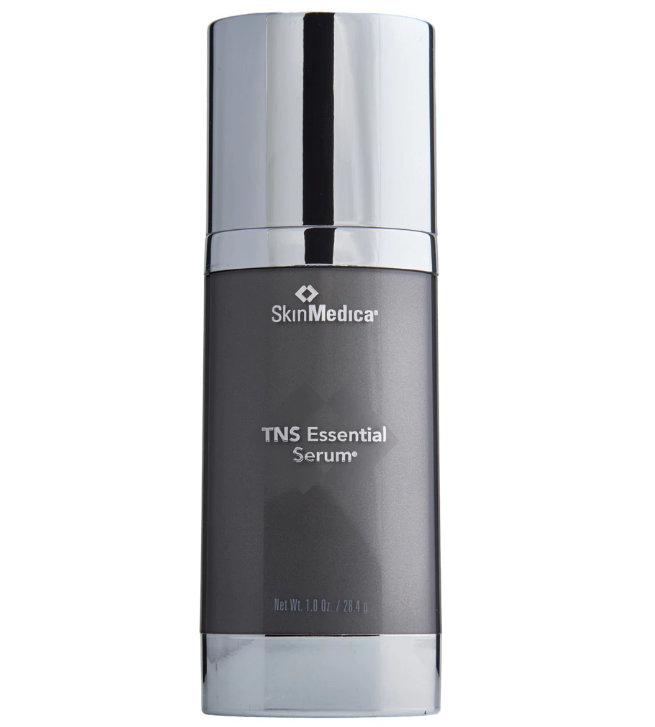
Buy: SkinMedica TNS Essential Serum $281

Yes, this serum is expensive, but it’s one of the few topical products worth the sticker price: it boasts natural growth factors that spur skin to act and look younger. I’ve been using it for years, and my skin is consistently heralded with compliments. My own testimony aside, it’s one of the most doctor-endorsed products around. “SkinMedica’s groundbreaking research resulted in a formula comprised of naturally occurring growth factors (proteins), cytokines, antioxidants and matrix proteins that are responsible for healing the skin, and naturally boost the skin’s ability to rejuvenate itself,” says Dr. Shafer. Even though growth factors work over time to repair skin at a cellular level, I notice my skin looks younger and fresher within a few days of use. 

Apply peptides overnight for an instant boost

how to firm skin at home image

Elemis.

Buy: Elemis Peptide4 Plumping Pillow Facial $65

Combining growth factors with peptides provides the ideal one-two punch against sagging skin. Peptides are chains of amino acids that signal your skin to create new collagen, which is a very important structural protein for your skin. You may have heard of the ingestible collagen craze with its gummies and drink mixes, but there is actually zero research that proves that ingested collagen travels to your skin cells and fosters skin firmness. Zero. The best way to reap the benefits of collagen (other than a healthy diet) is to signal your skin to produce more of it with topical peptides. This silky overnight mask from Elemis acts like spackle for your skin. I wake up with glowy and plump skin in the morning, even after I’ve imbibed too many glasses of Sambuca.

Micro-needle one to two times a week


how to firm skin at home image

Sdara.


Buy: Sdara Microneedle Derma Roller $20

The benefits of micro-needling are twofold: first, poking tiny holes into your epidermis spurs skin to repair itself, sending fresh collagen and elastin to the surface. Secondly, micro-needling after applying a skincare product (such as the serums above) with active ingredients helps those ingredients penetrate deeper into your skin. If you’re forking over the cash for premium ingredients, you want to be absolutely certain you’re getting the maximum absorption and mileage out of them. While micro-needling may look scary, it’s not in the slightest, as long as you purchase a derm-approved tool laced with either stainless steel (more affordable) or gold-plated needles (less affordable) to assure cleanliness. I don’t always remember to microneedle my skin, but I try to do it at least once a week with the Environ Gold Roll. Whenever I do, my skin looks firmer and more even by the very next morning.

Our mission at STYLECASTER is to bring style to the people, and we only feature products we think you’ll love as much as we do. Please note that if you purchase something by clicking on a link within this story, we may receive a small commission of the sale and the retailer may receive certain auditable data for accounting purposes.

Read More

I’m Obsessed With Keeping My Skin Firm & Here’s The Real Deal On How I Do It

As I dance with this decade known as my thirties, I find that my number one skincare priority has shifted. No longer am I burdened by hormonal breakouts (shoutout to spironolactone). My chief concern is how to firm my skin at home, in order to maintain my complexion’s texture and elasticity. I basically want you to be able to throw cooked spaghetti at my face and have it bounce right back off. That’s a mixed metaphor, but I hope it still paints a seductive mental picture of super bouncy skin.

My career as a beauty editor has led me to amalgamate a decade’s amount of skin wisdom from top dermatologists with my own personal experience. I’ve functioned as a beauty guinea pig, testing the thousands of products that arrive on my desk. Unfortunately, you’re probably going to balk at my advice, because it’s not fun at all: Forget the 10-step skincare routine, put down the cute packaging and drop your coins on active, proven ingredients.

You will find that most truly efficacious products come in unsexy yet airtight containers, which keep their powerful ingredients potent for as long as possible. You will also find that these products command a much higher price tag than your average impulse buy, and they don’t smell like rose petals mixed with kitten feet. However, if you choose to eschew superfluous products in lieu of performance-based ones, you might find that your overall beauty budget will benefit–and your skin will look as fantastic as possible.

Doctors agree with me. “For firm skin, I recommend looking for products that contain growth factors and peptides. Growth factors are essential as they trigger collagen and elastin production which are essential to the skin’s matrix,” says Dr. David Shafer, of Shafer Clinic Fifth Avenue. “Peptides are amino acids that make up the building blocks of our skin which are also necessary for skin structure.”

Without further ado, my time-honed advice for maintaining your skin’s supple factor for the long haul. 

Play the long game with growth factors

best firming serums image

SkinMedica.

Buy: SkinMedica TNS Essential Serum $281

Yes, this serum is expensive, but it’s one of the few topical products worth the sticker price: it boasts natural growth factors that spur skin to act and look younger. I’ve been using it for years, and my skin is consistently heralded with compliments. My own testimony aside, it’s one of the most doctor-endorsed products around. “SkinMedica’s groundbreaking research resulted in a formula comprised of naturally occurring growth factors (proteins), cytokines, antioxidants and matrix proteins that are responsible for healing the skin, and naturally boost the skin’s ability to rejuvenate itself,” says Dr. Shafer. Even though growth factors work over time to repair skin at a cellular level, I notice my skin looks younger and fresher within a few days of use. 

Apply peptides overnight for an instant boost

how to firm skin at home image

Elemis.

Buy: Elemis Peptide4 Plumping Pillow Facial $65

Combining growth factors with peptides provides the ideal one-two punch against sagging skin. Peptides are chains of amino acids that signal your skin to create new collagen, which is a very important structural protein for your skin. You may have heard of the ingestible collagen craze with its gummies and drink mixes, but there is actually zero research that proves that ingested collagen travels to your skin cells and fosters skin firmness. Zero. The best way to reap the benefits of collagen (other than a healthy diet) is to signal your skin to produce more of it with topical peptides. This silky overnight mask from Elemis acts like spackle for your skin. I wake up with glowy and plump skin in the morning, even after I’ve imbibed too many glasses of Sambuca.

Micro-needle one to two times a week


how to firm skin at home image

Sdara.


Buy: Sdara Microneedle Derma Roller $20

The benefits of micro-needling are twofold: first, poking tiny holes into your epidermis spurs skin to repair itself, sending fresh collagen and elastin to the surface. Secondly, micro-needling after applying a skincare product (such as the serums above) with active ingredients helps those ingredients penetrate deeper into your skin. If you’re forking over the cash for premium ingredients, you want to be absolutely certain you’re getting the maximum absorption and mileage out of them. While micro-needling may look scary, it’s not in the slightest, as long as you purchase a derm-approved tool laced with either stainless steel (more affordable) or gold-plated needles (less affordable) to assure cleanliness. I don’t always remember to microneedle my skin, but I try to do it at least once a week with the Environ Gold Roll. Whenever I do, my skin looks firmer and more even by the very next morning.

Our mission at STYLECASTER is to bring style to the people, and we only feature products we think you’ll love as much as we do. Please note that if you purchase something by clicking on a link within this story, we may receive a small commission of the sale and the retailer may receive certain auditable data for accounting purposes.

Read More

Kenya Moore’s Neon Yellow Lace Dress

Kenya Moore’s Neon Yellow Lace Dress in Confessionals

Real Housewives of Atlanta Season 12 Episode 17 Fashion

Despite a trip to Greece and looking stunning in a neon yellow lace dress in her new confessionals, Kenya Moore didn’t have the best episode of her life, thanks to issues with her marriage to Marc Daley becoming public. I really felt sympathetic for Kenya and I thought it was nice that the other women sort of rallied around her in support, whether they’re close or not. And thennnnn I saw a preview for next week’s episode in which Kenya seems to blatantly shade Cynthia Bailey’s knowledge of wine pairings (going after a friend’s business is never cool) and I realized that perhaps my feelings of sympathy may be better put towards those of you who might not get your hands on this perfect-for-spring dress.


The Realest Housewife,

Big Blonde Hair


Kenya Moore's Neon Yellow Lace Dress

Click Here to Shop her Marc Jacobs Dress

Originally posted at: Kenya Moore’s Neon Yellow Lace Dress

Read More

How Easy Is It to Like, Unlike, and Dislike on Facebook and in Real Life?

How Easy Is It to Like, Unlike, and Dislike on Facebook and in Real Life

Facebook comes with both its upsides
and downsides, as we’ve all discovered over the past decade. Some of the
obvious upsides are how Facebook helps us stay connected and involved with
friends and family who may not live nearby, and with those we don’t know
personally, but whose lives intrigue us.

Fair enough.

But also, friends have sworn off
Facebook because of its addictive quality. You’re happily perusing the lives of
the rich and famous, or not so famous, and you look up at the clock only to
discover two hours have gone by when you only meant to distract yourself for a
few minutes.

Like and Unlike

Facebook also introduced a relatively
simple concept with far-reaching implications that can be used for our good outside
the parameters of Facebook. I refer to the “like” and “unlike” feature.

It’s easy: you “like” something or
someone whose Facebook entries please you; you “unlike” something or someone
whose entries don’t please you. Nothing to it. One click, you’re done.

Oh, if we could only keep it that straightforward
in life. If you like someone or something, you put your effort and energy in
that direction. If you don’t like something, you hit a mental “unlike” and
withdraw your attention, your energy, and effort.

But that’s not what we do. We’ve
invented a third button: the “dislike” button. The dislike button means that
not only do we not like that person or thing, we now invest vast quantities of
time, attention, effort, and energy disliking whatever it is we dislike.

We don’t simply hit “unlike” and move
on (which would be far better for us on every level – mental, physical, and emotional – we dwell on our dislike. We can’t
let it go.

What’s worse, harboring negativity depresses
our immune systems. It can disrupt the smooth functioning of our heart and
digestive systems.

In other words, always hitting the
dislike button instead of discarding our negative thoughts can create health
hazards for us, not the least of which is shortening our life span – a truly undesirable consequence.

Take, for example, Betty Jean McHugh, who, at 90, ran the Honolulu Marathon,
breaking the previous record set in the Women’s 90-age category by two hours.
Betty Jean hits the “like” button on her daily runs in Vancouver, Canada,
whether she feels like running or not.

It’s been that way since she began
running in her 50s. Betty Jean doesn’t seem to have a “dislike” button, which
has enabled her to stay active and enjoy life. It shows when it comes to other
runners, whom she supports and encourages.

Learning to Let Go

Hitting the “dislike” button doesn’t
make things better. Dwelling on the thing or person that upset you doesn’t make
the upset magically disappear. Most likely, the “disliked” person or situation
isn’t suffering from your “dislike.”

If it’s a person, they probably
aren’t investing so much as a moment of attention your way. They’ve gone on
with their lives, thank you very much. So, what are you doing, holding
on to your unhappiness?

Learn the value of the “unlike”
button. Click on it and let whatever the misery was go. Or, if it’s
appropriate, figure out what you can do differently in the future so that you
don’t encounter that same unwanted situation/person again.

Whatever path you choose, to simply
let go or problem-solve, let your intention be the same: “unlike” and be done.
“Dislike” no more. Instead, expend your valuable, priceless, important
attention and energy to bring you happiness.

What “thing” do you know
you must “unlike” but can’t? What example can you give in which you
let go of something and immediately felt better? Please share with our
community and let’s have a conversation!

Read More