
Author: Admin01

Fashion Over 50: Our 32 Favorite Fashion Bloggers You Should Follow

favorite fashion bloggers over 50

Are you a fashionista? Do you like to be stylish and stay up to date on the trends? Many fashion bloggers are women over 50 who write blogs and articles for mature women.

I love to follow fashion bloggers who showcase fashion topics that we can relate to.

Here Is the List of Our Top 5 Favorite Fashion Bloggers:

  1. The Middle Page – Shop for top looks for middle aged women on this website.
  2. Grece Ghanem – Bold, modern, and unique fashion icon.
  3. A Touch of Style – Jodie Filogomo – Fashion advice and tips for women over 50.
  4. Penelope Jane Whiteley – Useful information about fashion and life for women over 50.
  5. Hello, I’m 50ish – Elegant and age positive Robin Lamonte shares her lifestyle and fashion advice for women over 60.

Read on to discover our complete list of fashion bloggers for women over 50.

Why Follow Fashion Bloggers Over 50?

Fashion bloggers over 50 bring something truly special to the style conversation. They’ve lived through trends, adapted to changing bodies, and developed a sense of style that’s authentic, confident, and personal. Following fashion influencers in your own age group can be incredibly empowering, offering inspiration that’s both stylish and relatable.

Unlike many younger influencers focused on fast fashion or unattainable looks, these women understand the importance of comfort, fit, and timeless pieces. They know how to make wardrobe staples feel fresh and how to mix high and low fashion in smart, creative ways. They also offer real-life tips: how to dress for hot flashes, what shoes actually work for sore feet, or how to layer stylishly without adding bulk.

Whether you’re rediscovering your style, refining it, or just looking for new outfit ideas, these fashion bloggers are proof that great style doesn’t come with an expiration date.

Fashion Bloggers Over 50 to Discover

The Middle Page
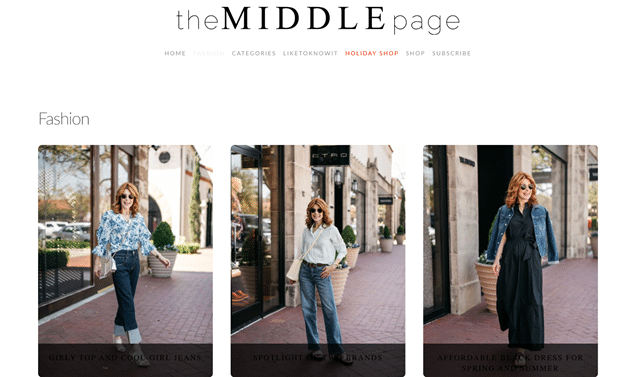
the middle page

Cathy Williamson created The Middle Page where she writes about fashion and style for middle-aged women. On her website you can access all her blogs and shop her looks.

Follow her on Instagram and Facebook.

Grece Ghanem
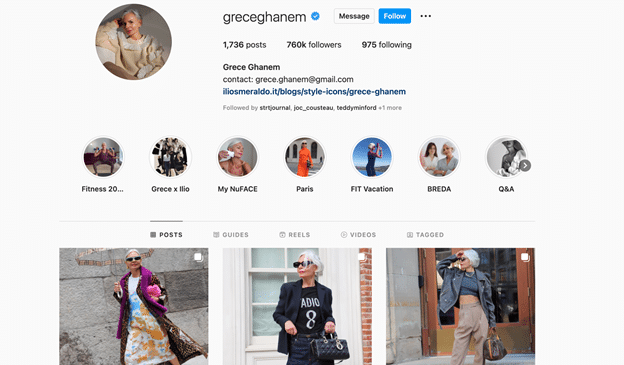
Grece Ghanem

Grece Ghanem is a style icon with almost two million followers on Instagram. Her style is bold, modern, and unique.

A Touch of Style – Jodie Filogomo

Jodie's Touch of Style

Our very own Sixty and Me fashion contributor Jodie Filogomo has her own website where along with her mom, Charlotte, and her good friend, Lesley, shares fashion advice and tips.

Follow her on Instagram and Facebook.

Penelope Jane Whiteley

Aging disgracefully

Aging disgracefully is a website full of useful information for women over 50. Penelope also contributes fashion articles on Sixty and Me.

Hello, I’m 50ish
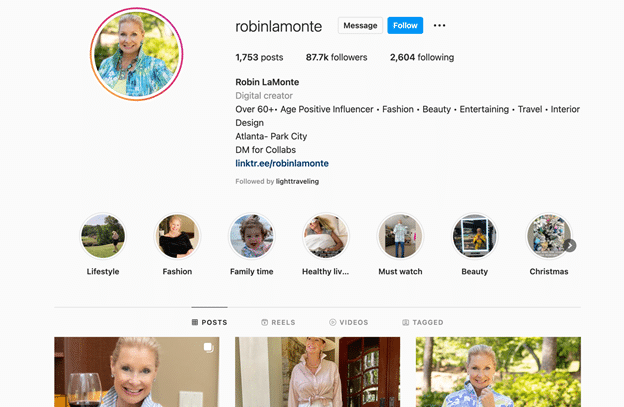
Hello, I'm 50ish

Robin Lamonte is a 60+ age positive influencer. She posts photos of her elegant lifestyle on her Instagram and gives fashion and life advice for older women.

Senior Style Bible

Dorrie Jacobson, the founder of Senior Style Bible, offers fashion advice and inspiration specifically for older women. Her blog emphasizes embracing personal style and feeling confident at any age.

Midlifechic

Nikki Garnett, who edited Selfridges magazine for nine years, now lives near the Lake District in the Northwest of England.

She started Midlifechic as a response to feeling like she had lost her groove amid the chaos of family and work life. The platform is for others who, like her, are emerging from the child-centric years and looking forward to a new chapter in life.

Follow her on Instagram and Facebook.

A Well Styled Life

A Well Styled Life

Jennifer Connelly gives styling advice and fashion tips on her website A Well Styled Life. Everything from finding the perfect trench coat to updating your wardrobe essentials.

Follow her on Instagram and Facebook.

Andrea Pflaumer
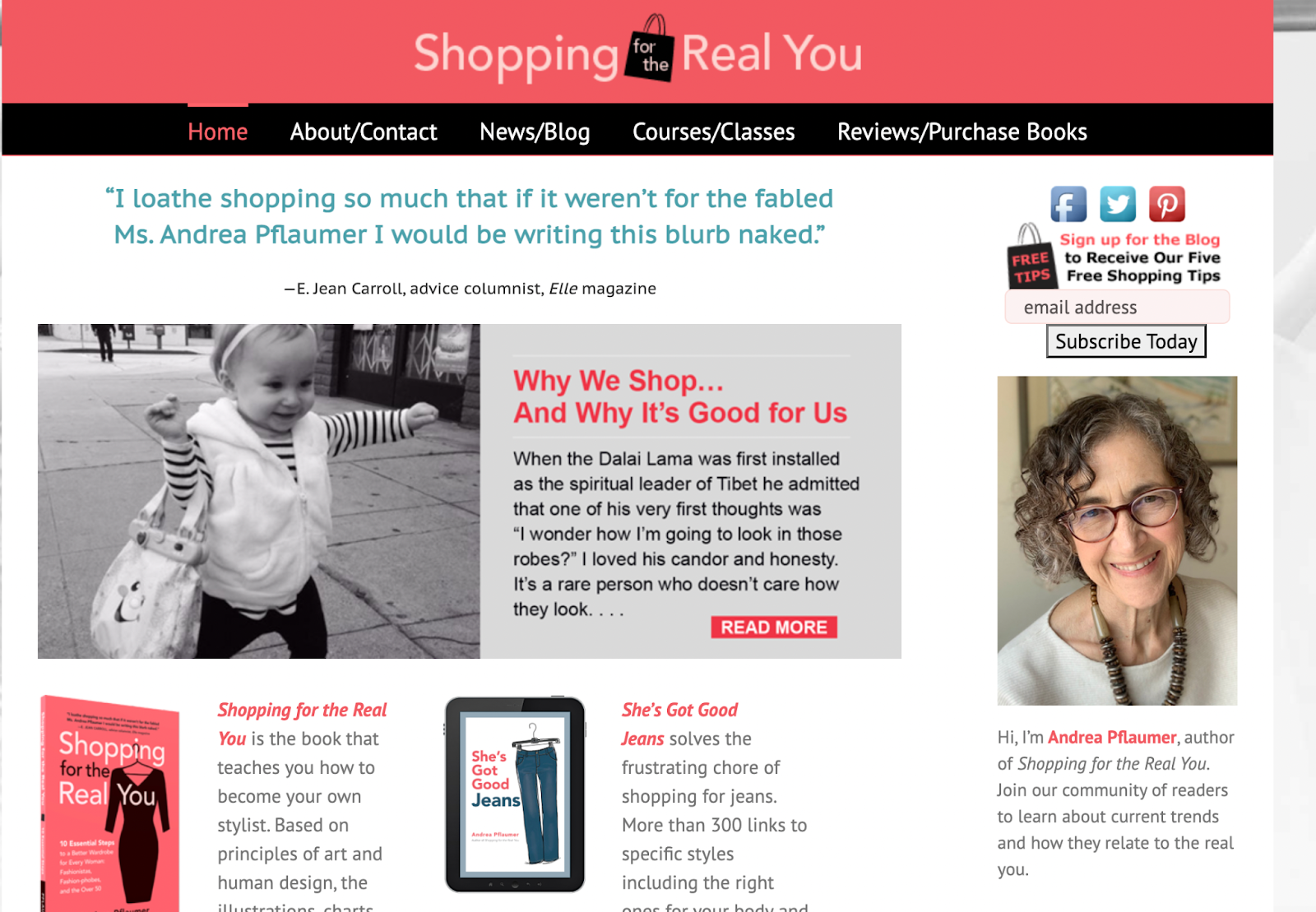
Andrea is a Sixty & Me fashion and beauty contributor and author of the book Shopping for the Real You – The book that teaches you how to become your own stylist. Visit her website for fashion advice and shopping tips. 

Also, follow her on Facebook.

Cindy Hattersley
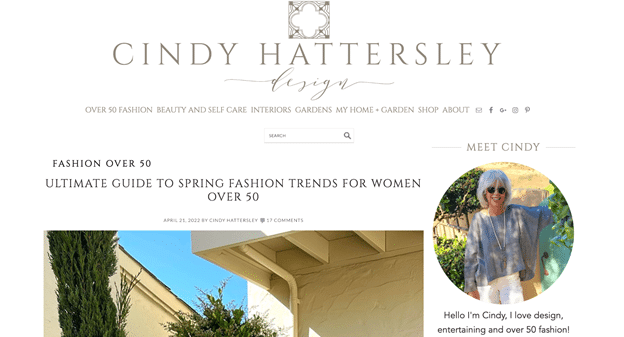
cindy Hattersley

Cindy is a fashion blogger who loves everything design. Her website is loaded with articles about style and design for women over 50.

Follow her on Instagram.

Style at a Certain Age
style at a certain age

Beth Djalali and her team create fashion blogs for the Style at a Certain Age website. They cover everything from design to closet cleaning.

Follow her on Instagram and Facebook.

Une Femme d’un Certain Âge

Une Femme d’un Certain Âge

This website is not in French; it is, however, very much influenced by French fashion. Susan Blakey travels a lot and gives great fashion advice for traveling women over 50.

Follow her on Instagram and Facebook.

The Midlife Fashionista
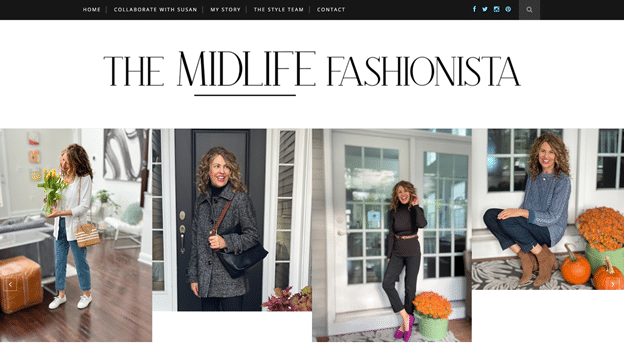
the midlife fashionista

Susan is a middle-aged fashion blogger who likes to help women feel beautiful and confident. Her goal is to give women easy to implement outfit ideas that are stylish, comfortable and modern.

Follow her on Instagram and Facebook.

50 Is Not Old

Tania Stephens shares her fashion finds and tips on her website 50 Is Not Old. Her style is “classic meets trendy,” and she loves pairing high-quality fashion pieces with affordable clothing to create unique looks. 

Follow her on her Instagram and Pinterest.

Awed by Monica

Monica Awe-Etuk is a Nigerian-American fashion blogger known for her bold and colorful style. She shares her fashion adventures, styling tips, and outfit inspiration on her blog and social media platforms, catering to women of all ages, including those over 50.

Watch her videos on her YouTube channel.

Funking After 50
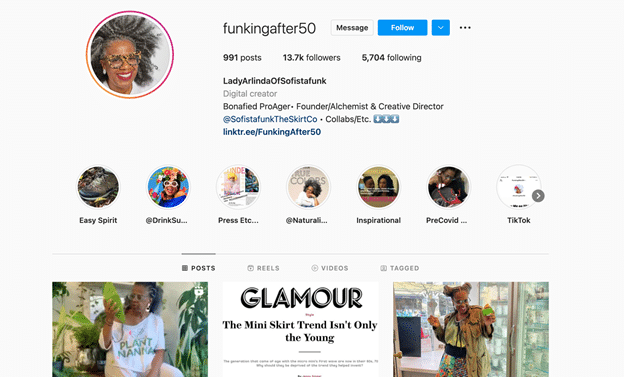
funking after 50

Funking After Fifty’s fun, quirky, and engaging Instagram profile has tons of pro aging posts with unique and modern styling tips.

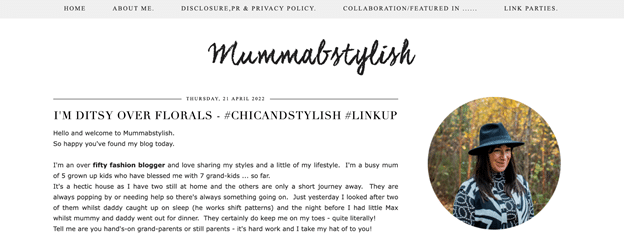
Mumma B Stylish
Mumma B Stylish

Jacqui is an over-50 fashion blogger who loves to share her styling tips and lifestyle hacks. Visit her website.

Follow her on Instagram and Twitter.

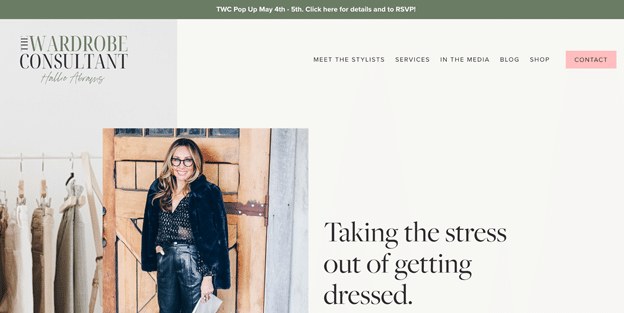
The Wardrobe Consultant – Hallie Abrams
The Wardrobe Consultant – Hallie Abrams

Hallie is a fashion stylist and blogger. She styles and writes for real people for real life. Visit her website.

Follow her on Instagram and Facebook.

Vanity & Me

Vanity & Me

Laurie Bronze’s website Vanity & Me covers all things fashion and styling for mature women.

Check out her videos on her YouTube channel.

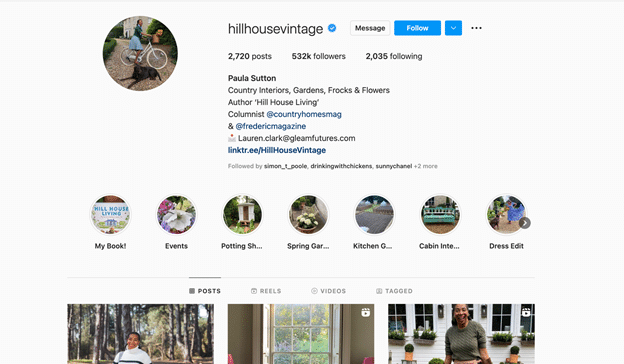
Hillhouse Vintage – Paula Sutton
Hillhouse Vintage – Paula Sutton

Elegant country and vintage living. Paula gives us a peek into her lifestyle on her Instagram.

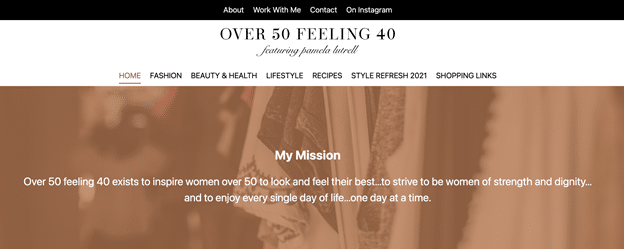
Over 50 Feeling 40 – Pamela Lutrell
Over 50 Feeling 40 – Pamela Lutrell

Pamela is a fashion and lifestyle blogger for women over 50. She helps women achieve strength, confidence, inspiration, and head-turning personal style.

Follow her on Instagram and Facebook.

Over the Hilda

Over the Hilda

Over The Hilda is a website where you can read about Hilda’s beauty finds and where she shares her tips for fashion for mature women.

Follow her on Instagram and Facebook.

Fashion Should Be Fun
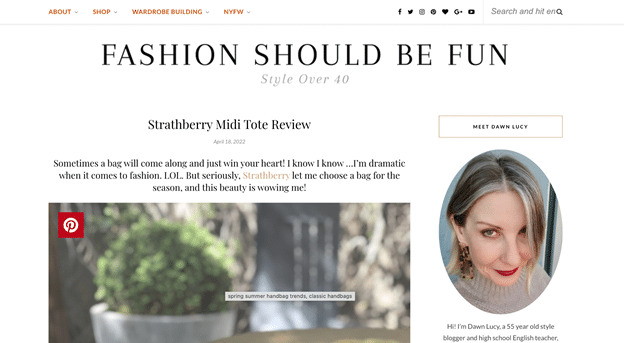
Fashion Should Be Fun

Fashion Should Be Fun was created by style blogger Dawn Lucy. She says that women are never too old to have fun and be fierce!

Follow her on Instagram and Facebook.

Cultured Curves
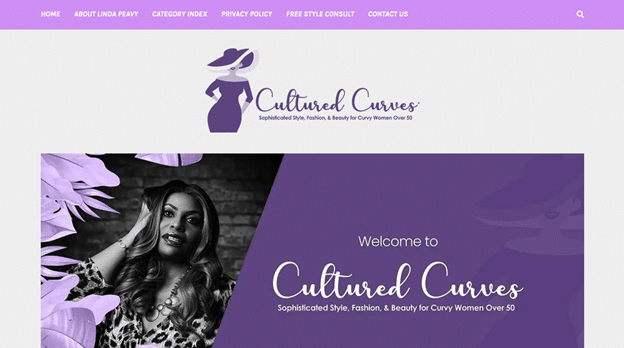
Cultured Curves

Linda Peavy is a 55+ curvy fashionista full of style and substance who loves promoting body positivity. Her website Cultured Curves is geared towards curvy women over 50.

Follow her on Instagram.

That’s Not My Age
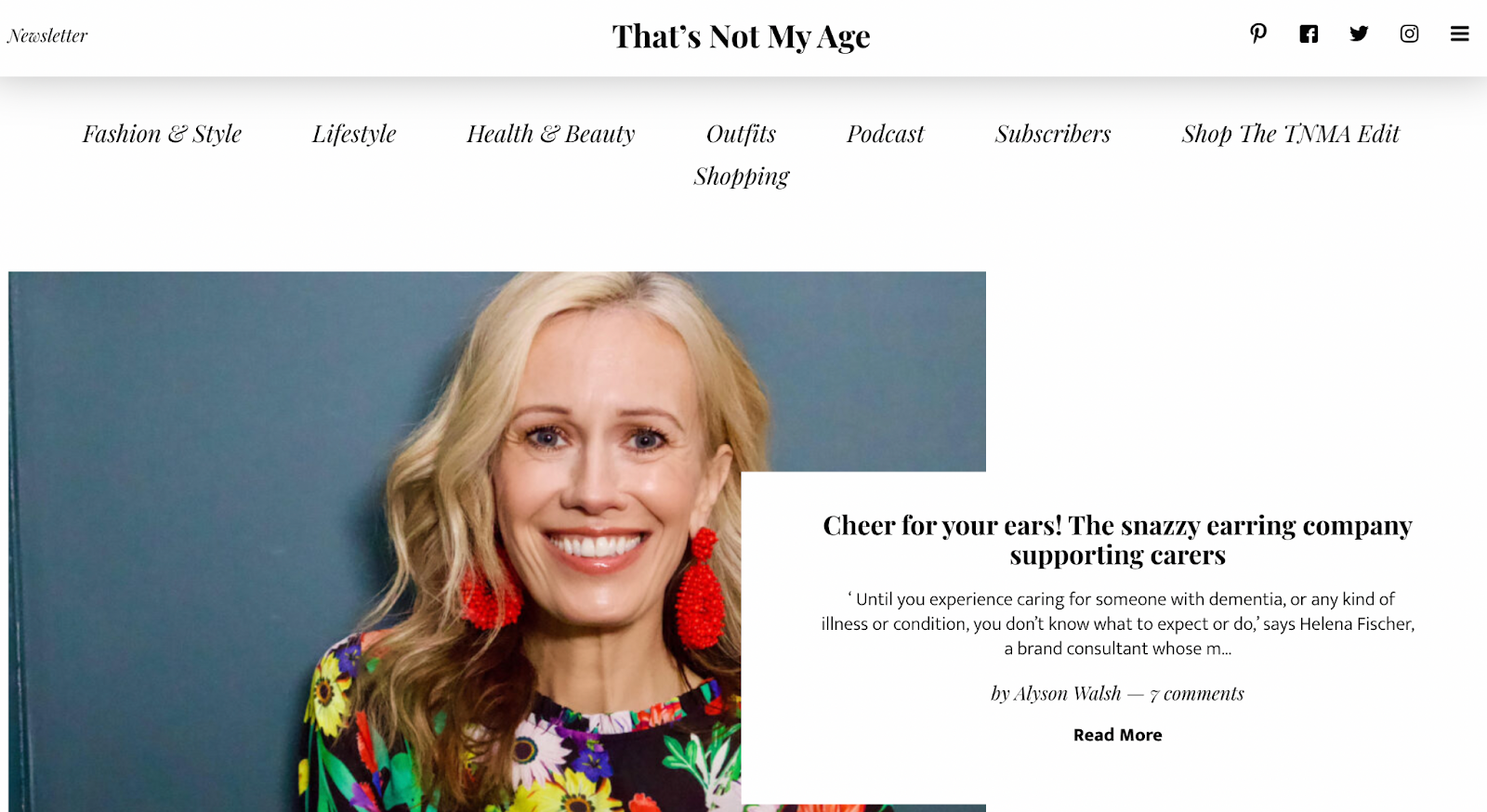
Alyson Walsh created That’s Not My Age in 2008 to reach out to women of all ages. She’s a freelance journalist and former fashion magazine editor and author. 

Follow her on Instagram, Facebook, and Pinterest.

Judith Boyd – Style Crone 

A striking, hat-loving fashion blogger who turned widowhood into a platform for fierce self-expression.

Find her on Instagram.

Carla Rockmore

A Canadian-American stylist and late bloomer in the influencer world, Carla gained fame through her TikTok and YouTube channels, where she shares archive-level wardrobe insights. Think Iris Apfel meets Carrie Bradshaw.

Debra Rapoport (Advanced Style)

Featured in Ari Seth Cohen’s iconic Advanced Style project, Debra is known for her signature pink hair and DIY accessories. Her outfits blend creativity and confidence, reminding fans that fun doesn’t have an age limit.

Follow her on Instagram.

Colleen Heidemann 

A macro-fashion influencer celebrated for her dramatic silhouettes and editorial-ready ensembles catered to mature women.

Find her on Instagram and TikTok.

Susie Wright 

A former Nordstrom buyer turned stylist influencer with ~580K followers on Instagram, sharing polished, vacation-ready outfits ideal for mature wardrobes.

Rose Hayes 

Featured in 2025 influencer roundups, Rose is a fashion stylist with a growing audience offering sharp, modern styling advice for women over 50.

Find her on Instagram.

Caroline Baudino (Shop With Caroline)

An inspiring influencer who transformed her life in her 50s, now running a successful fashion brand with six-figure monthly earnings. Ideal for mature women seeking reinvention.Find her on Instagram and TikTok

Read FASHION FOR WOMEN OVER 60 – LOOK FABULOUS WITHOUT TRYING TO LOOK YOUNGER.

Let’s Have a Conversation:

Do you follow any fashion bloggers? Who are your favorite fashion bloggers for women over 50? Let us know in the comments below.

Read More

Grief, Loss, and Loneliness After 60: How to Finally Heal

Grief, Loss, and Loneliness After 60 How to Finally Heal

By the time you reach 60, you’ve buried people you love. Maybe your best friend from college. Maybe siblings, parents, the person you thought you’d grow old with.

And with those losses often comes something harder to name: a deep loneliness, even when you’re surrounded by family. A heaviness that won’t lift. A sense that no one really understands what you’re going through.

You might think, “I should be grateful for what I have” or “Other people have it worse.” But that doesn’t make the grief go away. It doesn’t ease the loneliness.

Here’s what most people don’t understand: grief, loss, and loneliness aren’t just emotional problems. They live in your body. And until you understand how your body holds onto these feelings, true healing remains out of reach.

But here’s what makes grief and loneliness so hard to bear: You were taught, decades ago, that these feelings were wrong.

You Were Taught That Some Feelings Were “Wrong”

Think back to your childhood – the 1950s, ’60s, or ’70s perhaps. Maybe you cried and heard, “Stop that crying.” Got angry and heard, “Children should be seen and not heard.” If you were a boy: “Big boys don’t cry.” If you were a girl: “Don’t be so emotional.”

Those words seemed normal then. But here’s what they actually taught you: Some of your feelings are wrong.

So you learned to hide them. You smiled when you wanted to cry. You went quiet when you wanted to scream. You “didn’t burden others.”

That pattern doesn’t disappear just because you’re 65 or 75 or 85 now.

The Pattern Continues Through a Lifetime

Maybe your spouse says something dismissive, and you go quiet instead of saying, “That hurt my feelings.” Or your adult children make decisions about your care without listening, and you tell yourself, “They mean well. I shouldn’t complain.” Or your doctor talks past you, but you smile politely because “I don’t want to be difficult.”

Or you’re at your friend’s funeral and someone says, “At least they’re not suffering anymore,” and you want to scream, “But I’M suffering!” Instead, you nod and say, “Yes, that’s true.”

That’s what happens when emotional safety is missing. Even after a lifetime. You still hide what you feel because your body remembers: showing emotions wasn’t safe when you were young.

Your Body Still Remembers

Your body still remembers what happened 50, 60, 70 years ago. It remembers the rejection, the shame, the punishment for showing emotion.

So when you feel something big – grief over lost friends, anger about health problems, fear about losing independence – your body tenses up. You shut down.

That’s your nervous system asking, “Is it safe to feel this?” Until your body learns the answer is yes, you can’t fully heal.

What “Feeling Safe” Actually Means

It means your body finally believes: “I can feel this emotion and still be okay. I won’t be rejected. I’m allowed to feel.”

When that happens, your breathing slows, muscles relax, mind clears. You stop minimizing your feelings. You stop saying “it’s fine” when it’s not.

That’s emotional safety. It’s not some modern therapy idea. It’s biology. And it works the same at 70 as it does at 7.

What Happens Inside Your Body When You Feel Safe

Your brain has an alarm system – the amygdala – that constantly asks: “Are we safe?” If it thinks you’re in danger, your heart races and stress hormones flood your system.

But when your brain says “we’re safe,” the vagus nerve activates your body’s calming system. Breathing slows. Heart rate drops. Blood pressure may come down. Your body shifts into “rest and repair” mode – where healing happens.

The thinking part of your brain – the prefrontal cortex – comes back online. You can notice feelings without being overwhelmed.

That’s not a metaphor. That’s your biology. And it works at any age.

Feeling vs. Acting

Emotional safety doesn’t mean acting on every feeling. You can feel angry without lashing out. You can feel hurt without shutting people out.

All feelings are allowed. Not all actions are.

Emotional safety gives you space to feel fully – then choose how to respond. Many of us were taught that “controlling emotions” meant not feeling them at all. But that’s suppression, not control. And decades of suppression take a toll.

You Can’t Heal Without Safety First

You can’t heal what you’re still afraid to feel.

If your body believes that feeling sad makes you weak, or admitting loneliness burdens others, it will shut those feelings down automatically.

That’s why “just think positive” doesn’t work. That’s why “count your blessings” sometimes makes you feel worse.

It’s never too late. Your nervous system can still learn. You can still change patterns that have been there for decades.

How You Build Emotional Safety

You can teach your body that it’s safe to feel. You do it one small moment at a time.

Notice What You’re Feeling Without Judging It

Instead of “I’m being ridiculous,” try “I feel sad, and that’s okay.”

Name the Emotion

Labeling what you feel – “I’m grieving” or “I feel invisible” – calms your brain.

Pause Before You React

Take one slow breath. Feel your feet on the floor.

Find Safe People

Be around people who listen without trying to fix you. A friend, support group, therapist, or spiritual community.

Ground Yourself

When overwhelmed, touch something solid. Hold something warm – tea, a pet, a blanket.

If mobility or hearing loss makes some techniques challenging, focus on what works for your body – even just placing your hand on your heart works.

Give Yourself Credit

You survived a generation that didn’t talk about feelings. You made it through decades without this support. That took tremendous strength. Now you’re adding new tools, not replacing what got you here.

Every time you do one of these things, you’re teaching your body a new message: It’s safe to feel.

Why This Matters at This Stage of Life

Chronic stress from suppressed emotions contributes to high blood pressure, heart disease, and weakened immunity. Emotional regulation helps with pain and chronic conditions. Feeling emotionally safe improves sleep.

This is the missing piece in caring for your health.

One Last Thing

Healing doesn’t mean you stop having hard emotions. It means you stop being afraid of them.

When your body knows it’s safe to feel, you can finally choose who you want to be in these later years – instead of reacting from old fears.

You’ve lived long enough to earn the right to feel everything. That’s emotional safety. And that’s where healing begins – at any age.

If you’re ready to go deeper – with poetry that speaks to your generation, practical nervous system exercises, and a compassionate roadmap through grief and generational trauma – my book From Chains to Wings: A Poetry Revolution for Healing offers tools specifically designed for healing that’s been waiting decades.

Let’s Have a Conversation:

What feelings do you usually suppress? Why? Is there a pattern or learned behavior that’s been telling you it’s not safe to feel a certain way?

Read More

How I Learned to Care Without Carrying: A Path to Sustainable Giving for Women Over 60

How I Learned to Care Without Carrying A Path to Sustainable Giving for Women Over 60

For a long time, I believed that caring deeply meant absorbing other people’s pain. I thought being a compassionate person required emotional sacrifice. Staying up late worrying, saying yes when I needed to say no, and feeling responsible for everyone else’s healing.

Eventually, I realized the way things were going was not sustainable. I was emotionally overloaded, disconnected from myself and questioning my own worth because of my limitations.

That’s when I began exploring trauma-informed self-care and nervous system regulation. I learned that empathy doesn’t have to come at the cost of mental and emotional health and well-being.

Through a concept called care circuit activation, I discovered that it’s possible to “care without carrying.” That is, to show up with warmth, kindness and love while staying grounded in my own body, meeting my own needs, too.

The Cost of Over-Caring

There was a time when I measured my worth by how much I could give. If I wasn’t helping someone, solving something, or producing value, I felt uneasy. Like I was being lazy or indulgent and as though I wasn’t enough, just being me.

The needs of others kept growing, and I kept trying to meet them. But no matter how much I gave, it never felt adequate. I was tired, overwhelmed, emotionally stretched, and questioning both my worth and whether I deserved to do what I needed to recover.

How could I, and still meet the needs of everyone else?

This kind of caregiving pressure doesn’t always come with a clear breaking point. It builds slowly. The texts, phone calls and emails you feel obligated to answer, the never ending requests for volunteers at work and in the community, through the guilt of saying no, through the belief that your value is tied to being useful.

I didn’t know it at the time, but I was experiencing compassion fatigue.

I could still function. But inside, I felt like I was losing access to the part of me that could care for others and myself freely, without fear or exhaustion. Learning about compassion fatigue and compassion fatigue recovery gave me a name for what I was feeling and ultimately, it helped me to overcome those desperate feelings of inadequacy that had become all the more frequent.

What Compassion Fatigue Feels Like in the Body

Before I understood what compassion fatigue was, I experienced all the physical symptoms. My shoulders were tight even though I didn’t think I was stressed. My breath stayed shallow, like I was bracing for something. Ready to run a race at any moment.

I woke up tired, even after a full night’s sleep. And I often felt a strange mix of urgency and heaviness. Like I needed to do more but couldn’t quite move.

These are common signs of stress in general, but also of emotional overload. To differentiate between burnout and compassion fatigue, you need to listen to the signals your body is sending you.

You might notice:

  • Tension in the jaw, neck, or shoulders that doesn’t ease with rest.
  • Digestive changes like bloating, nausea, or loss of appetite.
  • Sleep disruptions, including waking up frequently or feeling unrested.
  • Racing thoughts paired with physical fatigue.
  • A sense of emotional flatness, even when something good happens.
  • Difficulty breathing deeply, especially during quiet moments.
  • Feeling unworthy unless you’re helping, fixing, or producing.

These signals are signs that your nervous system is trying to protect you. But without intentional regulation, it can stay stuck in a loop of hypervigilance or collapse.

Recognizing these signs was a major step toward healing for me. It helped me see that my body was asking for care, and that I deserved to listen.

Discovering the Care Circuit

When I first learned about the care circuit, it was a real breakthrough. I finally had a name for what was affecting me as I was perpetually overstretched. I wasn’t broken because I was overwhelmed, and I wasn’t getting sick or old or weak.

Put simply, I just hadn’t been taught how to care in a way that included myself.

The care circuit is a set of neural pathways that support connection and emotional sustainability. It’s part of the nervous system that involves the prefrontal cortex, the vagus nerve, and the oxytocin system. When activated, it allows us to show up with warmth and kindness and compassion for others without absorbing everything around us.

Unlike stress-driven empathy, which can lead to emotional overload, care circuit activation creates a sense of grounded compassion. It’s the difference between carrying someone’s pain and supporting them as they learn to cope. One depletes; the other sustains.

For caregivers, empaths, and anyone who feels responsible for others’ wellbeing, learning how to make this shift is life changing.

This concept helped me understand why I felt so drained and why certain practices, like deep breathing or structured reflection, made such a difference. They were activating a part of me that could care without collapsing.

What Helped Me Reconnect

Once I understood that my nervous system needed care to recover, I began experimenting with repeatable mindfulness practices until I found the ones that helped me feel safe enough to care again. These weren’t dramatic changes, but they helped me create some boundaries around my energy, and some perspective about the needs of others compared to my own.

Here’s what helped me reconnect with my care circuit and open myself to the self-compassion that I so desperately needed:

Breathwork That Slowed Me Down

I started using techniques like extended exhales and box breathing. These helped regulate my vagus nerve and shift me out of urgency. Over time, I noticed my thoughts slowing down and becoming more grounded, and my body relaxing.

Structured Self-Reflection

I began journaling with prompts that focused on emotional clarity rather than productivity. Questions like “What do I need to feel safe today?” or “Where am I overextending?” helped me reconnect with myself.

Mindfulness Tracking

I began to record how various practices impacted me, specifically, what grounded me and what drained me. Tracking these patterns helped me make small adjustments that supported regulation.

Letting Go of the Need to Earn Rest

This was the hardest part. I had to unlearn the belief that I needed to be useful to deserve care. That shift didn’t happen overnight, but it started with noticing how often I tied my worth to output and making a commitment to myself to start choosing something different.

These practices helped me access a part of myself that could care without collapse, and in a way that energized me instead of draining me.

The Deeper Shift: Letting Go of Guilt and Reclaiming Self-Worth

The breathwork, journaling, mindfulness tracking practices helped, for sure. But the real change came when I began to question the beliefs underneath my overwhelm.

I had internalized the idea that my worth was tied to how much I could give. Rest felt indulgent. Boundaries were nonexistent. Saying no felt like failure. And my needs were ranked lower than low – in fact I wasn’t even sure how to get in touch with them anymore.

I recognized I needed to do more than address the symptoms of compassion fatigue. I had to address the root causes that had driven me to care too much, give too much, take on too much, forever. What I realized was that beneath all of it was a persistent feeling of guilt.

Guilt for needing space; guilt for not being available; guilt for wanting to care without collapsing. Learning to let go of that guilt was a slow process of remembering that I am worthy even when I’m still. That my presence, not my performance, is what truly matters.

Care circuit activation gave me a new lens. It showed me that sustainable empathy isn’t about doing more. It’s about being regulated enough to show up, consistently, with joy and calm. And knowing when to step back, when to rest, and when to say, “I care, but I can’t carry this.”

Reframing my self-worth wasn’t easy. But it was necessary. And it’s what allowed me to realize that every time I gave of myself was a choice.

Learning to Care Differently

Do you ever feel like caring too much is costing you your peace? The key is to learn how to care in a way that includes yourself. Care circuit activation helps us to become more regulated, centered, resilient and present.

It’s the shift from absorbing pain to comforting others. From providing guilt-driven care to choice-based connection.

You don’t have to earn your worth or prove your value by carrying what was never yours to hold. You are allowed to rest and care without collapsing. And you are allowed to be enough, even when you’re still. That’s where I started. And it’s where you can begin, too.

Let’s Start a Conversation:

Can you relate to the concepts of compassion fatigue and emotional overload? Have you ever tried any mindfulness strategies? Were they helpful for you? Have you explored the underlying beliefs that may be responsible for our tendency to give too much without caring for ourselves? What words of advice would you give to younger women, so that they develop healthy habits earlier in life?

Read More

The Secret Geometry of London: My Visit to the Museum of Freemasonry

The Secret Geometry of London My Visit to the Museum of Freemasonry

I am a lone traveler and have been my entire life. When the opportunity arose to return to London after a hiatus of two decades (way too long), I jumped on it. The main reason for going was to attend the world premiere of The Hunger Games stage adaptation – I’m a longtime fan of both the books and the films. But as the show wasn’t until later in the week, toward the tail end of my eight-day trip, I started where I always do in a new city: with its museums and galleries.

After all, when you average nearly 20,000 steps a day (my tracker confirmed it – 14,500 on the “lazy” days), you earn the right to call it a cultural workout.

Curiosity as Compass

I’ve always been drawn to what hides beneath the surface – the carved emblem above a doorway, the ritual behind a ceremony, the invisible geometry that tries to bring order to chaos. Over the years, this fascination has led me through monasteries, temples, and even psychedelic art studios.

So when a client casually mentioned he was a Freemason, something clicked. Like a symbol revealing itself, I knew exactly where I needed to go next: The Museum of Freemasonry in central London.

What better city than London – the birthplace of modern Freemasonry – to explore a tradition that has fascinated (and unsettled) the world for three centuries?

Stepping Through the Bronze Doors

The museum occupies part of the Freemasons’ Hall – a soaring Art Deco structure completed in 1933 to honor Masons who died in the First World War. The bronze doors swing open to reveal a marble lobby so pristine it looks like a film set – Eyes Wide Shut meets Westminster. But the air here isn’t one of menace; it’s reverence.

Freemasonry’s essence, I quickly learned, isn’t in conspiracy or control but in symbolism – in using the tools of ancient builders as metaphors for moral and spiritual growth.

Inside glass cases, the Square and Compasses gleamed in silver and brass – the square representing integrity, the compasses restraint. Together they form a kind of moral geometry, the balance between inner truth and outer conduct.

Nearby, the All-Seeing Eye – that familiar triangle and eye seen on dollar bills – reminded initiates to act as though conscience is always watching. It’s a poetic idea, really: behave as if you’re being observed by your better self.

The Builders of the Inner Temple

Freemasonry, I discovered, began in early 18th-century London when working stonemason guilds transformed into philosophical societies. The cathedrals they once built from stone became metaphors for the human soul. Each member’s goal: to build his own “inner temple” – a life of virtue, patience, and skill.

In one display, two stones rested side by side – one rough, one perfectly polished. The caption read: The journey from imperfection to refinement. I lingered there for a while. Isn’t that what our 60s are about? Chiseling the rough edges, polishing the spirit, and finding new meaning in old symbols?

Symbols That Speak Across Centuries

Everywhere I looked, meaning unfolded. The Seal of Solomon – two interlocking triangles, fire and water, heaven and earth – symbolized unity and mastery. The black-and-white mosaic floors, much like the dualities of life itself, reminded visitors that light and dark always coexist.

What struck me most wasn’t the secrecy but the humanity of it all. Behind the myth of secret handshakes and shadowy cabals, Freemasonry has long stood for education, charity, and self-improvement. Its members have included George Washington, Mozart, Winston Churchill, and Mark Twain – men drawn to its blend of fellowship and philosophy.

Beyond the Myths

Freemasonry has endured centuries of misunderstanding. It’s been banned by dictators, romanticized by writers, and scapegoated by conspiracy theorists. Yet walking through the museum, I saw something simpler: an ancient tradition that still whispers the same message – build with integrity, live with purpose, seek the light.

And for a woman traveling solo in her 60s, that message resonated deeply. Our journeys – literal and spiritual – are built one stone at a time.

As I stepped back out onto the London pavement, taxis honking and the city alive around me, I looked once more at the hall’s elegant façade. Geometry and grace, secrecy and openness – all woven into the same fabric.

Perhaps mystery isn’t something to be solved but savored.

If You Go

Museum of Freemasonry

 60 Great Queen Street, London WC2B 5AZ, United Kingdom

 🌐 museumfreemasonry.org.uk

 📞 +44 20 7395 9257

 🕓 Open: Tuesday–Saturday, 10:00 am – 5:00 pm

 💷 Admission: Free

Let’s Have a Conversation:

Do you like visiting galleries and museums when you travel? What do you like to pay attention to – the expositions, the philosophy or something else? Do you reflect on the lessons you learn from each place you visit?

Read More