Author: Admin01

Keeping a Makeup Journal – What Can You Learn That You Didn’t Know?
makeup journal

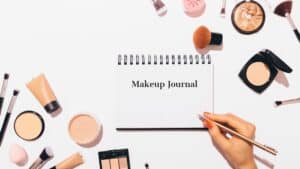
We don’t usually associate keeping a journal with our beauty products. Neither skin care or makeup. I have certainly never done so, but in review, it seems to be a good idea. No more buying something that gives you a rash… you’d forgotten about that, hadn’t you?!

What Do You Journal About?

Certainly foundation, powders, concealer, bronzer, and anything else that creates a layer of lustrousness on your skin or enhances your natural beauty is worth writing down.

It becomes a case of The Good, The Bad, and The Ugly and how wonderful it is to actually know what works and what doesn’t for you.

Best Brands

You’re conducting your own market research here, and hopefully, you can do it on a shoestring. By journaling your results you create a crystal clear picture of your makeup needs.

Your investment is the purchase of some of the tiny little makeup pots you can buy in Dollar stores or Poundland.

Take your little pot/s to a large makeup outlet and have the salesgirl put a little of what you fancy into a pot! There are few (if any) stores that will say no. Although it’s a little different now with the pandemic.

Reactions?

No reaction is what you’re looking for, of course. But if you have a reaction, you haven’t spent half your mortgage on makeup or skin care you can’t use ever again!

Yes, refunds are usually not a problem, but if you don’t have to go through the process, my advice is don’t. Just use the little pot method of testing.

Younger and Fresher Look

The little pot method is wonderful for concealer, foundation, and anything liquid creamy, but not so good for powders. Those you have to experiment with in store, and it doesn’t matter how many times you go to the counter looking. It’s about you and what you need and want.

Also, by trying the products you have the chance to see what gives you the edge in looking younger and feeling fresher. Which also applies to skin care.

Make note of the product, the maker, when and how you used it, how it looked, if there were any reactions and, more importantly, how it made you feel in your journal.

Eyes and Mouth

Mascara, eyeliner, eye shadow – these are all things you can try at the counter in a store and again, if it takes time to find what you want, keep going until you do. Keep journaling so you know what you have tried and what not!

Lipstick? It’s important to find a lipstick that feels right. Use the testers but NEVER on your lips! Instead, find an area that is the same colour as your face (more or less) and, using a cotton bud, wipe on a small sample.

We’re usually quite good at gauging what works colour-wise, so it’s the feel you’re testing. How smooth and creamy is it?

Quick Tip on Expired Beauty Products

Throw out anything too old. Most makeup will last generally for two years if it’s kept cold. If it has worn out its welcome, TRASH IT!

Using expired cosmetics often results in the product/s just not doing what it/they should do. If there are changes in appearance, smell, and colour, or something becomes sticky or oily, it’s definitely time to let it go.

The worst case scenario is skin irritation. Anything from dermatitis to allergic reactions and even infection.

Of course, no conversation about old cosmetics is complete without mention of cleaning your brushes. Very important.

By keeping a journal in which you carefully add details of every little happening, you will save yourself time, money, and heartache. You also have a go to spot for any information you need… you may find a concealer you have just mistakenly bought was used before – with catastrophic results.

Does this seem like a good idea to you? Would you like to create and keep makeup information to save your energy?! Is it important to you to know which products you really should not use? Please share below!

Read More

Abstract Thinking and Dementia: 4 Exercises to Keep Your Brain Fit as You Age

Abstract-Thinking-and-Dementia-4-Exercises-to-Keep-Your-Brain-Fit-as-You-Age

If dementia was a bowl of homemade vegetable soup, each ingredient would represent a different symptom of the disease. Naturally, no two bowls of soup are the same.

The symptom most people associate with dementia is forgetfulness. Potatoes could represent forgetfulness. But forgetfulness itself does not mean dementia, just like potatoes alone cannot make vegetable soup.

One significant symptom of dementia that doesn’t immediately come to mind is reduced abstract thinking. This ingredient is the salt of dementia soup.

What Is Abstract Thinking?

The easiest way to define abstract thinking is to talk about it in contrast to concrete thinking. Concrete thinking pertains to ideas that we can relate to using our senses. We can see a flower, hear a donkey, touch corduroy, and smell supper cooking.

Abstract thinking involves concepts with which we don’t have a physical relationship. We can’t see wisdom, hear peace, touch economic reform, or smell prejudice.

Abstract thinking itself, is an abstract idea, hence the difficulty in explaining it.

Language is abstract. Any word could be used to represent a tree, yet we, English speaking people, have all agreed that T-R-E-E will be used to represent the tall, growing, brown and green, woody thing in our back yard. Other languages have chosen different sound/letter sequences.

Math, too, is abstract. ‘Five’ is not concrete until we connect it to five bananas.

Colour may be considered concrete because we can see it. But it, too, is an abstract idea. When my oldest son was very small, I decided to teach him his colours. As I chose a toy and presented it to him, I would say, “This is blue.” He studied it, shook his head, and said, “Car.”

I chose another toy, showed it to him, and said, “This is blue.” Again, he shook his head and announced, “Dinosaur.” With every blue toy I selected, he resisted the idea of calling any of them blue. To his developing brain, colour was still an abstract idea.

What Does Loss of Abstract Thinking Look Like with Dementia?

Naturally, some of us tend to be more abstract thinkers and some of us tend to be more concrete thinkers. Since we don’t all operate with the same level of abstract thinking, reduced abstract thinking is then relative. We can best recognize it in others when we know them well.

Loss of abstract thinking shows up as taking things literally, not being able to draw conclusions, not being able to read between the lines, understand irony, or get a joke.

I phone my aunt every day to talk to her. She has some dementia, so our conversations are not that deep and usually include the weather.

On one particularly cold and snowy day, I said it would be a good day to go to the beach. Most people would recognize the mild sarcasm, but she simply said that she didn’t think it was.

How Can We Hone Our Abstract Thinking Skills?

There’s good news. You can exercise your abstract thinking skills.

Here are some things you can do.

Make up Analogies

An analogy compares two different things. Analogies can either trigger an understanding of one thing by examining its similarities with another thing or use known similarities between the two things to create a deeper meaning.

The easiest type of analogy to play with is the simile. A simile compares two things using the connecting words ‘like’ or ‘as’.

‘Sweet’ is an abstract idea, but paired with a concrete one, it gives your brain the skill of making new neural connections, as in “She is sweet as sugar.”

‘Careless and clumsy’ is another abstract thought. To make that it more concrete, we use the analogy “He is like a bull in a china shop.”

Exercise: Think of an abstract word and make a connection to a concreate idea using either ‘like’ or ‘as’. Here are some examples of words to get you started: wise, tall, joy, helpful, and love.

This exercise expands your abstract thinking by allowing you to make new cognitive links between usually unrelated ideas.

Analyze Symbols

Symbols are often used to represent concepts. A business will use their logo in an attempt to offer a glimpse into the company values.

Take a look at Amazon’s logo, for example. Their business is online shopping, and the yellow arrow in their logo starts at the letter ‘a’ and ends at the letter ‘z’, implying that they sell everything from a to z.

The arrow also represents a smile, with the arrowhead being a stylized dimple indicating the happiness people feel when they shop with Amazon.

Exercise: Look at logos and consider what each of them symbolises.

Play “What if…”

Another way of creating abstract pathways in your brain is the “What if…” game. This exercise can jump back and forth between concrete and abstract ideas.

Exercise: Ask yourself a hypothetical “what if” question. Then come up with as many answers to that question as you can. The rule here is that there are no limits to your answers. They don’t need to be possible or realistic either, although they can be.

Here are some questions to start you off. What if people were covered in fur like other animals? And what if I moved to a tropical island? What if we never had winter?

Play the “What if and then what if…” Game

A big part of abstract thinking is understanding the deeper meaning of a concept. By advancing the “what if” game you will be further stretching your abstract thinking. In the previous “what if” game, you go wide with as many answers as possible. In this version you go deep.

Exercise: Once you have answered the question, instead of coming up with another answer you would ask a new question which is “what if” to that answer and keep following that train of thought.

To get started, you can use the answers from the previous exercise.

It’s All About the Right Kind of Exercise

Many people enjoy doing puzzles to exercise their brain. Exercising your abstract thinking skills will also keep your brain sharp.

As an added bonus, you may find that not only will these activities strengthen your abstract thinking, they may also add colour to your conversations. There’s an abstract idea!

Are you more of an abstract thinker or a concrete thinker? Do you enjoy looking at modern art to figure out what the artist was attempting to depict? Do you think about how everything relates to everything else or to the bigger picture? Please share your thoughts below and let’s get the conversation going.

Disclaimer: This article is not intended to provide medical advice. Please consult with your doctor to get specific medical advice for your situation.

Read More

15 Free Online Workouts You Can Do At Home Or Anywhere Else

I don’t know about you, but walking and running outside or making up my own at-home workouts gets a little old after a while. Don’t get me wrong—Fresh air is always great and sometimes doing a freestyle exercise routine to Taylor Swift songs is ideal. However, spicing up the workout circuit is essential on days I just want someone else to guide me (and without having to pay for a personal trainer). Enter: the best free online workout videos, because there are enough bills to pay already.

Right now, the Internet is a Mary Poppins bag of exercise methods to try. (Even Billy Blanks, an actual workout legend, made a resurgence!) As far as I’m concerned, that’s all the reason I need to get moving and go down a YouTube rabbit hole of TaeBo, yoga, dance, kickboxing and every other workout videos I can get my hands, er, eyes on. If your workout routine is as stale as mine, here is just a small fraction of the best free online workouts you can press play and follow from your living room.

Pro-tip: Depending on the type of workout, you may want to secure simple exercise equipment. Nothing too hefty though—I’m talking small-space friendly items like a yoga mat, foam roller or hand weights. Once you’ve got a miniature at-home gym set-up, you’re ready to try just about every free workout video on the Internet right now. So let’s get moving, shall we?

Our mission at STYLECASTER is to bring style to the people, and we only feature products we think you’ll love as much as we do. Please note that if you purchase something by clicking on a link within this story, we may receive a small commission of the sale.


Chloe Ting

This abs and full-body workout from Chloe Ting needs absolutely no equipment. Plus, her Youtube channel is full of healthy snack ideas along with amazing workouts.


Tiffany Roth

You’ll never want to skip leg day again once you have Tiffany Roth as your guide.


The Fitness Marshall

Shake that groove thang with this cardio dance workout with head-to-toe benefits.


Tone It Up

The Tone It Up squad never disappoints with workout circuits that will get your blood pumping every. single. time.


Sweaty Betty

Sweaty Betty brings the ballet studio to your living room with this 45-minute ballet bootcamp workout.


Blogilates

A sweat-inducing arm workout you don’t need dumbbells to follow—and one that’s also small apartment friendly.


Yoga With Adriene

If you want to slow things down, Yoga With Adriene is the ideal online destination for yoga and meditation.


Pamela Rief

No equipment needed to shred this 10-minute ab blast on your living room floor.


GymRa

Prepare to feel the burn with this 45-minute workout focused on the butt, legs and thighs.


BodyFit By Amy

Dust off your dumbbells for this full-body workout.


TAE BO “For Real”

A high-energy, full-body cardio and martial arts-inspired workout that will definitely make you sweat.


Fitness Blender

A high intensity interval training (also known as “”HIIT”) workout that requires zero equipment and comes with lower impact modifications.


Jeanette Jenkins

Thanks to Jeanette Jenkins’ videos and Hollywood Trainer Club program, you can get trained by the same person who works with a slew of celebs including Pink, Tia Mowry and Kelly Rowland.


Crossfit

Crossfit’s YouTube channel is a treasure trove of low-cost ways to put together a circuit workout at home.


Fit Body By Ashley

Um, you had me at “Dance like Queen B!” This free at-home workout is bound to be effective and fun.

A version of this article originally appeared in April 2020.

beauty newsletter banner

Read More

3 Cardio Myths That Sabotage Our Weight Loss Results After 60

Weight-Loss-Results-After-60

Many moons ago, long before the existence of the Internet, no one thought much about cardio.

We were too busy fetching water down by the stream, hunting down our next meal, and worrying about whether the pony express would deliver the Sears catalogue in time for the holiday rush.

(I realize I mixed several different timelines in that sentence but bear with me for the sake of argument.)

In short, we didn’t give much thought to cardio because we were too busy running around doing cardio as part of our daily lives.

Today, every one of those things can be done in the comfort of our homes by simply shouting to Alexa, sending out a drone, or going online.

Problem is, all of the latter activities burn a total of maybe two calories.

When you get your heart rate up running from a wild boar, cardio becomes a do or die proposition. You either stepped up or got left behind to perish with the rest of the lazy hunter-gatherers.

My Take on Cardio

My theory is, if evolution runs its course in this current direction, eventually we’ll have no use for our legs and will simply bob around like buoys in an ocean, waiting for the next wave to bring us a fish, an iPhone2087, or the latest political disaster.

So, before we evolve beyond the need for legs, it’s a good idea to use them while we still can. They come in handy for pumping blood through our systems and keeping our heart healthy.

And yes, you burn calories.

This, my friend, nicely segues into my topic du jour: cardio myths. By definition, cardio or aerobic exercise includes any exercise that raises your heart rate and sustains it for a length of time, such as walking, running, biking, swimming, rowing, elliptical training, circuit training, etc.

As with so many other fitness topics, fake news abounds.

Here are the top cardio myths and the real deal truth behind them.

Myth #1: You Should Work Out in the Fat-Burning Zone for Greatest Weight Loss

Some myths never seem to go away, and this is one of them. Apparently, many believe a magical “fat-burning zone” exists, like the Land of Oz, where thighs get thinner, tummies flatten out, and everything becomes smaller and firmer.

If only.

Truth is, this zone refers to a low level of heart rate activity that burns a higher percentage of fat, not a greater number of calories. When you’re striving to lose weight, you want to burn more calories, and the fat burning follows.

It’s simple math: In order to burn off 1 lb. of fat, you need to create a calorie deficit of 3,500 calories. So, you can eat 500 fewer calories a day for a week, burn off that same number of calories – or both cut back on calories and increase your activity.

The percentage of fat you burn is less important than the total number of calories.

Make sense?

Myth #2: Walking – Running, If You Can Do It – Is the Best Cardio for Burning Calories

The best exercise is the one you will actually DO. Walking and running burn calories, sure, but if you’d rather wrestle a great white shark on Facebook Live than run a single step, you’re likely not going to stick with it.

Pick an activity where you enjoy at least something about it, even if it’s meeting up with friends at a coffee shop afterward.

And whatever you choose, be sure to vary your routine.

Mix it up by alternating longer (30+ minutes) endurance workouts with shorter interval workouts where you alternate bouts of higher intensity effort with lower intensity. This prevents boredom and also helps you keep seeing results by regularly upping the ante.

Myth #3: Cardio on an Empty Stomach Burns More Calories

In total transparency, I often break this rule and work out on an empty stomach mainly because I get up at 4 a.m. The idea of food at this hour of the morning is less than appealing.

I have a cup of coffee (which has been shown to help workout performance) and hit the gym. But research shows this approach does not enable me to burn more calories than someone who eats a small snack before they exercise.

In fact, if you’re low on fuel, it could compromise your ability to make it through your workout. More than once, I’ve seen people faint at the gym due to low blood sugar.

Trust me, nothing does more to squash motivation than seeing someone carted off on a stretcher in the middle of your workout.

Bottom line: Know thyself. If you can stomach a little food (toast with peanut butter, half a yogurt, or protein and carb drink) about an hour before your workout, try it and see how you feel. You’ll likely be able to keep going longer.

Either way, be sure to refuel afterward with a carb-protein snack.

What’s your favorite cardio workout and why? What other cardio myths have you heard? Do any of them stop you from going at it? Let’s chat!

Read More

Bath & Body Works’ Semi-Annual Sale Means 75 Percent Off Candles, Body Care & Soaps

Twice a year, Bath & Body Works pulls out all the stops and discounts holiday and everyday favorites up to 75 percent off, which new discounts throughout the week. The Bath & Body Works Semi-Annual sale for holiday 2020 is no different—actually, it might be even better. We’ve got the details on all the goods so you can game-plan your shopping trip.

Of course, deals will be online as well as in-store so if you feel safer shopping from your couch, you can still stock up on Bath & Body Works favorites. Now’s the chance to score the beloved holiday fragrances before they’re gone (until next year), as well as throwbacks including Secret Wonderland, Honeysuckle and Sensual Amber brought back just for this sale. Christmas body care will be just $4.95 and select Christmas 3-Wick Candles will be $11.95.

Instagram PhotoSource: Instagram

For the best of the best deals, you’ll want to dig for those 75 percent off products. These include body care, candles, hand soaps and tons of non-holiday items you’ll want to use all-year round. You’ll even be able to find some best-selling fall body scare scents and ones you haven’t smelled for months. It’s basically like a rummage sale where you never know exactly what you’ll find.

The sale begins Saturday, December 26. If you’re shopping in store, don’t forget your face mask and hand sanitizer and maybe even consider going on off hours to avoid the crowds. Or, there’s always delivery! As much as we want to shop and treat ourselves this year (we deserve it), we also have to stay safe too. Set your iCal and get ready to get your haul on. Then, have big New Year zoom with friends to share exactly what you got.

STYLECASTER | Ashley Benson Interview


Read More