Author: Admin01

Brittany Cartwright’s Red Leopard Dress

Brittany Cartwright’s Red Leopard Dress at the Vanderpump Photo Shoot

Vanderpump Rules Season 8 Episode 20 Fashion

While Jax Taylor and Brittany Cartwright aren’t exactly closing out season 8 of Vanderpump Rules with the most positive energy surrounding them, I will say that she looked positively stunning in her red leopard dress at the photoshoot on tonight’s Season 8 finale. And just like she’s loyal to Jax, she’s turned to this affordable brand for looks in just about every episode all season. The only difference between the two is that the latter has never, ever done her wrong.


The Realest Housewife,

Big Blonde Hair
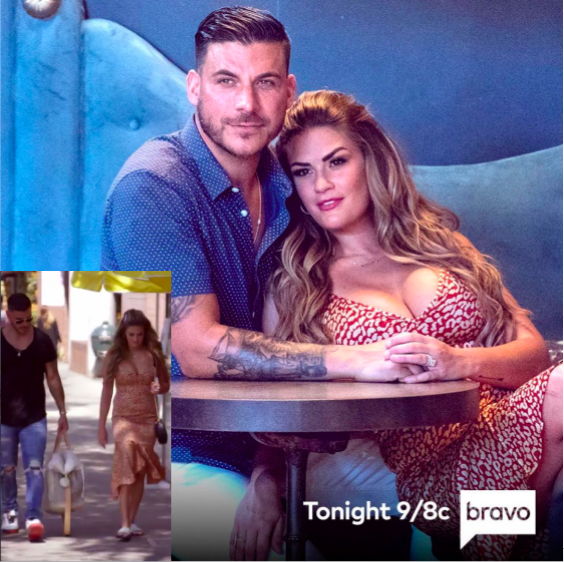
 

Brittany Cartwright's Red Leopard Dress

Click Here to Shop her Pretty Little Thing Dress

Originally posted at: Brittany Cartwright’s Red Leopard Dress

Read More

Stassi Schroeder’s Ivory Sweater Dress

Stassi Schroeder’s Ivory Sweater Dress with Lace Up Cuffs at Lala Kent’s

Vanderpump Rules Season 8 Finale Fashion

While some of the Vanderpump Rules cast may have ended the season on a low note errrr bye Danica, Stassi Schroeder closed things out engaged, looking at two million dollar houses and wearing this gorgeous ivory sweater dress. Many times I can just look at something at know it’s going to be a bit pricey, and this piece fits every bit of the credit card bill. It just looks soft and has that extra detail with the lace up sleeve and ribbed cuffs it look extra luxe in a completely understated way.

Clothing and home price tags aside I’m very happy for Stassi and all of her success this season. She’s growing up and removing the drama for her life. Plus I’m totally thrilled to see her end up with Beau Clark and thriving (don’t tell her I said that) career-wise. So while she may not have been at the center of the drama this season, she and her closet are right where they’re supposed to be.


The Realest Housewife,

Big Blonde Hair


Stassi Schroeder's Ivory Sweater Dress

Click Here to See her Sold Out Ryan Roche Dress

Click Here to Shop it in Black in Limited Sizing


Originally posted at: Stassi Schroeder’s Ivory Sweater Dress

Read More

How to Deal with Damaged Hair after 60 (A Stylist Gives Her Advice)

How to Deal with Damaged Hair After 60

For nearly every woman on earth, our hair is our crowning glory, no matter how old we are! As time passes, you might have noticed your hair undergoing changes, such as becoming thinner or not as shiny as it was before. Chances are that it has changed color as well!

Today, Margaret Manning speaks with celebrity stylist and recent member of the I-just-turned-sixty club Denise McAdam about tips for the mature woman who is dealing with damaged hair.

How Did It Happen?

The first question we should ask ourselves is how did our hair become damaged to begin with? Was it a hormonal change? Is it due to chemical exposure? Are we simply bad hair managers, using styling instruments incorrectly?

“Once you understand how it got damaged, it’s easier to find a solution to the problem,” Denise notes.

As we grow older our bodies, including our hair, will change, for some of us, dramatically. Denise feels that it’s important for women to realize that they have reached a new chapter in the book of their lives.

Bringing in a photo when you were twenty-something and asking the stylist to recreate the hair in your youth is not productive and not realistic. Denise believes that women are better served by facing facts and enjoying what ever “chapter” in life you find yourself.

Best Tips to Avoid Damage

Avoiding the things that damage hair is far easier than repairing it. Some of Denise’s best tips include:

Limiting Heat: Blow dry the roots, not the ends. You should always avoid very hot temperatures. The Dyson hair drier is great for fine hair and curly hair since it doesn’t use extremely hot air.

Use the correct hairbrush and learn how to brush your hair correctly. Brushing your hair and what brush you use might seem farfetched, but Denise says that these can actually damage your hair.

If you must use hair irons, whether they are straightening irons or curling irons, you should always use a good heat protection product. Denise recommends Wella or Loreal brands.

How to Help with Breaking or Brittle Hair

Hair and nails are a barometer to what is going on inside the body, Denise says.

Breaking or very brittle hair occurs for a variety of reasons, including medical problems or medication. It can occur from heat or even air pollution, but a medical checkup can ensure that there are no underlying health problems would be the place to start.

What about Thinning Hair?

This is a huge subject that Denise has found that many women are afraid to discuss, most likely because many people believe that thinning hair equals old age. While it’s true that the aging process often does lead to thinning hair, some women are born with thin, fine hair, so this isn’t something to fear.

Let’s also not forget that grey hair is naturally thinner because it lacks color. Many women begin to see grey hair in their thirties or even their twenties, so thin hair does not necessarily make us ancient history!

Supplements can help prevent or improve hair thickness. One of Denise’s favorite supplements is a professional biotin product, available only at your hair dressers.

The manner in which you style your hair can sometimes be the cause of thinning, such as wearing hats daily or wearing a tight hairstyle regularly. Try to change hairstyles and try other options besides hats to avoid this problem.

The Final Word

Denise says that, more than anything else, she is happy that women talk about these things in today’s world. Previously, even subjects such as thinning hair used to be avoided, for the reasons given above.

Denise was recently given an award by the Queen of England and Margaret talks with her about this and other issues in her life, which makes for an entertaining video interview that you shouldn’t miss.

Do you have other tips you use to avoid hair damage? Which are your favorite supplements to improve your hair? Have you found other causes for thinning or brittle hair besides the ones mentioned? Join in the conversation- We want to hear from you!

Read More

All-Natural Concealers to Add to Your Clean Beauty Collection

The non-toxic and all-natural beauty market has expanded tremendously over the past several years, so now you don’t have to sacrifice performance, coverage, and wear time to a formula that’s not laden with foreign and potentially harmful ingredients. Beauty enthusiasts have become more and more aware that some makeup items are chock full of toxic chemicals and shady additives that can totally cause your skin to freak out in a number of different ways, from blemishes to rashes. Frankly, if you see an ingredient listed on the product’s packaging that you can’t pronounce, it’s probably not natural or healthy for your skin.

When looking for a natural concealer that isn’t formulated with a slew of bad substances, keeping your eye out for keywords like “organic,” and “vegan,” is often a great place to start. What you do want to avoid are synthetic and potentially-harmful additives, including fragrances, silicones, parabens, and sulfates (just t name a very select few). While natural complexion products tend to be associated with less coverage and mediocre performance overall, there are surprisingly plenty of all-natural formulas available that don’t compromise the quality of the formula for healthy ingredients. Ahead, we’ve rounded up a few of our favorite concealers to help you transition to clean makeup easily.

Our mission at STYLECASTER is to bring style to the people, and we only feature products we think you’ll love as much as we do. Please note that if you purchase something by clicking on a link within this story, we may receive a small commission of the sale and the retailer may receive certain auditable data for accounting purposes

Read More

How Important Is Quiet (Introversion) in Today’s Noisy World?

Introversion

I recently came
across a cartoon in an email that made me laugh out loud. But it wasn’t a
standard punch line or funny character or comment that triggered my laughter. I
was laughing in absolute utter recognition of the truth that was being shared.

So, what was this
laugh-inspiring truth? The cartoon portrayed the five
things that introverts do to recharge during parties
.

If you’re an
introvert like I am (and one-third to one-half of the population are introverts), then you may also feel
a jolt of recognition when you look at this list of the five things that
introverts do to recharge during parties:

  • Play with a pet
  • Flip through books
  • Hide in the bathroom
  • Do the dishes
  • Leave early

Being an Introvert in a Culture of Extroversion

But this cartoon also triggered some uncomfortable school and work memories of what it’s meant to be an introvert in a culture that researchers contend (and which I think most of us would agree) values the traits of extroversion:

  • the regular comments at teacher conferences and
    on report cards that indicated that even though I excelled in my class work I
    needed to participate more in class discussions,
  • the utter fear I felt when I had to “cold call”
    businesses to secure support, and
  • the utter sense of dread at having to attend a
    work event of 20–30 people with whom I was
    required to interact.

Fortunately, I
loved the part of my work that involved research and writing, one-on-one work
with donors, and the mission of the organization. Still, I often shook my head
when I thought about the utter irony of a shy, introverted person ending up in
a job that also included cold-calling and sales.

Introversion and Extroversion Defined

Susan Cain, the author of Quiet: The Power of Introverts in a World That Can’t Stop Talking, indicates that introversion and extroversion are about how we respond to stimulation.

Introverts are
“most alive” in quieter more low-key environments, whereas extroverts thrive in
noisier, high-stimulation environments. And some of us are lucky enough to be
ambiverts – people who fall somewhere in
between on the extrovert-introvert scale.

Today’s School and Work Environments

In her book and in her TED talk, Cain contends that today our most important institutions – schools and workplaces – are designed for extroverts.

Though we most likely sat in classrooms with
rows of desks and worked autonomously on projects, schools today often feature
pods of 6-7 desks facing each other and numerous group assignments. Workspaces
often feature noisy open plan offices without walls.

I’m still grateful
that I retired several months before our company’s work space remodeling would
have taken me from working in a private office to a cubicle.

Solitude can be a
crucial ingredient for creativity, Cain says. Darwin, for instance, took long
walks in the woods alone and turned down dinner invitations.

Steve Wozniak spent
hours working alone at his desk and in his garage before teaming up with Steve
Jobs to launch Apple. As Susan Cain stated in her Ted talk, “For some people,
solitude is the air they breathe.”

What Has Triggered a Cultural Shift?

So why have schools
and workplaces changed so drastically in the past decades? The answer,
according to Cain’s research, lies (at least for the U.S.) deep in the country’s
cultural history.

In America’s early
days, we lived in a “culture of character” where people were valued for their
inner selves and moral rectitude with role models like Abraham Lincoln. In the
20th century, this changed.

As the country
changed from an agricultural economy to a world of corporations, people moved
from rural to urban settings and no longer worked beside people they’d known
all of their lives.

Instead, there was
a need to “prove yourself” in a crowd of strangers, and qualities like
“magnetism” and “charisma” came to be more highly valued. (Think of Dale
Carnegie’s book How to Win Friends and
Influence People.)

Why We Need to Value the Work Styles and Environments of Both Introverts
and Extroverts

Now to be clear,
Susan Cain is not saying that
developing social skills and teamwork is not important. What she is saying is that our problems today are
so vast and complex that we’ll need armies of people coming together to solve
them.

And the more
freedom we give introverts and
extroverts to be themselves and to work in environments best suited to optimize
their productivity, the more likely we’ll all benefit.

In fact, the vision
statement for Cain’s Quiet Revolution site is this: “To create a world where
introverts are celebrated for their powerful contributions and, more
importantly, for who they are. And where everyone’s quiet strength – no matter what their personality type – is
validated.”

For all my fellow
introverts reading this article, I thought you might enjoy “A Manifesto for
Introverts,” taken from Susan Cain’s book:

  • There’s a word for “people who are in their
    heads too much”: thinkers
  • Solitude is a catalyst for innovation.
  • The next generation of quiet kids can and must
    be raised to know their own strengths.
  • Sometimes it helps to be a pretend extrovert. There
    will always be time to be quiet later.
  • But in the long run, staying true to your
    temperament is key to finding work you love and work that matters.
  • One genuine new relationship is worth a fistful
    of business cards.
  • It’s O.K. to cross the street to avoid making
    small talk.
  • “Quiet leadership” is not an oxymoron.
  • Love is essential; gregariousness is optional.
  • “In a gentle way, you can shake the world.” — Mahatma
    Gandhi

Where
do you fall in the introvert/ambivert/extrovert spectrum? How has being an introvert/ambivert
or extrovert impacted your personal life? Your work life? What kinds of social
situations are most challenging for you and why? Please share your thoughts and
experiences with our community.

Read More